
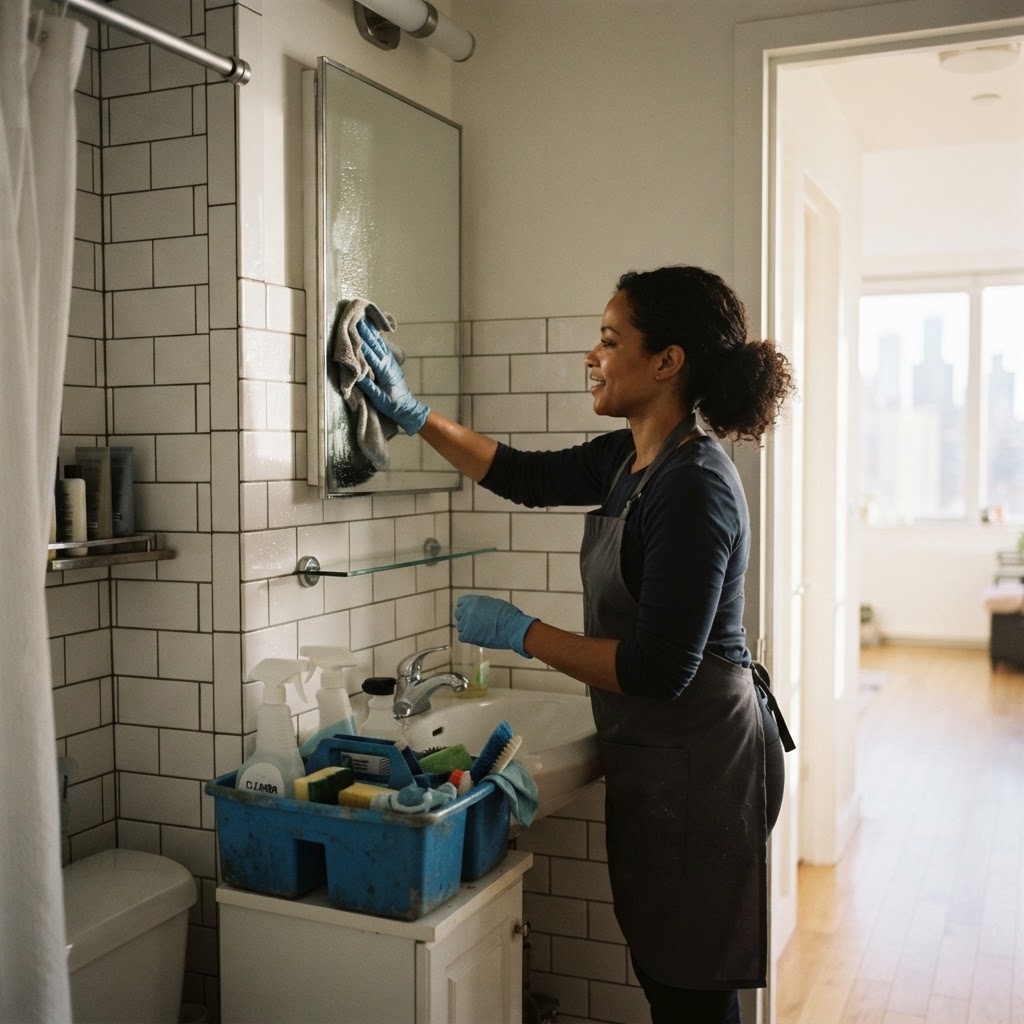
Managing Moisture in Your Windowless Bathroom
When you live in an NYC pre-war building or a modern high-rise, it is common to have a bathroom that lacks a window. Without natural ventilation, moisture stays trapped in the space, which leads to mildew and potential damage to walls and fixtures. To clean bathroom no window spaces properly, your focus must shift from surface aesthetics to moisture control.
Why ventilation is your first priority
If your exhaust fan is weak, clean bathroom no window environments become a breeding ground for mold. Start by checking your fan. If it makes a grinding noise or fails to hold a single square of toilet paper against the vent, it is time to have it professionally cleaned or inspected. Keeping the air circulating is the most important maintenance step you can take in a tight New York apartment.
To test your ventilation efficacy, tape a thin piece of tissue paper over the intake grille while the fan is running. If it does not pull the paper firmly against the mesh, the ductwork is likely clogged with lint and dust. You can unscrew the plastic cover and use a vacuum attachment to pull out debris. If the suction remains weak, the blockage might be further up in the shaft, which often requires a building technician to clear. Without this airflow, all other cleaning efforts are merely temporary solutions.
Developing a daily drying routine
After every shower, use a squeegee on the walls and glass. It takes thirty seconds, but it pulls a significant amount of water off the surfaces before it evaporates into the air. Leaving the door open or placing a small fan in the doorway for fifteen minutes after you finish helps replace the damp air with drier air from your bedroom or hallway. This simple habit prevents the need for a professional deep cleaning NYC later on.
Beyond the squeegee, pay attention to horizontal surfaces. Wipe down the faucet handles, the top of the vanity, and the toilet tank lid after your morning routine. In humid conditions, even a light layer of water sitting on a laminate vanity can lead to swelling or peeling edge tape. By drying these surfaces, you stop water from pooling in the seams, which is exactly where black mold likes to establish its first foothold in an apartment.
A Weekly Cleaning Schedule
Consistency is the best tool for preventing buildup. In a small bathroom, grime accumulates quickly. A weekly routine ensures that you do not have to scrub hard later.
First, clear the counter. In many NYC apartments, space is at a premium, so move your bottles and personal items out to the main area. Use a mild, non-abrasive cleaner for the sink and vanity. If you have tile, focus on the grout lines. If you are struggling with heavy soap scum, you might want to look into house cleaning service options to restore the space to a manageable state.
When scrubbing tile, use a stiff-bristled brush to agitate the cleaner into the grout. Rinse thoroughly with hot water. If the grout is heavily discolored, a paste of baking soda and vinegar can act as a gentle abrasive. Let it sit for ten minutes before scrubbing. For soap scum on glass shower doors, use a mixture of warm water and dish soap, which is often safer for the finish than harsh chemicals that might strip protective coatings over time.
Finally, wipe down the door and the area around the baseboards. Dust and moisture combined create a sticky film that is difficult to remove if left for months. Doing this weekly keeps the room feeling much larger and brighter.
Navigating NYC Building Regulations
When managing a windowless bathroom in a New York building, always consult your building management before modifying ventilation. In many older brownstones or co-ops, the exhaust systems are tied together on a single stack. Installing a more powerful fan without approval can cause back-drafting or moisture issues in your neighbors units. Always check your proprietary lease or building handbook to see if bathroom exhaust maintenance is your responsibility or if the building super is required to handle internal duct cleaning.
Additionally, be mindful of chemical use. NYC apartments have shared ventilation shafts. Strong bleach odors or harsh aerosol cleaners can travel through these vents, affecting other tenants. Whenever possible, use non-toxic, low-VOC cleaning agents that effectively break down soap scum and mildew without filling your apartment and the building hallway with hazardous fumes.
Humidity Control and Seasonal Maintenance
New York experiences drastic shifts in humidity between the winter months and the humid summers. In the winter, your radiator might dry out the air, but the contrast between the cold bathroom tile and the hot shower steam creates heavy condensation. In the summer, the outside humidity makes it nearly impossible for a windowless room to dry on its own. Using a compact, tank-based dehumidifier on your counter during the peak of summer is a highly effective way to pull moisture out of the air.
If you notice persistent dampness behind the toilet or under the vanity, check for pipe sweat. Cold-water pipes often collect condensation during humid spells. Wrapping these pipes in foam insulation can prevent the moisture from dripping down onto the floor, which protects the subfloor from rot. Catching these small issues early prevents the high cost of floor replacement or major wall repairs later in your tenancy.
Preventing Long Term Damage
Maintenance is not just about keeping things pretty. It is about protecting your security deposit. If you notice black spots forming in the corners or around the caulking, act immediately. Once mold penetrates deep into the caulk, it often requires a professional touch to strip and reseal the area correctly.
When to call in the professionals
If you find yourself scrubbing once a week and still dealing with recurring mildew, or if you are preparing to move out and want to ensure you get your money back, professional help is a smart investment. For those finishing a lease, a move-out cleaning can save you hours of labor and help satisfy landlord requirements. If you have accumulated old bottles, broken bathroom scales, or other clutter that is taking up space, you can also book junk removal to clear the room completely.
Frequently Asked Questions
Why does my bathroom smell musty even after cleaning?
The most common cause in windowless bathrooms is trapped moisture in the exhaust fan or behind the sink vanity. Ensure your fan is actually pulling air and check for hidden leaks under the plumbing that might be soaking the subfloor.
How often should I deep clean a windowless bathroom?
If you use a squeegee and wipe surfaces weekly, a thorough deep cleaning every three to four months is sufficient. If the room stays damp constantly, you may need a professional cleaning service more frequently to prevent mold growth.
Are there specific products for rooms without windows?
Use moisture-absorbing products like silica gel canisters or a small dehumidifier if your bathroom space is particularly humid. Avoid harsh ammonia-based products that create strong fumes in a room without an outside vent; opt for eco-friendly, low-odor cleaners instead.
Book help in New York
If you need a professional to handle a deep clean or help with maintenance tasks in your NYC home, we are here to assist. You can schedule your appointment at our house cleaning service page.