Why the Tops of Cabinets Collect Grime
If you live in a classic NYC brownstone or a modern high-rise, your kitchen cabinets likely share the same enemy: gravity. As you cook, microscopic particles of oil and steam rise into the air. Eventually, they settle on the highest surfaces in the kitchen. Over time, this thin mist turns into a sticky, amber-colored layer that traps dust and hair. If you leave it too long, it becomes a permanent part of the wood finish.
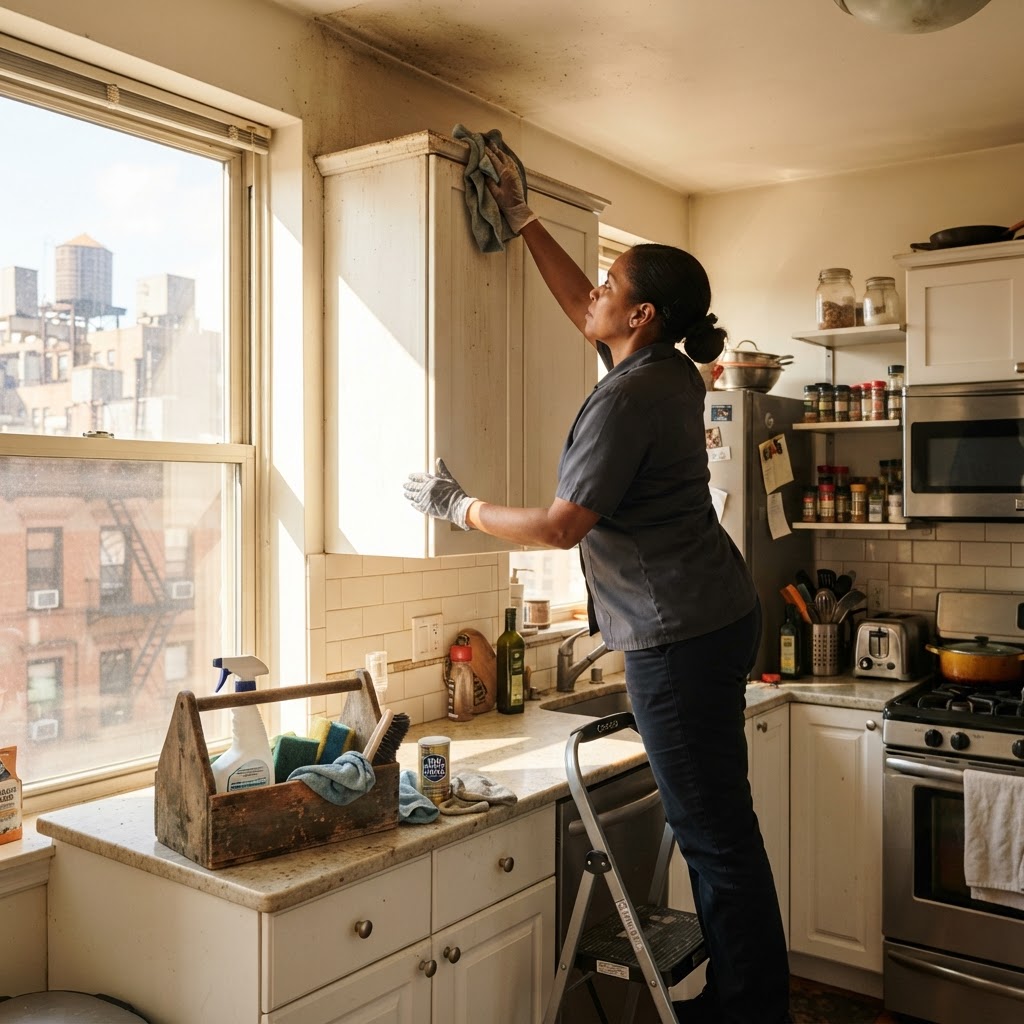
Learning how to clean top of kitchen cabinets is not just about aesthetics. It is a vital maintenance step that prevents pests and keeps your ventilation clear. When you tackle this task every few months, you avoid the nightmare of scrubbing hardened, years-old grease that may eventually require a full deep cleaning to resolve properly.
The Proper Technique for Grease Removal
Before you reach for heavy-duty chemicals, remember that many NYC apartments have delicate, older cabinets that react poorly to harsh solvents. Start with the basics. You need a sturdy step stool, a plastic scraper or a stiff-bristled nylon brush, and a grease-cutting dish soap. If you are struggling with a particularly stubborn layer, you can use a mixture of warm water, a splash of white vinegar, and a drop of dish soap.
Protecting the surface while you clean
Apply your cleaning solution sparingly. You want to soften the grease, not soak the wood or laminate. Work in small sections, letting the solution sit for about thirty seconds. Use your nylon brush to gently lift the buildup before wiping it away with a microfiber cloth. Avoid steel wool or heavy abrasive pads, as these will ruin the finish of your cabinetry. If you find yourself needing a total refresh before a lease ends, you might want to look into our move-out cleaning options to handle the heavy lifting.
The sequence of an effective scrub
Start by dusting the area with a dry cloth to remove loose debris. If you skip this, the dust turns to paste. Mix one part dish soap with four parts warm water in a spray bottle. Mist a twelve-inch section and wait sixty seconds for the saponification process to break the bonds of the oil. Use a plastic putty knife to gently lift thick clumps, taking care to avoid gouging the wood. Follow up with a damp cloth, rinsing it frequently in hot water to remove the oily residue. Always finish by drying the surface with a clean towel to prevent water spots.
Preventive measures for NYC kitchens
Once the tops are pristine, keep them that way. Many New Yorkers line the tops of their cabinets with wax paper or parchment paper. This creates a sacrificial layer that you can simply replace every few months. It saves you from having to scrub the wood directly. If you have an open-concept kitchen where the top of the cabinet is visible, stick to a regular dusting schedule with a dry microfiber cloth to prevent the initial accumulation of debris. For ongoing maintenance of your entire kitchen space, you can always book house cleaning to keep things in top shape.
Navigating NYC Building Constraints
Space is the ultimate luxury in New York City. Many pre-war buildings feature cabinets that stop a foot or more below the ceiling, creating an exposed ledge that serves as a magnet for grime. Because these spaces are often narrow or cramped, you must assess the stability of your step stool before beginning. Never stand on a kitchen chair or a countertop. If your building has tight vertical clearances, consider using a long-handled extension pole with a flat mop head attached to a microfiber pad to reach the back corners safely.
Always check for signs of moisture near ceiling corners or vents. If you notice persistent dampness or mold behind the cabinets, stop cleaning and inspect for leaks. Persistent moisture can swell cabinet materials and lead to permanent warping. If the issue is related to building-wide ventilation, ensure your range hood filter is clean, as a clogged mesh screen forces more grease into the open air of your kitchen, which eventually deposits itself on the cabinet tops.
Long-Term Maintenance and Cost Factors
Regularly scheduled cleaning prevents the grease from hardening into a lacquer that can damage the wood grain. If the grime is left for years, the chemicals in the oil can actually strip or discolor the factory finish, which may necessitate a professional refinishing service. While professional cleaning represents an initial cost, it is significantly cheaper than the price of cabinet replacement or touch-up painting in a high-demand market like New York.
Establish a seasonal rhythm for this task. Aligning your cabinet cleaning with other semi-annual chores, such as flipping your mattress or cleaning the refrigerator coils, makes the habit stick. If your kitchen layout makes accessing these heights physically taxing or dangerous due to narrow walkways, do not hesitate to delegate the task. Consistent maintenance preserves the value of your fixtures and ensures your kitchen remains a sanitary space for food preparation.
When the Task Becomes a Project
Sometimes, the grease buildup is so severe that it has penetrated the finish or attracted debris that is impossible to move without damaging the material. If you have a massive amount of junk accumulated on top of your cabinets or need a larger overhaul, you might consider professional assistance. If the mess is part of a larger cleanup, we can help you book junk removal to clear out the excess items that make these spaces hard to reach. If you are exhausted after trying to reach those tight, high spots in a walk-up or a cramped kitchen, just call us to handle the deep scrubbing.
Frequently Asked Questions
How often should I clean the top of my kitchen cabinets?
In a typical NYC kitchen, we recommend a wipe-down every three months. If you fry food often or have poor ventilation, you should check them once a month to prevent thick grease from setting in.
Can I use harsh chemicals to remove old, hard grease?
Avoid harsh solvents or ammonia-based cleaners, as these can strip the varnish or stain off your cabinets. Stick to a mixture of grease-cutting dish soap and warm water, or a gentle degreaser designed for wood.
What if the grease has already damaged the cabinet finish?
If the finish is damaged, cleaning will only reveal the underlying issue. In this case, you might need a refinishing service or a professional touch-up rather than just a deep clean.
Book help in New York
We provide professional cleaning and maintenance services across all five boroughs, Long Island, Westchester, New Jersey, and Connecticut. Let us handle the tough spots in your apartment so you can focus on enjoying your home. Visit our house cleaning service page to get started.