
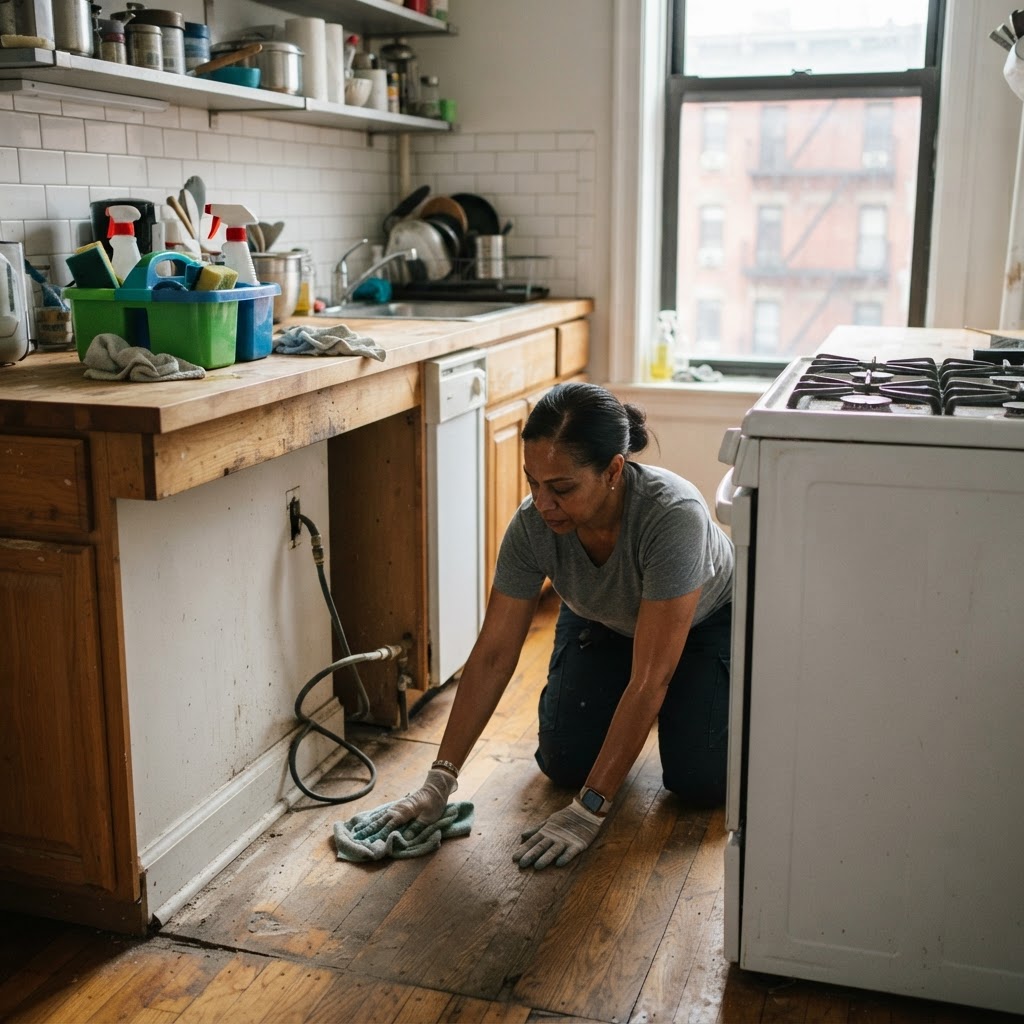
Getting Started Safely
You do not need to pull out your refrigerator every week, but ignoring the space behind it is an open invitation for NYC dust bunnies and pests. To clean behind appliances safely, you must prioritize moving them without damaging your floor or scratching your cabinetry. Always check for tight clearances in your kitchen, especially if you live in a pre-war building with uneven floors or narrow doorways. Measure the gap between your cabinets and the fridge doors to ensure you have a clear path for exit. If the appliance width is greater than 30 inches, maneuvering in a tight galley kitchen requires extreme precision.
Before you begin, disconnect the power. For refrigerators, turn off the water line if it has an ice maker. Use a furniture dolly or heavy-duty sliders under the feet to prevent gouging your linoleum or hardwood. If the unit feels unstable, stop immediately. Check that the leveling feet are retracted enough to clear the floor trim. If you need a deep scrub that reaches every corner, you can book a deep cleaning NYC to ensure no spot is missed.
Tools for Tight Spaces
Most NYC kitchens are small, meaning you have very little room to maneuver. You do not need industrial gear. A long, flat vacuum attachment is your best friend here. If you cannot pull the appliance out more than a few inches, a stiff coil brush can reach the cooling coils on the back of the fridge. Removing dust from these coils not only improves hygiene but actually helps your refrigerator run more efficiently. Keep a flashlight handy, as the area behind the fridge is often dark and home to accumulated debris or dropped hardware.
For the floors, a mixture of hot water and a mild detergent works for most surfaces. Be careful not to use too much water, as it can seep under cabinets or into your floorboards, potentially causing warping in older brownstones. Use a spray bottle to dampen the cloth rather than a bucket to prevent pooling. If you find significant debris or broken items behind the units, you might need to book junk removal to handle the haul away for you.
Clearing Behind the Stove
The stove is usually the greasiest area in the house. Food particles, oil splatter, and crumbs fall through the thin gap between the stove and the counter. Pulling the range out requires steady hands. If it is a gas range, be extremely careful with the yellow flex line. Do not stretch or kink this pipe. If you feel resistance, do not force it. Ensure the stovetop is completely cool for at least two hours before attempting to move the unit to avoid burns.
Once the stove is moved, vacuum the area thoroughly before using a degreaser. The walls behind the stove often trap layers of old grease that can attract roaches. Use a heavy-duty degreaser specifically rated for kitchen use. Apply, let sit for five minutes, and scrub with a nylon-bristled brush. Rinse with a damp cloth. If the buildup is years old or you are preparing for an inspection, house cleaning service pros can help you get the job done right.
Maintaining the Fridge Area
Refrigerators in city apartments often sit on small wheels or adjustable feet. Make sure you know how to unlock the wheels before you pull. Once the fridge is moved, you will likely find dust matted into the condenser coils. Use a vacuum hose or a specialized coil brush to pull this dust away. Do not use a wet cloth on the coils, as this can cause corrosion. If the coils are particularly dirty, a canned air duster can help dislodge debris trapped in the inner fins.
Navigating Building Rules and Timing
When working in New York apartment buildings, time is often your greatest constraint. Many co-op and condo boards have strict rules regarding the hours during which you can perform heavy labor or create excessive noise. Always check your house rules before dragging a refrigerator across your floor, as vibration or heavy thumping can disturb neighbors below. Aim for mid-morning on a weekday when most residents are away at work to avoid complaints.
Additionally, some buildings require a certificate of insurance from any professional labor you hire. If you are hiring out the cleaning or maintenance, confirm their documentation aligns with building requirements. If your kitchen layout requires removing a door or complex maneuvering through a narrow vestibule, verify that the path is clear of hallway obstacles to avoid liability issues. Taking these precautions saves time and protects your relationship with building management.
Cost Drivers and Maintenance Tips
Labor costs for appliance maintenance in NYC are influenced by the complexity of the unit and the difficulty of access. If your fridge has a complicated water line or is built into custom cabinetry, the time required to move it safely will increase. Routine maintenance such as cleaning the coils every six months can prevent compressor failure. A failed compressor is a major expense, often requiring a professional technician or a complete unit replacement.
Keep a log of when you last cleared the floor behind your appliances. Prevention is cheaper than professional cleaning. By consistently wiping down the sides of the stove and keeping the floor clear, you prevent the buildup of grease that becomes much harder to remove over time. If you notice a persistent smell or recurring pests after a deep clean, it may indicate a deeper issue with wall seals that a maintenance professional should inspect.
When to Call a Pro
There is a point where manual labor becomes a liability. If your appliances are hardwired into the wall, or if your gas line is fixed without a flex pipe, you should not attempt to move them yourself. Additionally, if you are nearing the end of your lease and need the kitchen to look pristine to protect your deposit, it is better to hire professionals for a move-out cleaning rather than risking damage to the property.
Professional cleaners are equipped to handle the heavy lifting and the specific cleaning agents required for rental units. If your appliances are malfunctioning or you find damage to the floor underneath, you may need a handyman. Handyman services are available at $85/hour for those small repairs that come up once you finally see what has been hiding under your appliances for years.
Frequently Asked Questions
Is it safe to pull out a gas stove myself?
It is generally safe if the stove has a flexible gas line, but you must move it slowly to avoid kinking the pipe. If the connection is rigid or you feel any resistance, stop immediately to prevent a gas leak and call a professional.
How often should I clean behind the refrigerator?
Aim to clean behind your refrigerator every six months. This frequency is enough to prevent heavy dust accumulation on the condenser coils and keep the area free of food debris that might attract pests.
Can I move a refrigerator by myself?
Moving a refrigerator is physically demanding and poses a risk of scratching floors or hurting your back. It is best to use a partner or furniture sliders, but if you are unsure about the weight or the appliance size, consider hiring professional labor.
Book help in New York
If you need help with deep cleaning or preparing your kitchen for a move, our team is ready to assist. You can schedule your appointment through our house cleaning service page to get started.