
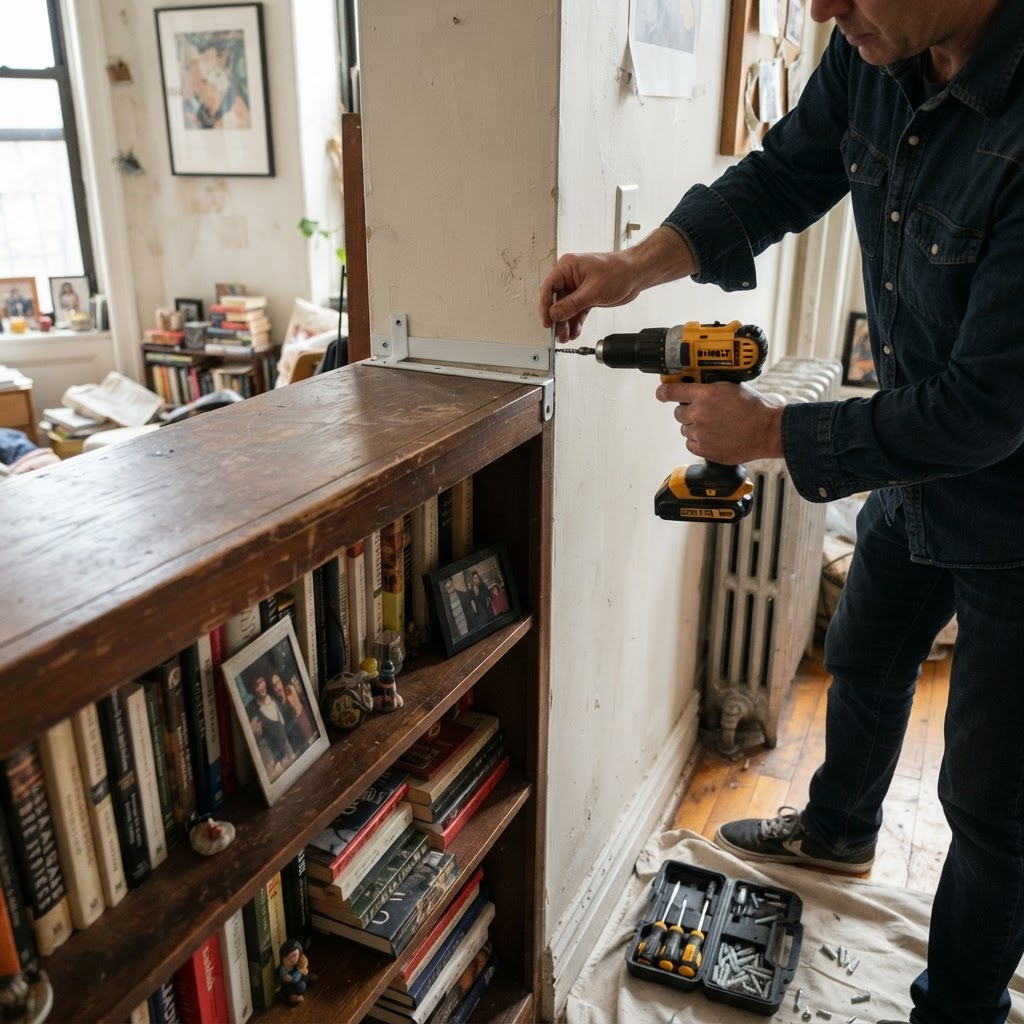
If you have kids, pets, or just a collection of heavy hardcovers, you need to anchor bookcase to wall structures. In a city where floors are rarely perfectly level and buildings often shift, a tall, top-heavy piece of furniture is a liability. It takes about 20 minutes to prevent a dangerous tip-over accident. While many people overlook this step, furniture tipping is a leading cause of home injuries that is entirely preventable with proper hardware and a small time investment.
The Tools You Need for Success
You do not need a massive toolbox, but you do need the right hardware. Most bookshelves come with a basic kit, but in NYC, those plastic straps are often flimsy. Pick up a high-quality furniture anti-tip kit from a hardware store. These often include steel cables or rigid metal brackets. You will also need a stud finder, a power drill, a level, and a set of quality drill bits. Before you start, check your wall type. If you live in a pre-war building with lath and plaster, anchoring is more difficult than in modern drywall construction. The plaster is often thick and brittle, which can cause the wall to crumble if you do not use the right anchor. If you have fragile materials, you might decide that the risk of DIY damage is too high. If you are not confident, you can always book a handyman to handle the job correctly.
Finding the Studs
Your furniture must be anchored into wood studs, not just the plaster or drywall. In New York apartments, studs are typically spaced 16 inches apart. Use your stud finder to locate them behind the bookshelf. If the unit does not align with your studs, you may need to use heavy-duty toggle bolts, which hold better in older, hollow-walled buildings. When searching for studs, slide the device slowly across the wall. If you hear a consistent signal, mark the center of the stud with a pencil. In older NYC buildings, watch out for electrical wires running vertically along studs. If you are struggling with the layout of your room, you might consider professional book a handyman services to ensure the job is safe. A pro knows exactly how to navigate different wall compositions in brownstones versus high-rises.
Drilling and Securing Position the bookshelf where you want it to live.
Use a level to ensure it is not leaning forward. If your floors are slanted, you might need shims under the front legs to keep the unit stable before you even start drilling. Once it is level, attach the metal brackets to the top of the bookshelf and then to the wall stud using the screws provided in your kit. If you are using a drill, start with a pilot hole slightly smaller than your screw diameter. This prevents the wood of the bookcase from splitting and helps the screw bite into the stud behind the plaster. Tighten until the bracket is flush, but do not overtighten to the point where you strip the screw or the wall material. If you find the assembly process is frustrating or if you are working with complex, high-end pieces, book furniture assembly to have it handled by someone who does this daily. They can ensure that both the building and the furniture remain in pristine condition.
NYC Building
Rules and Regulations Living in a city building means you have to play by the rules of your management or condo board.
Before you start drilling into walls in a rented apartment or a co-op, check your lease agreement. Some buildings require you to patch and paint nail or screw holes when you eventually move out. If you live in a high-rise with metal studs instead of wood, standard wood screws will not work. You will need self-tapping metal screws or specific toggle anchors to ensure the bookcase stays firmly attached. Always prioritize the structural integrity of the wall over the ease of the installation. If you are unsure about the specific requirements of your building regarding wall alterations, ask your super or building manager before you pick up the drill.
Managing Maintenance
After the Install Once the work is done, do not just forget about the installation. Check the hardware every six months, especially in buildings that tend to vibrate from subway lines or construction nearby. Over time, wood can expand or contract with the seasonal humidity common in New York, which might loosen the screws. Gently pull on the top of the bookcase to feel if there is any play or movement. If the bookshelf wiggles, tighten the screws slightly, but ensure you are not creating a new, larger hole in the drywall. If the furniture feels loose, consider adding an extra anchor point toward the middle of the unit for better weight distribution. Keeping these connections tight ensures your home remains a safe environment for everyone.
When DIY Becomes Risky
There are times when a simple DIY project becomes a headache. If you live in a co-op or condo, some buildings have strict rules about what you can hang on walls. Damaging high-end finishes or hitting a hidden pipe in a pre-war wall can lead to costly repairs. Additionally, if you have a massive media center that requires specialized mounting, it is often safer to rely on book TV mounting professionals who have the right equipment for brick, concrete, or metal-framed walls. Also, consider your time. If you have multiple units to secure or a complicated smart home setup that requires precise positioning, the value of your own time might exceed the cost of professional labor. For anything involving delicate electronics, remember you can book tech setup for a clean, worry-free installation.
Frequently Asked Questions
Do I really need to anchor a small bookshelf?
Yes. Even small bookshelves can be dangerous if a child tries to climb them or if you live in a building that experiences vibrations from nearby trains. It is a simple safety measure that prevents serious injuries.
What if I cannot find a stud in the wall?
If you cannot find a stud, you should use heavy-duty toggle bolts appropriate for your wall material. Avoid using basic plastic anchors as they are not reliable for heavy furniture that could tip over in a shifting building.
Can I anchor a bookcase to a brick wall?
Yes, but you will need a masonry drill bit and specialized wall anchors designed for brick or concrete. This process is significantly more involved than drilling into drywall, so ensure you have the correct tools.
Book help in
New York If you would rather skip the stress of drilling into your walls, our professional team is ready to assist. You can book a handyman today to get your furniture secured safely and efficiently.