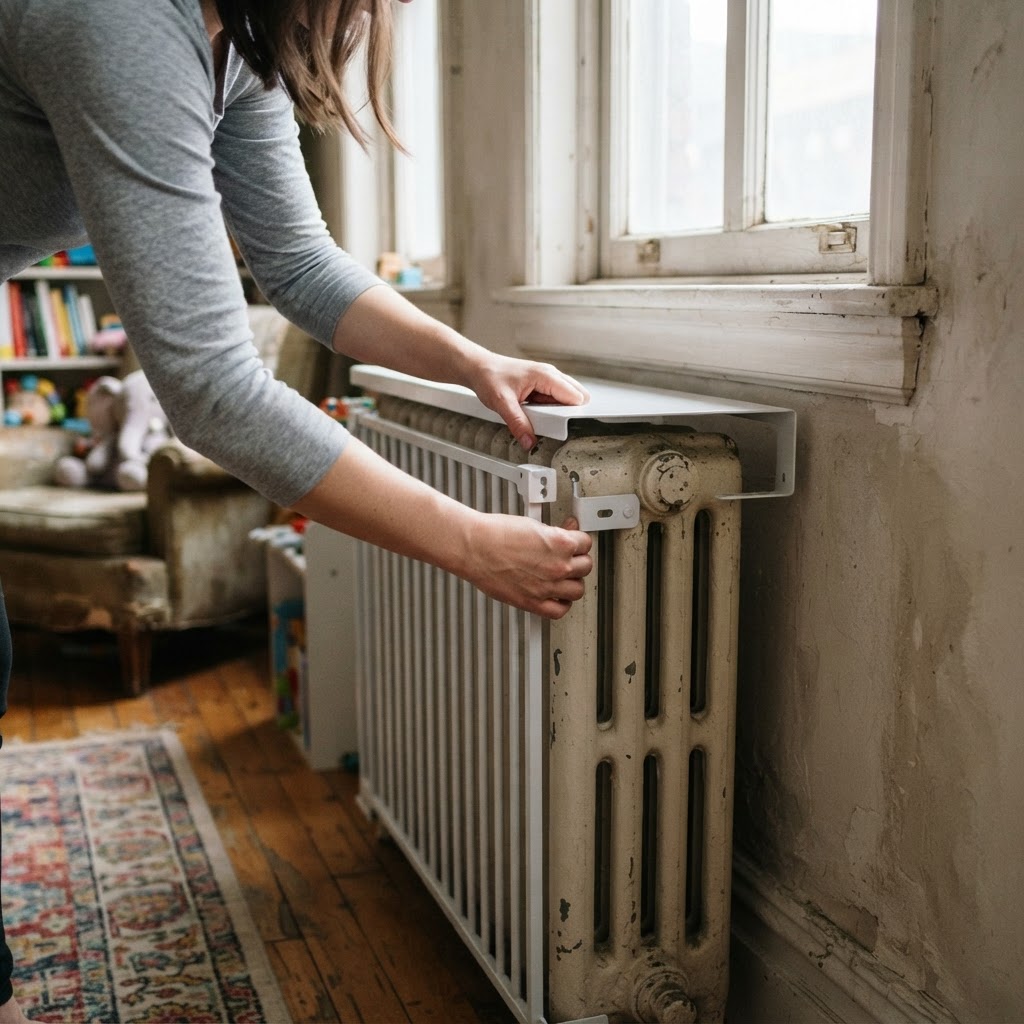
Living in a classic NYC pre-war building has its charm, but exposed steam radiators are a major safety hazard for toddlers. Between the scalding metal and the sharp edges, these units require immediate attention once your baby starts crawling. The goal is to create a physical barrier that prevents direct contact while allowing heat to circulate properly through your space.
Understanding your radiator limitations
Before you head to the hardware store, evaluate the type of radiator in your apartment. Cast iron radiators in buildings across Brooklyn, Queens, or Manhattan often have unique dimensions and irregular pipe placements. You must avoid blocking the valves or the air vent, as this can cause your radiator to malfunction, leak, or fail to produce heat. Check for the air valve, which is usually a small cylindrical object on the side of the radiator. This must remain completely exposed to ensure the unit functions safely. If you notice a hissing sound or water dripping, do not attempt to cover the unit until these plumbing issues are resolved.
Check if you are permitted to drill into your floor or baseboards. Most rental agreements, especially in co-ops and condos, have strict rules regarding modifications to the apartment. If you cannot drill, you must focus on weighted, free-standing solutions that remain stable even if a child leans against them. If you feel overwhelmed by these restrictions, you can always book a handyman to evaluate your specific setup.
Choosing the right materials
When researching radiator baby proofing, focus on heat-resistant materials. Standard plastic baby gates are often not rated for direct, prolonged exposure to the high temperatures of steam heat, which can cause them to warp or off-gas toxic fumes. Look for powder-coated steel or metal fireplace screens that are specifically designed to withstand high heat. Ensure the finish is non-toxic and chip-resistant, as curious toddlers may mouth or pick at the surface.
Measure the full footprint of your unit, including the pipes that extend to the floor or wall. You want a gap of at least six inches between the radiator surface and the protective barrier to ensure proper airflow. If your radiator is part of a larger project involving new furniture or child-safe nursery storage, you might consider booking furniture assembly to ensure all heavy items are anchored correctly to the walls. For the best airflow, prioritize screens that have an open-mesh design rather than solid panels, as trapped heat can damage your walls or nearby floorboards.
Installation techniques for renters
If your landlord allows it, a custom radiator cover is the safest and most effective solution. These can be crafted to fit the exact dimensions of your unit and provide a sturdy barrier. However, in many apartments, the radiator is tucked into a corner or beneath a low window, making a custom cover difficult to install. If you choose a custom wood-metal hybrid, ensure there is a thermal break or insulation barrier on the inside to prevent the exterior from becoming hot to the touch.
For a DIY approach, use heavy-duty, floor-mounted fireplace screens. These units are heavy enough to stay in place without wall anchors. Ensure the mesh is fine enough that little fingers cannot reach through to touch the hot iron. If you need assistance moving heavy equipment into position or ensuring your wall decor is safe, you might prefer booking TV mounting to get bulky items off the floor and out of reach. Check the weight of your screen carefully; it should be heavy enough that a toddler cannot push it over by pulling on the top edge.
Navigating building rules and management
In New York City, your lease may dictate what kind of physical changes you can make to your apartment. Many landlords prohibit drilling into hardwood floors or stone tiles. Before you install any anchor-based safety gate, send a brief email to your building manager or superintendent. Requesting permission in writing protects your security deposit. Most management companies prefer non-permanent solutions that do not leave behind unsightly holes or damage to the building infrastructure.
If your building requires that all radiator covers be fire-rated, you may need to provide documentation from the manufacturer. Always keep a copy of the product specifications. If you are in a building with very old pipes that tend to leak, ensure your chosen barrier is easily removable. You need to be able to access the radiator quickly if you need to bleed the valve or shut off a leaking pipe during an emergency.
Maintaining your setup throughout the season
Once the heating season begins in October, your radiator protection needs regular attention. Check the stability of your barriers weekly. As the pipes expand and contract with the intense NYC steam heat, the floor beneath your radiator might shift slightly. This can cause free-standing screens to become uneven or wobble. Re-tighten any hardware and inspect the paint or coating on your protective screen for signs of blistering or peeling.
Do not store toys, papers, or blankets near the radiator behind the screen. It is tempting to use the area near the radiator for storage in small apartments, but this poses a significant fire hazard. Keep at least twelve inches of clearance around the base of the radiator to allow cool air to pull into the unit. If you detect a strong odor of burning dust or metal when the heat first turns on, wipe the unit down with a damp cloth to clear away accumulated debris, but ensure it is completely cool before starting.
When to call a professional
DIY radiator protection is suitable for standard, free-standing units. However, if your radiator is plumbed in a way that makes it impossible to place a barrier without blocking the pipe or valve, do not attempt to force a fit. You also need professional help if you have a radiator that is unusually tall or located in a tight, awkward space that requires custom mounting.
If you are worried about your tech gear near a heat source, professional tech setup can ensure your routers and power cables are routed safely away from the radiator, reducing both heat damage and fire risks. For expert help, a professional can install protective barriers securely in under an hour, ensuring you remain within your building's safety standards and lease agreements.
Frequently Asked Questions
Can I use wood to cover my radiator?
It is generally not recommended to use wood for radiator covers. Steam radiators reach temperatures that can dry out, warp, or even scorch wood over time, creating a fire hazard in your apartment.
Should I block the air vent for better baby proofing?
Never block the air vent or the radiator valve. These components are essential for the unit to heat your apartment properly and to prevent steam buildup that could lead to dangerous leaks or pipe bursts.
Will a heavy screen stay in place if my child pulls on it?
Standard fireplace screens may tip over if a child pulls on them. Ensure your chosen barrier is heavy, wide-based, or secured according to building rules to prevent it from collapsing onto your child.
Book help in New York
If you need professional assistance to secure your home or handle complex installations, we are here to help. You can easily book a handyman to assist with your safety projects today.