
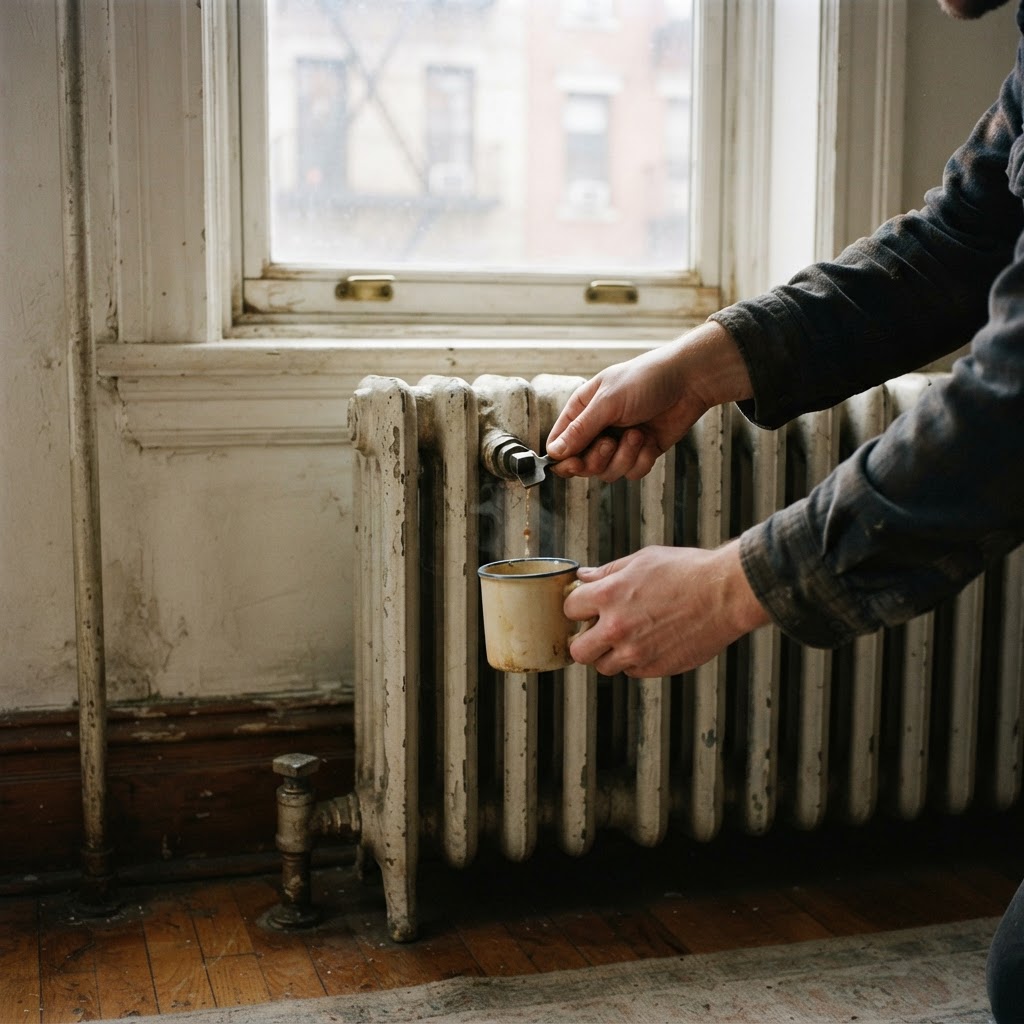
Why your radiator stays cold
If you live in a pre-war apartment in Manhattan or a classic Brooklyn brownstone, you know the struggle of inconsistent steam heat. When your radiator is clanking or staying cold at the top, it usually means trapped air is preventing steam from circulating. You can often bleed a radiator yourself to release that air, which helps the system run more efficiently. If the issue is a stuck valve or a major leak, however, you should stop and book a handyman to avoid damaging the building's infrastructure. Steam heat relies on a cycle of condensation and pressure, and when air pockets form, the steam cannot reach the fins, leaving your living room freezing while the building boiler runs overtime.
Tools you need for the job
Before you start, check your radiator valves. You will need a radiator key or a flat-head screwdriver, depending on the age of your hardware. Since pre-war buildings often have unique valves, inspect yours closely first. Have a small bucket and an old rag ready to catch the water that might spit out. If you find the valve is painted shut or too stiff to turn, do not force it. You might snap the valve stem, which can cause a major leak that requires immediate professional repair. In that case, prioritize your safety and call for help. Using a lubricant like a light penetrating oil may help if the screw is slightly corroded, but never use aggressive solvents that could damage the valve gaskets.
Preparing to release trapped air
First, make sure the heat is off or the room is cool. Dealing with live steam is dangerous and can cause severe burns. Locate the air vent valve, which is typically at the opposite end from the pipe that supplies the steam. If you have been doing other home projects, such as when you book furniture assembly, keep your tools organized so you do not lose the small key in a tight NYC apartment corner. Place your rag and container directly under the valve. If your radiator is installed on an angle, you may need to shim the feet slightly to ensure the air vents toward the valve side rather than pooling in the center of the unit.
The bleeding process
Slowly turn the key or screwdriver counter-clockwise just a quarter turn. You should hear a hissing sound as the air escapes. Keep the rag pressed firmly against the opening. Once you see a steady stream of water instead of hissing air, the trap is clear. Immediately tighten the valve clockwise until it is snug but not overtightened. If the radiator continues to stay cold after this process, there may be a deeper issue with the building thermostat or your radiator trap, which is best left to a professional. Ensure the air vent itself is not clogged with paint or debris, as these vents often fail over time and require a simple replacement rather than a full system flush.
Understanding building-wide heat issues
In many NYC buildings, the radiator in your apartment is just one part of a larger, interconnected loop. If you have bled your radiator and the unit remains ice cold, check the supply valve at the base of the unit. This large knob, usually made of cast iron or brass, should be fully open. Turning it halfway can cause water hammer, which creates loud banging noises as steam collides with condensed water. If your neighbors are also experiencing cold radiators, the issue is likely a faulty boiler or a broken steam trap in the basement level. In these instances, individual apartment repairs will not solve the lack of heat, and you should coordinate with your building superintendent.
Maintenance and long-term care
To keep your heating system running efficiently throughout the winter, try to keep the area around your radiator clear. Avoid placing heavy curtains, upholstered furniture, or wooden covers directly against the metal fins. These items block convective airflow and effectively insulate the radiator, preventing it from heating your room. Additionally, inspect the connection point where the pipe enters the floor. If you notice persistent staining on the ceiling of your downstairs neighbor, you may have a slow pinhole leak in your piping. Addressing these small issues early prevents emergency damage to flooring and ceilings, saving you significant money and stress during the colder months when parts for steam systems become harder to source.
When to call a professional
While bleeding a radiator is a straightforward task, older apartments in NYC have delicate systems. If you notice persistent leaks, excessive rust, or if the valve will not budge, you risk a costly flood that could impact your neighbors. Our pros handle these repairs regularly, along with TV mounting and tech setup. If you are struggling with home maintenance or other repairs, keep in mind that our handyman services are billed at $85/hour. It is often worth the cost to have a professional ensure the job is done without creating a larger headache.
Frequently Asked Questions
How do I know if I need to bleed my radiator?
If the top of your radiator remains cold while the bottom is hot, trapped air is likely preventing heat circulation. If the entire radiator is cold, the issue might be the building boiler or a closed supply valve rather than trapped air.
Is it safe to bleed a radiator in a co-op?
Generally yes, but always check your building rules first. Some co-ops or condos have specific restrictions on adjusting heating elements, so it is best to confirm you have permission before starting.
Can I damage my radiator by doing this?
Yes, if you force a stuck valve or use the wrong tool, you can break the valve or strip the screw. If the valve does not turn with gentle pressure, stop immediately and contact a professional handyman to avoid a serious leak.
Book help in New York
If you are not comfortable managing your apartment heating or need assistance with other repairs, our team is ready to help across the boroughs. You can book a handyman through our website to handle your radiator issues and other maintenance tasks.