
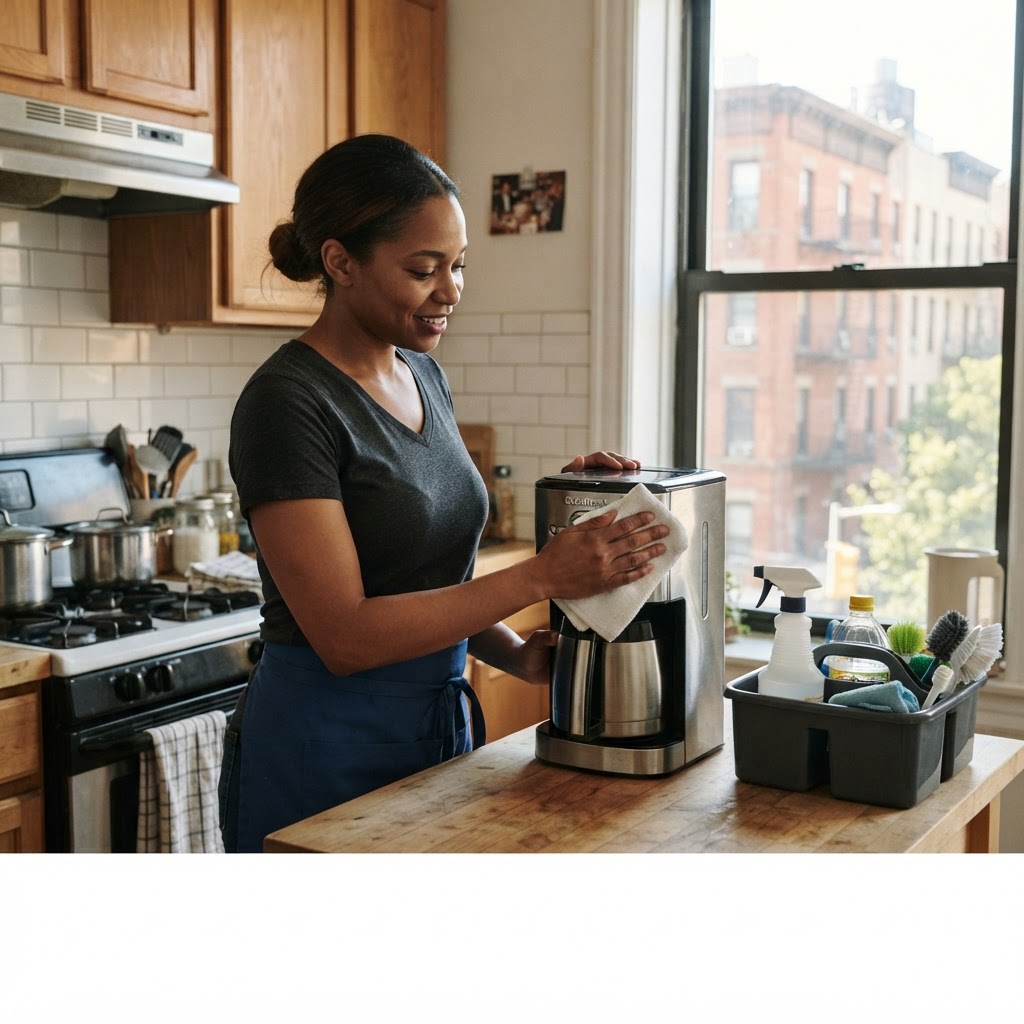
To clean a coffee maker properly, you need a mixture of white vinegar and water to descale the mineral buildup caused by the city's tap water. Running this solution through your machine every month breaks down lime deposits that affect flavor and heating performance. While the process seems simple, the difference in coffee quality is immediate and noticeable. A clean machine delivers a hotter cup with a cleaner taste profile that does not carry those bitter, burnt undertones caused by old residue.
Why Your Coffee Machine Needs Regular Care
New York City tap water is famously soft, but over time, minerals still accumulate inside internal tubes. If you notice your coffee taking longer to brew or coming out lukewarm, scale is likely clogging the heating element. Neglecting this leads to bacteria buildup in the reservoir, which no one wants in their morning cup. Over time, the buildup of calcium and magnesium creates a calcified layer that acts as an insulator. This forces the heating element to work harder for longer periods, which eventually causes internal thermal fuses to trip or wires to overheat in your machine.
The Descaling Process
Start by emptying the carafe and removing the filter. Fill the reservoir with a 1:1 ratio of white vinegar and water. Use roughly two cups of white distilled vinegar and two cups of cold water for a standard twelve-cup machine. Start a brew cycle, but pause it halfway through for 30 minutes to let the solution soak into the pipes. This dwell time is critical because the acid needs time to chemically react with the mineral deposits to dissolve them into a liquid state.
After the soak, finish the cycle. Once the reservoir is empty, rinse the carafe thoroughly with dish soap and warm water. Run two additional cycles with plain, filtered water to remove any lingering vinegar taste. If you still smell vinegar, perform a third rinse cycle. This simple routine prevents long-term hardware failure in your small city apartment and extends the lifespan of your appliance by several years.
Navigating New York Kitchen Rules and Maintenance
Living in a New York City apartment often means working with older plumbing and compact kitchens. When performing maintenance on kitchen appliances, keep in mind that many pre-war buildings have delicate pipes. When you descale your machine, pour the used vinegar solution down the drain slowly rather than dumping it all at once. This prevents excessive acidity from splashing onto metal fixtures or damaging aging sink traps. Always dispose of the rinse water into the sink while running the cold water tap to dilute the acidic residue immediately.
Additionally, consider the layout of your counter space. Many apartment dwellers keep their coffee makers under low-hanging cabinets. Steam from the brewing process can cause the laminate or wood veneer on these cabinets to peel over time. Move your machine toward the edge of the counter during the cleaning process to ensure that steam and moisture do not compromise your cabinetry. Periodic inspections of the outlet behind your appliance are also wise, as high-draw heating elements can cause minor sparks or discoloration if the wiring is outdated or loose.
Cost Drivers and Maintenance Scheduling
Maintaining your appliances is a major factor in the overall cost of home upkeep. In a city where buying new appliances often requires coordinating with building management or freight elevators, keeping your current machine running is a smart financial strategy. The cost of a bottle of vinegar is negligible compared to the cost of a replacement machine. Establishing a consistent schedule, such as every first Saturday of the month, helps you avoid the reactive cost of emergency repairs or replacements.
Beyond basic descaling, keeping your kitchen clean prevents secondary issues like mold and pests. In tight spaces like a West Village studio or a Queens walk-up, cleanliness is key to managing odors. If you are dealing with a larger kitchen cleanup after a move or a renovation, it is often easier to rely on professional deep cleaning services to ensure every surface is handled safely. Managing small appliances is just one part of keeping your home environment healthy.
When to Call a Professional
Sometimes, maintenance goes beyond coffee makers. If your kitchen faucet is leaking or you are struggling with heavy appliance installations, DIY might not be enough. If you are preparing your place for a new tenant, you might need a move-out cleaning to ensure the kitchen is pristine. For those struggling to keep up with the demands of an apartment, our house cleaning service can handle the detailed work, leaving you more time for your day. If you have broken or outdated appliances taking up valuable floor space, you can also book junk removal to clear your kitchen and storage areas.
Frequently Asked Questions
How often should I descale my coffee machine?
If you use your coffee maker every single day, you should aim to descale it once a month. In areas with harder water, you might notice buildup faster and need to adjust your schedule to every three weeks.
Can I use lemon juice instead of vinegar?
Yes, lemon juice is an effective acidic alternative if you dislike the smell of vinegar. Mix it with equal parts water and follow the same brewing and rinsing procedure as you would with vinegar.
Is it necessary to wash the carafe daily?
Yes, washing the carafe with warm soapy water after every use prevents oil buildup. Coffee oils turn rancid quickly, which will negatively impact the taste of your next pot.
Book help in New York
If your home needs a deep refresh or you need help with apartment maintenance, our team is ready to assist. Visit our house cleaning service page to view availability and get your home back in order.