
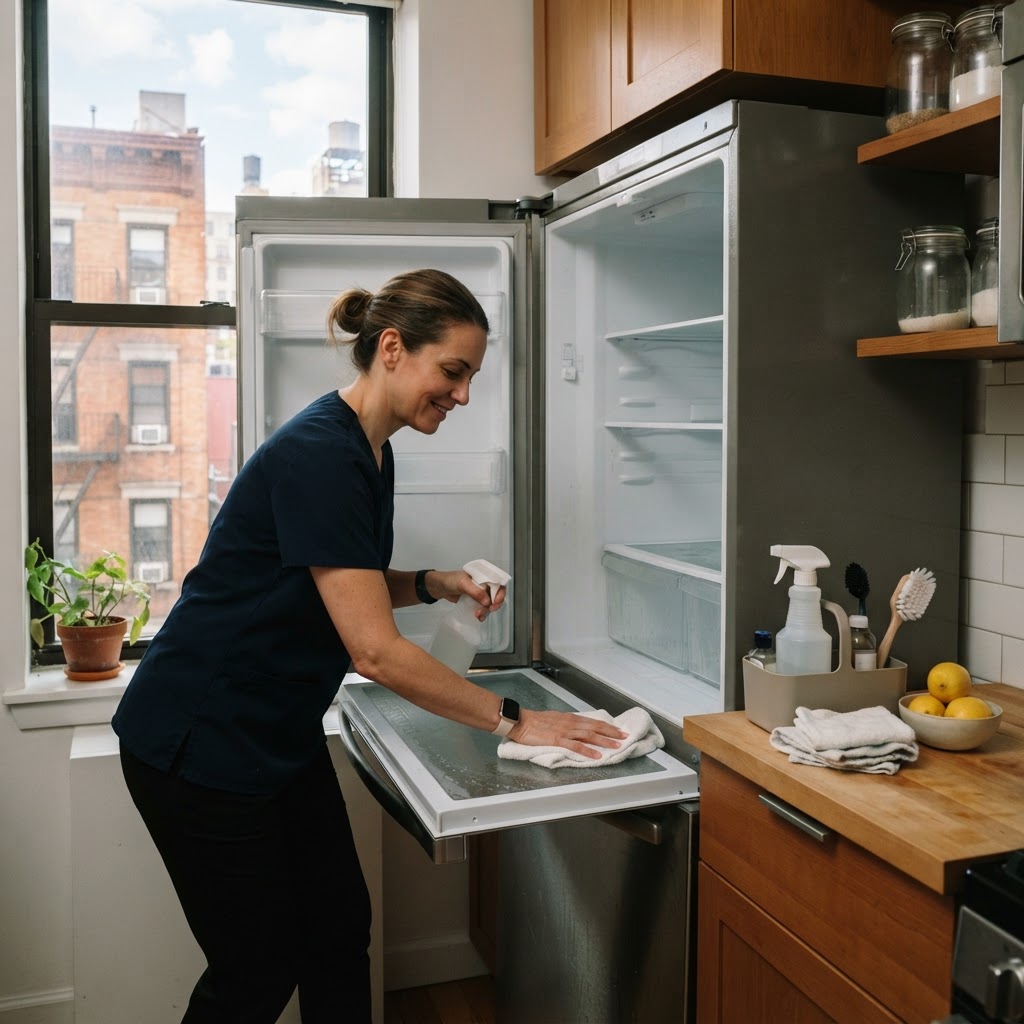
A clean refrigerator is the heart of a functional NYC kitchen. Whether you are dealing with a compact fridge in a pre-war walk-up or a larger unit in a luxury high-rise, regular maintenance is the key to preventing mechanical strain and unpleasant odors. If you notice persistent smells or thick frost buildup, it is time for a thorough refresh. If the task feels overwhelming, our professionals provide expert house cleaning services to help you reclaim your kitchen space.
The Professional Sequence to Clean Refrigerator Units
Before you start, gather your supplies: a mild dish soap, warm water, a microfiber cloth, a soft-bristled brush, and a handheld vacuum. Avoid harsh chemical cleaners, as these can leave residues that affect food safety. If you have a stainless steel finish, avoid abrasive sponges or steel wool that might cause visible scratches. Preparation is key to avoiding a messy kitchen disaster.
Clearing and Sorting
Start by unplugging the unit if you plan to do a deep scrub. Remove all perishable items and check expiration dates carefully. If you are preparing for a move, this is the perfect time to book a specialized move-out cleaning to ensure you leave your rental in pristine condition. Discard anything that has been in the back of the fridge for months. Place remaining items in a cooler bag to keep them cold while you work. Group items by category to make the reloading process more efficient.
Cleaning Shelves and Drawers
Remove all removable parts, including glass shelves and crisper drawers. Wash them in your sink with warm, soapy water. If the shelves are cold, let them reach room temperature before putting them in hot water to prevent cracking the glass. Use a soft-bristled brush to reach the crevices in plastic drawer tracks. While these dry, wipe down the interior walls using a mixture of water and mild soap. If you find deep grime that requires extra attention, our team offers a professional deep cleaning service that handles these stubborn spots.
Maintenance Tasks That Prevent Future Repairs
The exterior and the unseen components of your fridge are just as important as the interior. Dust on the condenser coils can force your motor to work harder, shortening the lifespan of your appliance. In many NYC apartments, these coils are located behind a kick plate at the bottom. Use a vacuum attachment with a brush head to remove pet hair and thick dust buildup at least once every six months.
Cleaning Door Seals
The rubber gaskets around your doors are responsible for keeping the cold air inside. Crumbs and sticky spills here can prevent a tight seal, leading to energy waste. Wipe these down with a damp cloth and mild soap. If the gasket is brittle, apply a thin layer of petroleum jelly to keep the rubber supple. If you notice the door is not closing tightly, it may be time for a minor adjustment, which is a task our handyman team handles regularly.
Addressing the Drip Pan
Most refrigerators have a drip pan located underneath. If you notice an odd smell in your kitchen, this pan may be the culprit. It can collect moisture and harbor mold over time. Carefully slide the pan out, clean it with disinfectant, and ensure it is dry before sliding it back into place. If you find the job involves moving heavy, old appliances, you might consider our team to help you book junk removal for any other items cluttering your space.
Navigating NYC Building Rules and Appliance Care
In New York City, your building management may have specific rules regarding appliance maintenance and repairs. Always check your lease agreement or building handbook before attempting to move a heavy unit away from the wall. Many buildings require you to shut off the water supply valve before disconnecting a refrigerator with a built-in ice maker. If you lack the tools or the space to safely pull the unit out, do not force it. Damaging floor tiles or catching the unit on a cabinet trim is a common issue in smaller kitchens.
Scheduling and Seasonal Timing
Timing your deep clean can save you energy and headaches. It is best to perform a major appliance refresh just before the summer months when the motor works the hardest to maintain cold temperatures in a humid city apartment. If you are planning to go out of town, perform your cleaning shortly before your departure. Leaving an empty, clean fridge prevents odors from developing while you are away. Consider mapping out your deep cleaning schedule to coincide with your seasonal deep house cleanings to ensure your entire home remains in top condition year round.
When to Call in the Experts
Sometimes, a simple wipe-down is not enough. If your refrigerator is constantly leaking water, making loud noises, or the seal is completely broken, these are signs of mechanical failure rather than a cleaning issue. While we excel at keeping your home tidy, our professional team can assist with a variety of tasks if you need further help maintaining your living space.
Frequently Asked Questions
How often should I deep clean my refrigerator?
We recommend a deep clean every three to four months. This prevents grime buildup and keeps your appliance running efficiently in the tight conditions of an NYC apartment.
Can I use vinegar to clean my fridge?
Yes, a mixture of equal parts white vinegar and water is an excellent natural disinfectant. It works well to neutralize odors without leaving behind harsh chemical fumes.
What should I do if my fridge has a persistent bad smell?
First, clear out all expired food and wipe down the interior surfaces. If the smell persists, place a fresh, open box of baking soda on a middle shelf to absorb remaining odors.
Book help in New York
If you need assistance with your home maintenance or cleaning tasks, our professional team is ready to help. You can easily schedule your next visit through our house cleaning service page.