
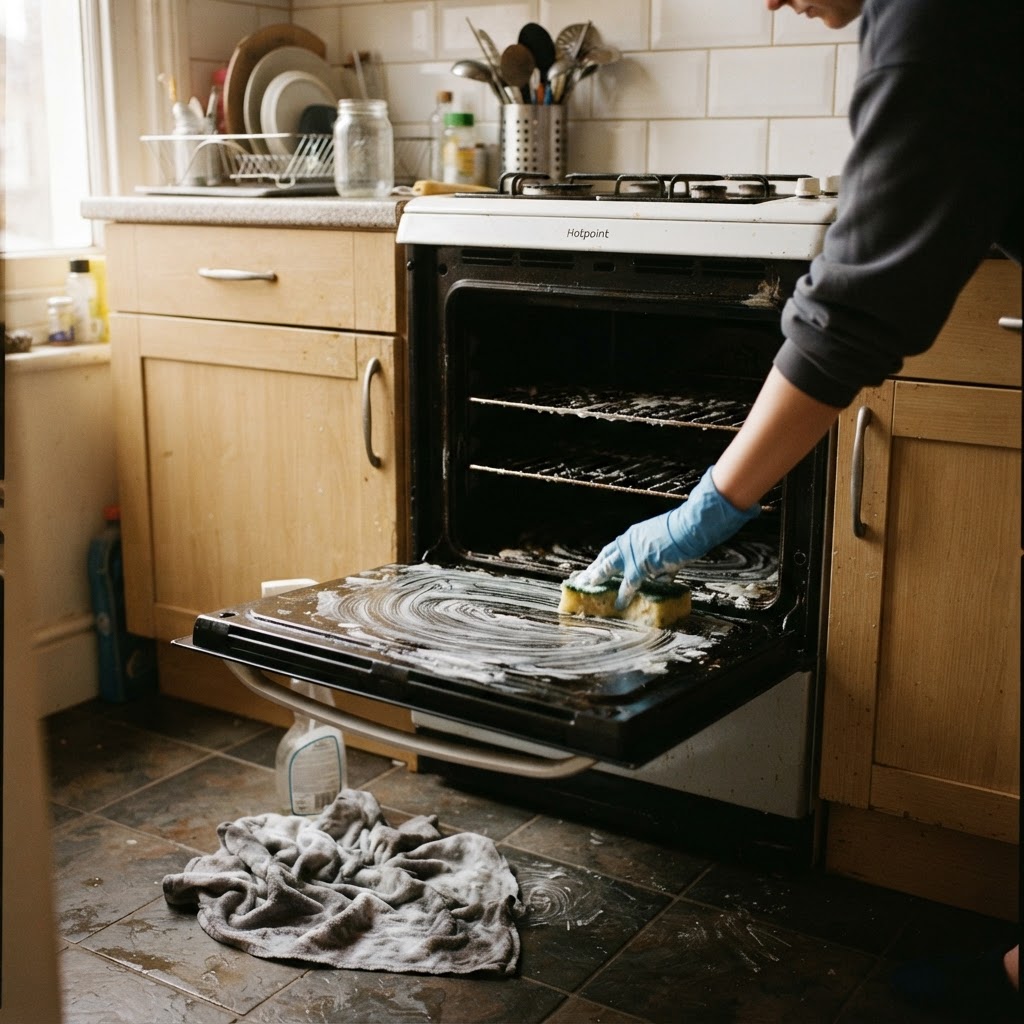
Match the method to the oven first
Oven cleaning goes wrong in two ways: people use a harsh method on a lightly soiled oven and waste hours, or they use a gentle method on baked-on carbon and give up halfway. Check which oven you have before you start.
- Self-cleaning (pyrolytic): a lock and a high-heat cycle that burns residue to ash. Easiest, but it smells, and in a small apartment the smell matters.
- Steam clean: a short cycle with water in the bottom. Good for maintenance, useless on heavy buildup.
- Standard oven: no cleaning cycle, so manual work is required.
Before anything: the 15-minute prep
- Remove racks and the flat side panels if they lift out.
- Scrape loose debris with a plastic scraper into the trash, not the sink. Grease in the drain is its own future problem.
- Wipe the inside of the door glass.
- Turn the oven off at the breaker if you are going near the heating element, and never spray cleaner on a hot oven.
Method A: the overnight paste (low fumes, works on most stains)
This is the method to use in a small apartment when you do not want chemical fumes hanging around for a day. Mix baking soda with water to a thick paste, about three parts soda to one part water, and coat the interior while avoiding the heating element and the fan opening.
Leave it 12 hours or overnight. Wipe out the paste with a warm damp cloth, use a plastic scraper on stubborn spots, and spray vinegar to break up the residue. The catch: it needs time, and cleanup can take as long as scrubbing. The payoff is no harsh smell and no risk to the enamel.
Method B: a dedicated oven cleaner (fast, needs ventilation)
For a genuinely dirty oven, a lye-based cleaner does in 20 minutes what the paste does overnight. Wear gloves, open a window, and run the exhaust fan. Give it the full dwell time on the label, then wipe thoroughly, including the door seal where residue collects. In a studio or one-bedroom, plan this for a day you will be out anyway.
Method C: the self-clean cycle
Run it when the oven will be empty and you have a couple of hours at home. Ventilate, expect some smoke on the first run, and wipe out the ash with a damp cloth afterwards. Never run the cycle with anything stored in the drawer below.
The parts people forget
- The racks. Soak them in the bathtub with hot water and dish soap, or a bin with baking soda, then scrub with a non-abrasive pad.
- The door glass, inside and out. Grease on the inner glass is what makes an oven look dirty from across the kitchen.
- The door seal. Wipe with warm soapy water. A torn seal is also why the oven cooks unevenly.
- The drawer under the oven. Crumbs and a forgotten pan live there.
- The knobs and control panel. Grease builds up on the edges and turns gummy.
How often
A quick wipe after anything that spatters, a light clean every month, and a deep clean every three months matches how most apartments actually get used. If you roast regularly, shorten those intervals.
When to hand it off
If the oven has years of baked-on buildup, or if the whole kitchen needs a reset before a move-out inspection, book a deep clean. Our cleaners handle ovens, stovetops, cabinet fronts and the rest of the kitchen in one visit, and handyman help is available if a hinge or seal needs replacing.
FAQ
Is baking soda safe on oven enamel? Yes. It is mildly abrasive and will not damage enamel the way scouring powders and steel wool can.
Should I use the self-clean cycle in a rental? Usually yes, but check with your landlord first and follow the manual. Older ovens sometimes struggle with the high heat.
Why does my oven smoke after cleaning? Residual cleaner or paste on the element or walls burns off. Wipe again and run the oven empty for 15 minutes with a window open.