
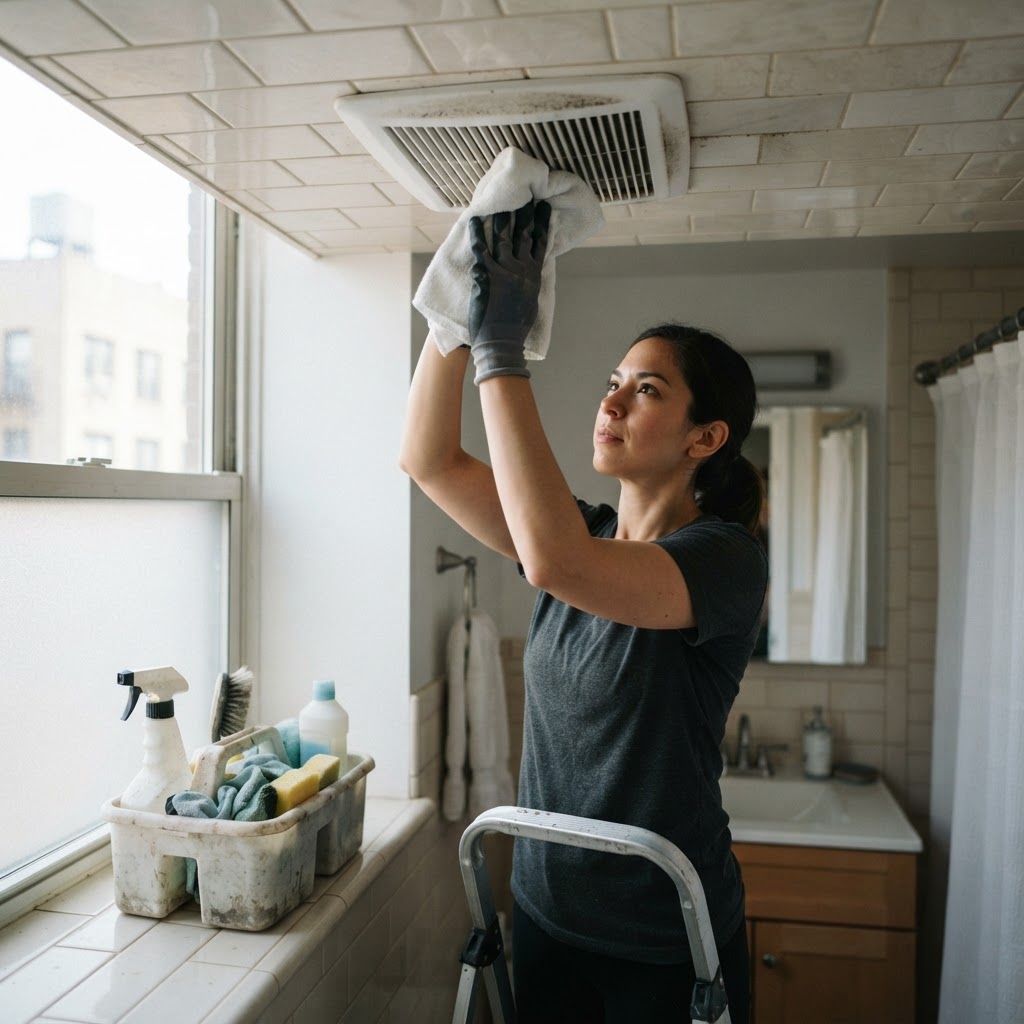
Most NYC apartments rely on small, often neglected bathroom exhaust fans to manage the extreme humidity generated by hot showers. If your fan sounds like a helicopter taking off or simply pushes air around without clearing the steam from your mirror, it is likely clogged with a thick layer of dust and lint. Cleaning it regularly not only extends the life of the motor but also prevents mold growth behind your walls. Proper maintenance preserves your bathroom air quality and prevents long term damage to your ceilings and paint.
Why you should clean a bathroom exhaust fan
In a pre-war building or a tight studio, airflow is everything. When an exhaust fan gets packed with dust, the motor works harder to spin, which leads to premature failure. If you live in a co-op or a high-rise, a broken fan can lead to persistent humidity that eventually ruins paint and encourages mold. Taking ten minutes to clean it can save you from a much larger maintenance headache later.
A clean fan also helps your bathroom dry out faster after a shower which reduces the amount of scrubbing you need to do on your tiles and grout.
Supplies you need to start
You do not need expensive tools to get the job done right. Gather a screwdriver, a vacuum with a brush attachment, a bucket of warm soapy water, and a microfiber cloth. If your unit is mounted on a high ceiling, ensure you have a stable step ladder that fits securely in your bathroom footprint. Always turn off the power to the bathroom at the breaker panel before starting to avoid any electrical risk.
Using a flashlight or a headlamp is also recommended to clearly see the internal components inside the ceiling housing.
The cleaning sequence
Carefully pull the plastic cover down from the ceiling. Most covers are held in place by two metal springs that hook into the housing. Squeeze these springs together to release tension before pulling the cover away from the ceiling surface. Once the cover is off, use your vacuum with a soft brush attachment to remove the bulk of the dust from the housing and the fan blades.
Never force the blades; if they are caked in grease, use a damp cloth with mild soap. Focus on the edges of the blades where debris builds up most significantly. Soak the plastic cover in your warm soapy water, rinse it thoroughly, and let it air dry completely before popping it back onto the springs. If the fan is still noisy after a deep clean, it may be time for a house cleaning service to help manage the rest of the room.
Navigating NYC building rules and maintenance
If you live in a co-op or condo in New York City, your building rules often dictate your maintenance responsibilities. Always check your proprietary lease or building handbook before modifying or replacing an exhaust fan. Some buildings require that you use licensed contractors for any work involving building ventilation systems to ensure the integrity of the common ductwork. If your unit is connected to a central building exhaust system, never attempt to modify the damper or the internal connection points yourself.
Improper handling can cause air to backflow into your neighbors bathroom or decrease the draw of the central system. Always prioritize safety and compliance with your building management team.
Timing and routine maintenance cycles
Managing your bathroom ventilation is a seasonal task that fits well into a quarterly home checklist. In New York, the dry winter months often see higher levels of floating dust in apartments, while humid summers increase the risk of mold growth from damp fans. Scheduling a cleaning during the change of seasons ensures your fan can handle the heavy load of steam during the winter and the mold risk during the summer. Beyond the fan, check the ventilation grate for any obstructions.
If you notice a damp smell despite a clean fan, it could be a sign of poor airflow in the ductwork or a hidden leak. Staying on top of this schedule minimizes long term costs associated with ceiling repairs and paint touch ups.
When to call a professional for bathroom maintenance
Sometimes, the issue is not just dust. If you notice rattling sounds coming from the ceiling, the motor bearings might be worn out, or the housing itself might be loose. NYC walk-ups and brownstones often have older venting systems where the ductwork can become disconnected. If you are struggling with a deep layer of grime that you cannot reach, our team can help with a deep cleaning NYC session where we tackle those neglected spots.
Should your bathroom require a full refresh, perhaps after a long-term tenant moves out, we can provide a move-out cleaning NYC to ensure everything is perfect. If your bathroom cleanup turns into a decluttering project, you can easily book junk removal for any old items or debris you want to clear out during the process. Professional technicians can safely disassemble older hardware that may be fragile or brittle from years of heat and moisture exposure.
Frequently Asked Questions
How often should I clean my bathroom exhaust fan?
If you use your shower daily, aim to clean the fan cover and vacuum the interior every three to six months. This frequency keeps dust from accumulating and maintains proper airflow throughout the year.
Can I use a power washer on the fan cover?
No, do not use a power washer or abrasive scrubbers on the plastic cover, as these can damage the finish or cause the plastic to crack. A simple soak in warm, soapy water is plenty to remove dust and hair buildup.
What if the fan still makes a loud noise after cleaning?
If the noise persists, the motor or the ventilation fan itself might be damaged or misaligned within the ceiling housing. At this point, it is best to consult a professional to see if a repair or a full replacement is needed.
Book help in New York
If you prefer to let a professional handle your home maintenance or cleaning tasks, we are here to help throughout the five boroughs and beyond. You can schedule your appointment through our book cleaning page today.