
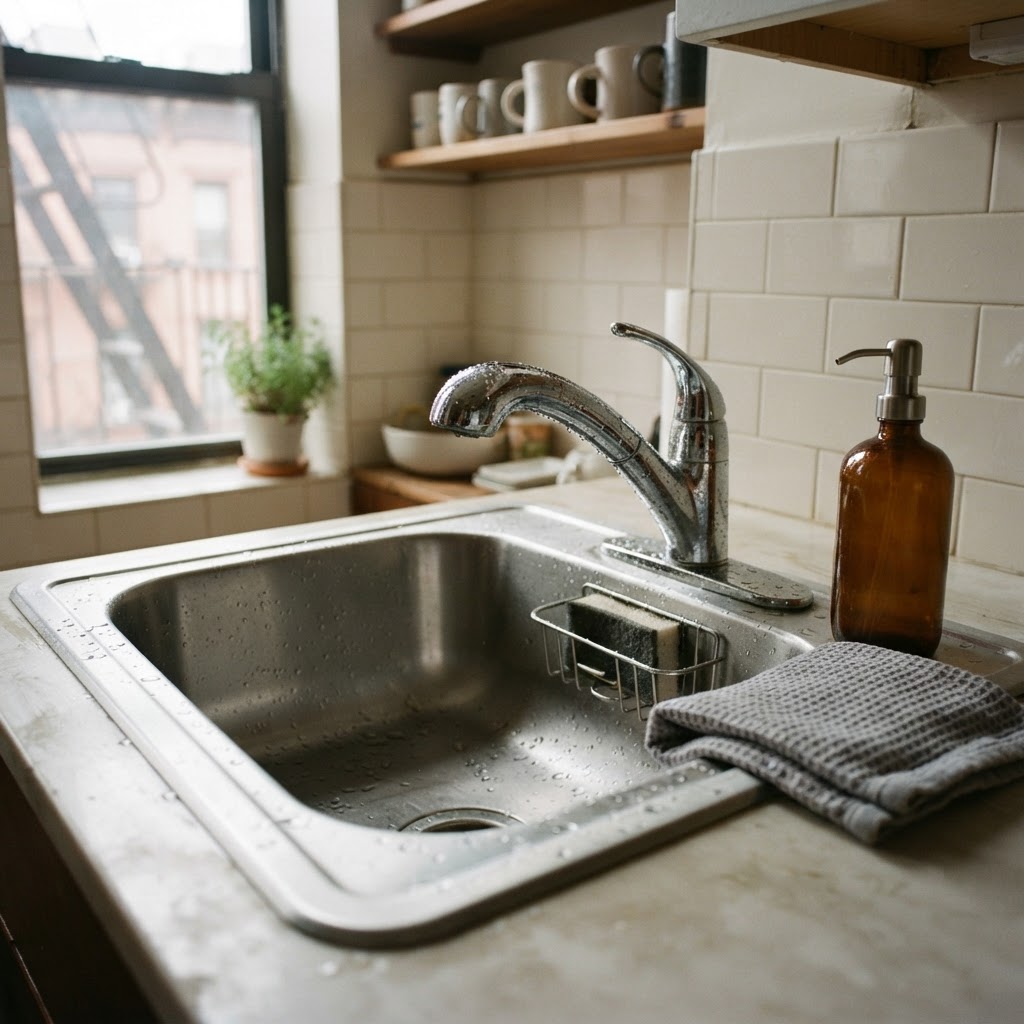
Why stainless steel looks dirty even when it is clean
Stainless steel is not stain-proof. The surface has a microscopic grain, and every wipe in the wrong direction pushes grease and water into it. That is why a sink can be scrubbed and still look streaky an hour later: the residue sits in the finish, not on top of it.
The fix is order of operations, plus one habit almost nobody follows, which is rubbing with the grain.
What you need
- Dish soap and warm water
- Baking soda for scouring
- White vinegar for mineral spots
- A soft sponge, a microfiber cloth, and a dry towel
- Olive oil or a dedicated stainless polish for the final buff
Skip steel wool, chlorine-based abrasive powders, and anything labeled scrubbing cleanser. They scratch the finish permanently, and scratches trap dirt, which makes the sink look dirtier faster.
Step 1: Clear and degrease
Empty the sink and remove the drain strainer. Fill with warm water and a few drops of dish soap, then wipe the basin, the sides, and the rim where the sink meets the counter. Grease hides in that seam and under the strainer, and it is usually the source of the smell people blame on the drain.
Step 2: Lift the mineral spots
Water in New York is hard enough to leave visible rings. Soak a cloth in white vinegar and lay it over the spotted areas for five minutes, then wipe. For a heavy ring around the drain, a paste of baking soda and water left for ten minutes does more than scrubbing harder.
Step 3: Scour with the grain
This is the step that separates a clean sink from a streaky one. Stainless has a visible direction, usually horizontal on the basin floor. Sprinkle baking soda, add a little water to make a paste, and rub with the grain using a soft sponge. Rubbing in circles leaves fine swirl marks that catch light, and light catches read as dirt.
Step 4: Rinse completely
Residue is the enemy. Rinse with clean warm water and dry immediately with a towel. Air drying leaves mineral deposits in the exact patterns you just removed.
Step 5: Buff for shine
A few drops of olive oil on a microfiber cloth, rubbed thinly with the grain, restores sheen and creates a light barrier so water beads instead of spotting. Use very little. Too much leaves an oily film that attracts dust and looks worse than water spots.
Monthly maintenance that prevents the work
- Rinse and dry after washing dishes. Ten seconds prevents most spotting.
- Do not leave a wet sponge or steel scouring pad in the basin overnight.
- Once a month, run hot water with a cup of vinegar down the drain.
- Wipe the faucet base, which collects the most grime and corrodes first.
What will not come out
Deep scratches, dents, and rust blooms from a can left in the sink are permanent without refinishing. Surface-level rust can sometimes be lifted with a baking soda paste, but once the metal has pitted, no cleaner fixes it.
If the sink is beyond a weekend clean and the whole kitchen needs a reset, our cleaning service covers standard, deep and move-out cleans, and our handyman team can replace a corroded faucet or reseal the sink rim.
FAQ
Can I use bleach in a stainless sink? Avoid it. Chlorine attacks the protective layer and can cause pitting, especially if it sits.
How often should a stainless sink be deep cleaned? A quick soap-and-dry after use, a vinegar treatment weekly, and a full scour-and-buff once a month keeps it looking new.
Why does my sink smell even after cleaning? Usually the drain trap or the seam around the strainer, not the basin. Pour hot water and vinegar down the drain, then clean the strainer threads with an old toothbrush.