
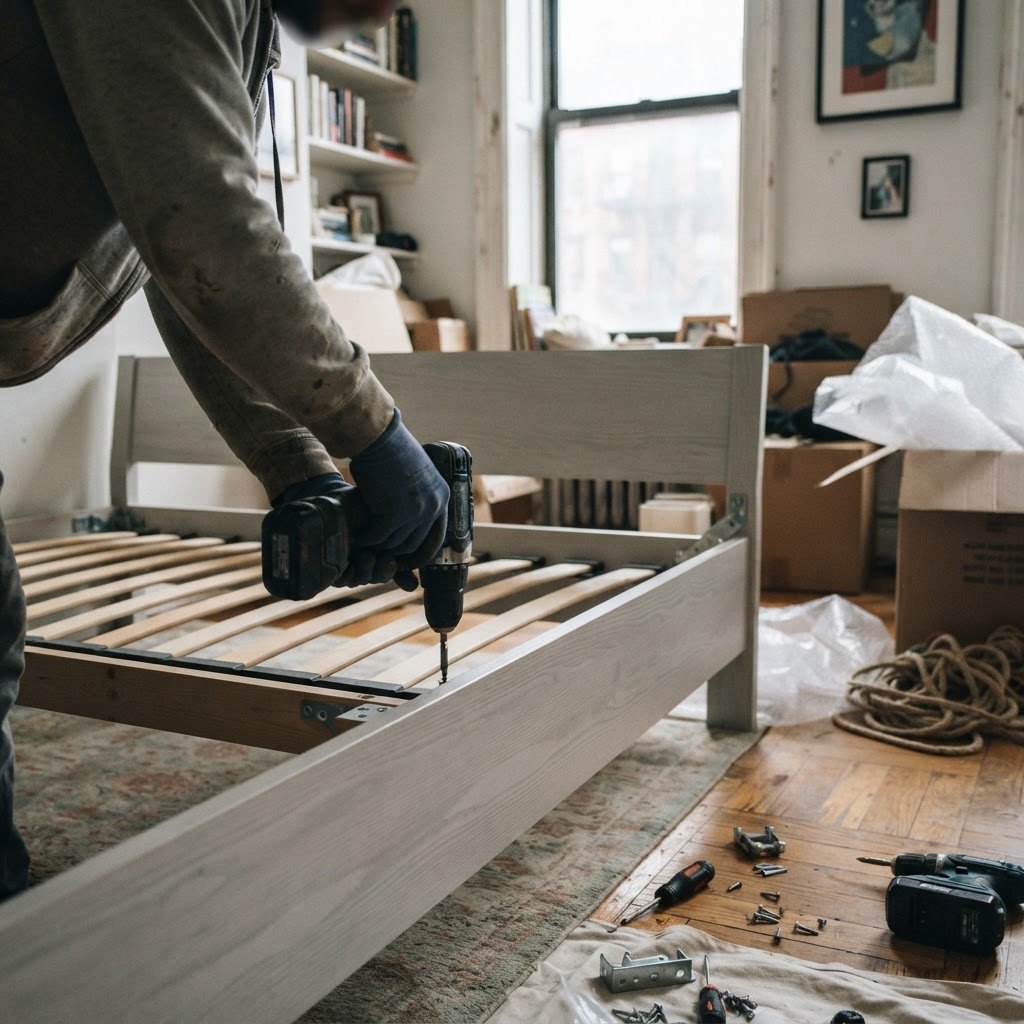
Moving in New York City is often an exercise in geometry. Whether you are navigating a pre-war brownstone with tight turns or an elevator building where the box is smaller than your dresser, the secret to a successful move is knowing when and how to disassemble furniture for moving. Taking a piece apart can save it from scratches, prevent damage to your walls, and make the physical labor of moving much easier for you or your team.
The essential toolkit for furniture breakdown
Before you start turning screws, you need the right setup. Most flat-pack furniture relies on cam locks, dowels, and hex screws. A simple screwdriver set is rarely enough. You should have a cordless drill with a magnetic bit extension, a set of hex keys, and a rubber mallet for gently tapping stubborn joints apart.
If you are dealing with particle board, be extremely careful. Over-tightening or using too much force can strip the screw holes, rendering the piece unstable once you try to put it back together in your new place.For disassembly, work in a specific sequence. Always remove doors first, then shelves, followed by top panels and sides. If you are dismantling a bed, remove the mattress and slats first to expose the frame.
Use a magnetic tray to hold screws as you remove them, then transfer them to bags. If a screw feels stuck, do not force it with power tools. Apply a small amount of lubricant or use a manual screwdriver to avoid snapping the head off the fastener. If you see a wooden dowel is glued, use your rubber mallet to tap firmly near the joint to break the seal without splitting the veneer.Always use Ziploc bags for the hardware.
Tape the bag directly to the underside of the piece it belongs to, or label it clearly with a permanent marker. If you lose a critical cam bolt for a custom bookshelf, finding a replacement at a local hardware store can be a nightmare. Keep the assembly instructions if you still have them; if not, take photos of each step of the disassembly process so you can reverse it easily. Documenting the location of each shelf pin and backing nail will save you hours during reassembly.
When to DIY and when to call a professional
For simple items like basic coffee tables, bed frames, or open bookcases, DIY is perfectly fine. However, New York apartments present unique challenges. If you are living in a five-story walk-up, you might not have the energy to break down a heavy oak dining table after a long day of packing boxes. Sometimes, the risk of injury or damage to your flooring outweighs the savings.If you find yourself struggling with complex items like wall-to-wall shelving units or antique furniture that uses dovetail joints, stop immediately. You can book furniture assembly if you need help on the other side of your move, but you can also hire our pros for the prep work. If the piece is heavy, expensive, or requires specialized tools, professional labor ensures that your items arrive in one piece. We charge $75/hour for furniture assembly services to help you get settled without the headache of missing parts. Professionals also carry the necessary insurance to cover damages if something goes wrong during the structural breakdown.
Protecting your apartment during the process
Disassembly is only half the battle. You also have to move these pieces through hallways and doorways. If your building requires a Certificate of Insurance (COI) for movers, ensure your furniture is staged near the entrance. Use heavy-duty moving blankets and shrink wrap to cover corners and exposed edges. Even if you have disassembled the unit, long side panels are still prone to gouges. Use cardboard corner guards to protect high-traffic areas like doorways, as these are where most accidental wall impacts occur during the moving process.
Handling pre-war door frames and tight landings
Many older buildings in Manhattan and Brooklyn have narrow doorways that were never meant for modern, oversized couches or king-sized headboards. If a piece refuses to fit through the door even after being broken down, do not force it. Pushing a piece of wood into a plaster wall will only leave a hole you have to repair later. Instead, look for secondary fasteners or consider if the piece truly needs to be moved. If you need help with repairs after a tough move, you can book a handyman to patch those dings or hang your art in your new space. Always measure the diagonal width of the door frame against the narrowest part of your furniture component. If the diagonal of your desk side panel is 32 inches and the door frame is 30 inches wide, you will need to find another angle of entry or consider removing the door from its hinges entirely.
Tech and wall-mounted setups
If you are breaking down a media console, remember that your TV and smart home devices require extra care. Disconnect all wiring, coil cables neatly, and pack your monitor in its original box if possible. If you need assistance getting your entertainment center set up correctly in the new living room, you can book TV mounting or book tech setup to get your apartment feeling like home instantly. Taking the stress out of the reassembly phase is often the most important part of the entire moving experience.
Navigating NYC building rules and timing
Before you disassemble large items, check your building's house rules regarding elevator use and move-in times. Many NYC co-ops and luxury condos restrict furniture moving to weekdays between 9 AM and 4 PM. If your furniture disassembly takes longer than expected, you may find yourself stuck with a lobby full of loose boards after the freight elevator hours have ended. Schedule your work so that all disassembly is completed the day before the truck arrives. This prevents rushed, sloppy work that often leads to damaged furniture or scratched hallway paint.
Cost drivers for large scale furniture moves
Understanding what impacts your move cost is vital. Factors include the number of pieces requiring specialized tools, the weight of the furniture, and the distance from your front door to the truck. Large, modular sectionals are the most common cost drivers because they require significant time to break down and reassemble. If you have multiple heavy items, inform your tasker about the number of pieces beforehand. This allows the team to bring additional support and the correct equipment, which keeps the hourly labor cost lower than if they were caught unprepared by a surprise oversized wardrobe.
Frequently Asked Questions
Should I use power tools to disassemble furniture?
Yes, but with caution. Power drills speed up the process, but they can easily strip cheap screws found in flat-pack furniture. Set your drill to a low torque setting to avoid damaging the wood.
How do I keep track of small hardware during a move?
Use Ziploc bags to group hardware by piece and label them with a marker. Always tape the bag to the back or underside of the furniture so it stays with the item during transport.
What if my furniture does not fit even after disassembly?
If a piece cannot be broken down further without damaging it, you may need to reconsider moving it or hire professionals who have experience with tight corner navigation. Do not force items through narrow pre-war frames as you risk damaging both the furniture and your walls.
Book help in New York
If the job feels too big to handle, our team is ready to assist with all your furniture needs. You can book furniture assembly today to get started.