
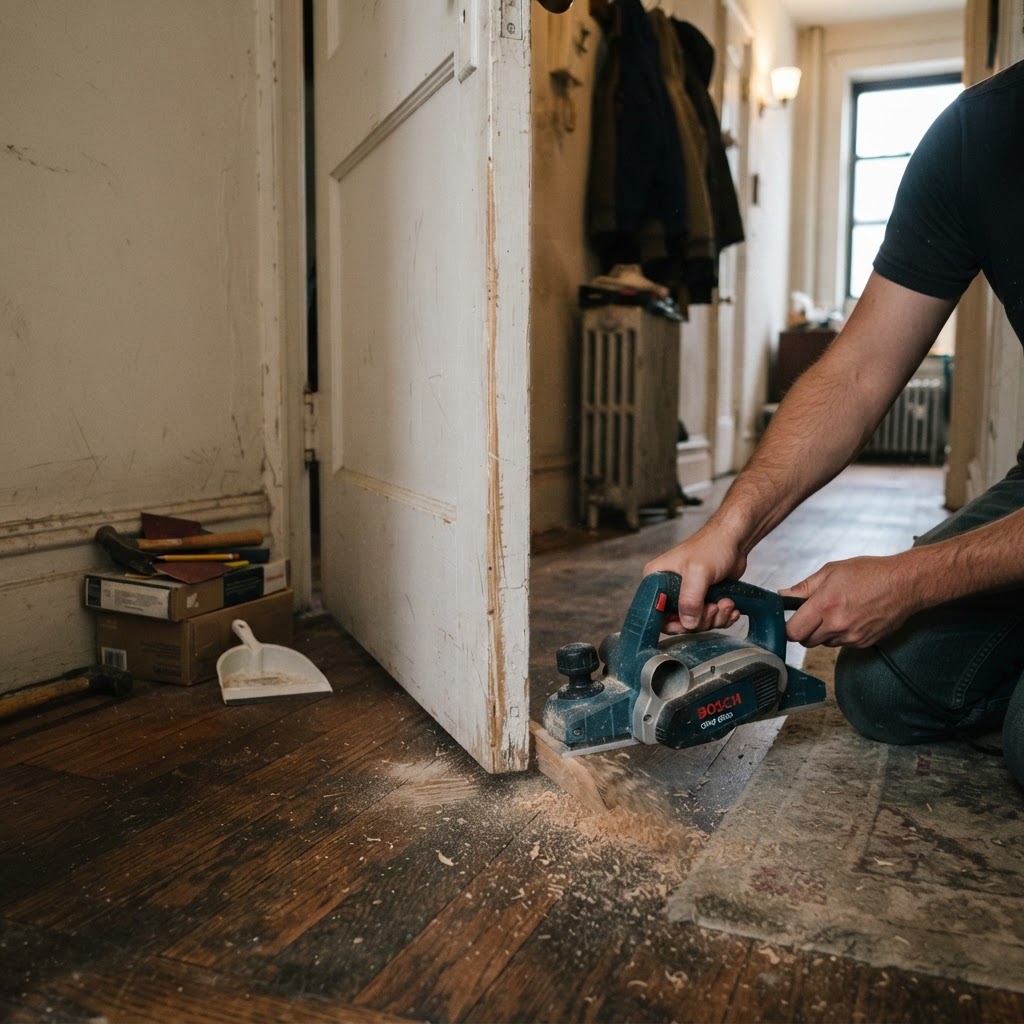
If your interior door suddenly refuses to latch or drags along the floor frame, you are likely dealing with the classic NYC summer humidity problem. As moisture levels rise across the five boroughs, wood absorbs that dampness, expands, and pushes against the frame. Before you panic, check if it is a seasonal issue or a structural one. If the door closed perfectly in February but sticks in July, it is almost certainly humidity causing the expansion. Identifying the correct cause ensures you do not perform unnecessary, irreversible modifications to your door.
Identify the source of the friction.
Before grabbing a sander, pinpoint exactly where the door is binding. Open and close the door slowly, watching the gap between the door edge and the frame. If you see rub marks or chipped paint, you have found the pressure point. In many pre-war apartments with thick, old-growth wood doors, even a tiny bit of swelling can lock a door tight. Do not force it, as you will likely just damage your hardware or the surrounding plaster. Use a piece of carbon paper or chalk rubbed on the edge of the door to reveal the specific contact points. This visual aid is crucial before you start removing any material.
Tightening the hinge screws.
Sometimes, the door is not swelling as much as it is sagging. Before you start shaving wood, grab a screwdriver and tighten the hinge screws on the jamb side. Over years of use, screws in older brownstones can loosen. If the screws just spin in place, the wood has stripped out. You can fix this by removing the screw, inserting a wood glue-covered toothpick into the hole, letting it dry, and then driving the screw back in. This often clears the gap without needing to touch the door edge. Ensure the hinge plates are flush with the mortise. If they are loose, the door will shift under its own weight, causing binding at the top latch side.
Checking the hinge pins.
If the door is rubbing at the top hinge side, check your pins. If the hinge is slightly bent or the pin is loose, the door will tilt, making it appear as though the wood has swollen. Sometimes a light tap with a hammer on the hinge pin can help seat it better, but proceed with caution if you have antique hardware. If you feel uncomfortable making adjustments, you can always book a handyman to handle the calibration safely. A bent pin can often be straightened with a pair of pliers if you take your time, but replacements are safer for heavy doors.
Navigating building rules and fire codes.
In many NYC apartment buildings, especially co-ops and condos, your front door is considered a fire-rated assembly. You should never shave, sand, or alter the edges of a main entry door yourself. Doing so can void the fire rating required by city building codes. If your bedroom or closet doors are solid wood and you are planning significant changes, check your building bylaws. Some co-op boards require you to use specific contractors for any alteration that changes the appearance or functionality of the door. Always consult with your super or management office if you suspect the door frame itself is fire-rated metal, as DIY adjustments here could lead to code violations during a future inspection.
Maintenance and seasonal prep.
Once you successfully clear the friction, maintaining the door is about controlling the environment and the finish. A high-quality oil-based primer followed by a semi-gloss paint serves as a vital barrier against airborne moisture. If the edges of your door are raw or unfinished, they will act like a sponge during the summer. For long-term maintenance, ensure your bathroom exhaust fans are working correctly, as excess humidity from hot showers is a common cause of internal door swelling in NYC apartments. Running a dehumidifier during the peak humidity months of July and August can also prevent doors from becoming stuck in the first place, saving you the labor of sanding or planing.
When to shave the door edge.
If the wood itself is clearly hitting the stop, you may need to sand it down. Only remove the minimum amount of material. Use a medium-grit sandpaper block rather than a power sander to avoid taking off too much at once. Remember that the door will shrink again when the heat or air conditioning dries out the apartment in the winter. If you take off too much, you will be left with a permanent gap later in the year. If the binding is severe, mark the area with a pencil, remove the door from the hinges, and place it on sawhorses. This allows for a more controlled pass with a block plane or sandpaper. Be mindful that if you have a custom, heavy solid-wood door, the sanding process is labor-intensive and messy. If your door is sticking because of a larger frame issue or if you have specialized trim work, it is often better to have a pro assess it. While you are at it, if you need other home improvements, you can also book furniture assembly or book TV mounting if you have other seasonal projects piling up.
When DIY stops being worth it.
There is a point where DIY becomes a headache. If you have to shave off more than a quarter-inch, or if the door is rubbing on the top and the bottom at the same time, the frame itself might be shifting. This is common in older buildings where floors are not perfectly level. Attempting to plane a door yourself can lead to uneven edges that look unprofessional. Furthermore, if you are in a co-op or condo with strict renovation rules, you must ensure your door remains fire-rated. Shaving too much off a door can compromise its integrity. If you are struggling with complex adjustments, remember you can also book tech setup for your smart home devices while a pro is already on-site for your door repairs. Professional help ensures the job is done right the first time without unnecessary damage to your home.
Frequently Asked Questions
Why does my door only stick in the summer?
Wood is a porous material that reacts to changes in relative humidity. During humid NYC summers, the wood absorbs moisture from the air and expands, causing it to swell against the door frame.
Should I paint the door to prevent swelling?
A high-quality coat of paint or varnish acts as a moisture barrier. If your door is currently unpainted or the finish is cracked, moisture enters the wood grain more easily.
Can I use a plane to fix a sticky door?
You can, but it requires skill to keep the edge square and smooth. For most apartment dwellers, a sanding block is safer and easier to control than a hand plane or power planer.
Book help in New York.
If your door is still sticking after you have tried basic adjustments, our team is ready to assist with professional repairs across the five boroughs. You can easily schedule an appointment by visiting our booking page at https://nycprotasker.com/book-handyman.