Storing a bike in a cramped New York City apartment is a constant battle for square footage. Installing a wall bike mount in your apartment is an effective way to reclaim floor space, but it requires precision to avoid damaging your walls or compromising the structural integrity of your bike rack. Proper preparation is the difference between a secure long-term storage solution and a damaged wall that requires expensive repairs upon move-out. Always check your lease terms regarding wall modifications before proceeding, as some management companies restrict drilling into specific finishes.
Tools and Preparation for Installation
Before you start drilling, assess your wall material. Pre-war buildings often feature hard plaster and lath, while newer condos may use drywall over metal studs. You will need a reliable stud finder to ensure the mount is anchored into wood or metal framing, not just the hollow wall material. Using wall anchors in plaster without a stud will almost certainly lead to the mount pulling out under the weight of the bike.
Essential Gear Checklist
- Stud finder with deep scan capability
- Electric drill with appropriate bits for masonry or wood
- Level (essential for a clean look)
- Pencil for marking pilot holes
- Measuring tape
- Socket wrench if your mount hardware requires heavy-duty lag bolts
Measure the height of your bike handlebar to ensure you have enough clearance from the ceiling and floor. If you need help with the initial assembly of the rack itself, you can book furniture assembly to handle the hardware setup before mounting.
The Installation Process
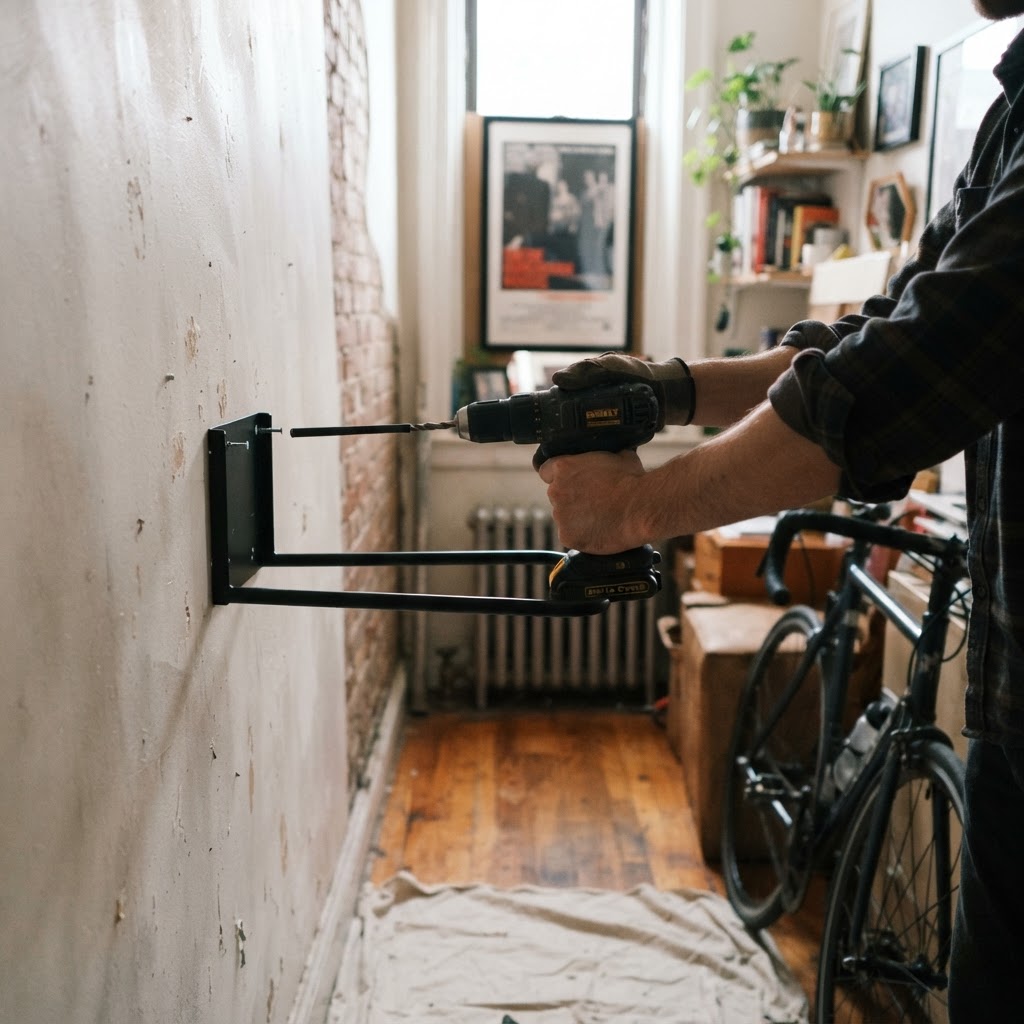
Once you have located the stud, mark the mounting holes using the rack's base plate as a template. Use a level to ensure the bracket is perfectly horizontal. For older NYC brownstones with slightly uneven surfaces, you may need a small shim behind the mount to keep it flush against the wall. When drilling into masonry, use a hammer drill for better control and clean holes. For wood studs, ensure your pilot hole is slightly smaller than the diameter of the lag bolt to maintain maximum thread grip.
Drilling Safely into Apartment Walls
If you are drilling into plaster, apply masking tape over the spot where you intend to drill to prevent the surface from cracking or crumbling. Start with a smaller pilot hole to guide your larger screw. If the mount feels loose or the wall material begins to crumble significantly, stop immediately. Mounting heavy items into fragile, old-building walls is a task where you might want to book a handyman to ensure the hardware is secured to structural members properly. Always clear the area of debris as you drill to avoid breathing in plaster dust.
NYC Apartment Compliance and Building Rules
When living in a co-op or condo, always verify if your building has specific rules regarding structural modifications. Some boards require proof of insurance before you perform any work that involves mounting hardware into common elements or building infrastructure. If you are mounting your bike in an area that borders a hallway or a neighbor's unit, be mindful of noise transmission. Using rubber gaskets between your bike mount and the wall can help dampen vibration and prevent the transfer of noise through the structural studs.
Strategic Space Planning for Small Units
In tiny NYC studios, positioning is everything. Think about how the bike width affects your daily flow. Place the bike mount behind a door, in an entryway, or above a radiator cover to maximize otherwise dead space. Ensure that the front wheel does not swing out to hit your furniture as you remove the bike. If your bike has wide drop bars, tilt the mount slightly if the design allows it to ensure the handlebars do not scrape the wall paint. Use a clear protective film on the wall behind the tire to prevent scuff marks when you mount and dismount your bike frequently.
When to Call a Professional
DIY bike mounting stops being worth it if you lack the right tools or if you are unsure about the wall's composition. If you feel uncomfortable drilling into expensive finishes or if you are worried about triggering a potential leak in a hidden utility line, do not force it. Mounting items safely is part of what we do, and we can also assist if you need to book TV mounting or require professional book tech setup for your smart home devices.
Professional pros ensure that your bike mount is level, secure, and ready for use without damaging your apartment’s structure. Our handymen are insured, meaning you do not have to worry about the liability of drilling into shared walls or delicate surfaces in a co-op or condo setting. We bring the correct drill bits and fasteners for every wall type, whether you are dealing with exposed brick, steel studs, or delicate lath and plaster.
Frequently Asked Questions
Can I mount a bike rack on a plaster wall?
Yes, but you must anchor it directly into a wooden stud. Plaster is too brittle to hold the weight of a bicycle using standard plastic drywall anchors alone.
How high should I hang my bike mount?
Measure your bike's height from the tire to the handlebar, then add at least six inches of clearance from the floor. Ensure the mount is positioned so the bike does not block doorways or narrow hallways common in NYC apartments.
What if I cannot find a stud?
If a stud is not available where you need the bike, do not attempt to hang it. You may need to use a sturdy piece of plywood that is screwed into multiple studs, which then serves as a mounting base for the bike rack.
Book help in New York
If the project feels more complex than expected, we are here to help with your home installations across all five boroughs. You can easily book a handyman to get the job done right the first time.