
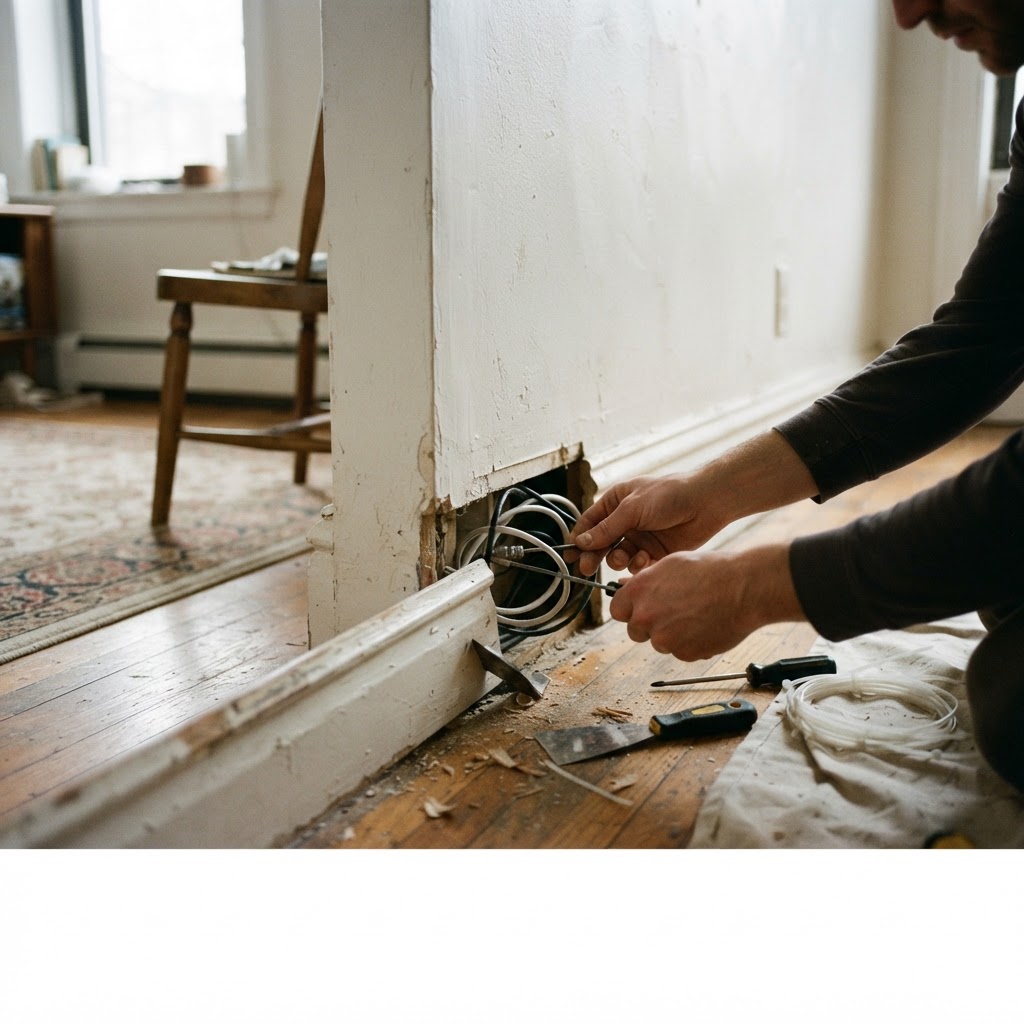
Dealing with tangled wires is a common frustration in NYC apartments, especially when you are trying to maintain a clean aesthetic in a tight space. Whether you are setting up a home office in a pre-war walk-up or organizing your media center, you might wonder if you need to slice into your walls. You do not. You can often hide cables behind baseboard molding by utilizing the gap that naturally exists between the flooring and the bottom of the trim. This method keeps your security deposit safe and your living room looking sharp. Doing this correctly requires patience and a good eye for detail to ensure your apartment remains in pristine condition.
Assessing your baseboard and cable setup
Before you start, look closely at your baseboards. Most modern apartments or renovated brownstones use shoe molding or quarter-round, which sits on top of the baseboard and the floor. This is where you have the most room to work. If you have older, thick baseboards that are flush against the floor, you might not have any gap at all. In that case, forcing a wire through will likely damage the wood or peel the paint. Check the perimeter of your room first. Some areas might have enough clearance while others are pinned tightly against the subfloor. Use a flashlight to inspect the shadow line where the trim meets the floor to determine if there is a consistent clearance of at least an eighth of an inch.
Tools for a tidy result
If you have a gap, you will need a flat cable, a non-marring pry bar, and potentially some clear adhesive clips. Flat Ethernet or power cables are much easier to tuck than traditional round ones. If the gap is tight, do not force the cable. If you struggle to get things organized or need help with a more complex media setup, you might want to book a handyman to ensure the job is done without marking up your walls. You should also have a plastic putty knife or a specialized cable insertion tool. Metal tools are risky because they can easily gouge soft wood or leave dark scuff marks on light-colored baseboards. Keep a roll of painter tape nearby to temporarily hold wires in position while you work your way around corners.
The tucking process
Start at one corner and use your pry bar to gently lift the edge of the shoe molding just enough to slide the cable underneath. Move slowly and work in small sections. In NYC apartments, floors are rarely perfectly level, so you might find spots where the molding is tight against the floor. Do not use excessive force. If you feel resistance, stop immediately. Damaged molding is difficult to match in older buildings, and it is rarely worth the headache of a repair. Insert the cable slowly, pushing it in about two inches at a time. If the cable bunching occurs, pull it back and redistribute the slack. Ensure that no wires are pinched over existing nails that attach the molding to the wall, as this can pierce the cable jacket and cause a short.
Understanding building regulations and property care
In New York City, tenants must be careful not to make permanent alterations to their living space without landlord consent. Hiding cables behind existing molding is usually considered temporary and non-invasive, provided you do not remove the trim entirely. Avoid using staples or heavy-duty nails to secure wires, as these will trigger security deposit deductions during move-out inspections. If you live in a co-op or condo, check your specific house rules regarding work that involves the building structure. Even minor DIY tasks should be performed with the goal of leaving the unit exactly as you found it. Always opt for removable solutions like tension-based routing or damage-free adhesive clips when the baseboard gap is nonexistent.
Long term maintenance and cable heat management
Properly managing your cables is not just about looks; it is about safety. When you tuck cables behind molding, ensure they are not under tension, as this can fray the internal wiring over time. Never bundle high-voltage power cords together in tight spaces, as this can lead to heat buildup. Keep audio cables separate from power lines to avoid electromagnetic interference, which causes buzzing in your speakers. If you are rerouting cables every few months, you might want to switch to magnetic cable channels that allow for easy access. Periodically check these areas during your seasonal cleaning to ensure no dust has accumulated or that the molding has not warped due to moisture or temperature changes common in older NYC buildings.
When to call a professional for cable management
DIY cable management stops being worth the effort when you are dealing with heavy-duty power cords, high-voltage equipment, or fragile molding. If you have an expensive television that needs a clean look, you should book TV mounting rather than trying to hide heavy-gauge wires behind thin trim. Pros have the right tools to route these safely and securely.
Additionally, if you are setting up a complex network or smart home system, consider that specialized gear often requires specific cable pathways to prevent signal interference. You can book tech setup for a configuration that handles the wiring and the hardware simultaneously. Finally, if you have recently purchased new office furniture, book furniture assembly so that the team can manage the wiring while they put your desk together. Trying to manage cable routing while assembling complicated furniture often leads to pinched wires or bruised trim.
Frequently Asked Questions
Can I hide thick power cords behind baseboards?
Most power cords are too thick to fit under standard baseboard molding without damaging the wood or causing a fire hazard. Use flat extension cords or specialized cord covers instead of forcing standard cables where they do not fit.
What if I do not have a gap in my baseboards?
If your baseboards are flush with the floor, do not attempt to pry them up. You should use adhesive cable channels that match the color of your trim to keep wires neat without needing to move the molding.
Will this work in a pre-war apartment?
Pre-war apartments often have thick, uneven trim or antique wood that is prone to splitting. Be extra cautious in these homes, and if you are unsure, hire a professional to avoid damaging original architectural details.
Book help in New York
Managing your apartment wires is easy when you have the right help on your side. Whether you need a simple fix or a full room setup, we are ready to assist you. Book your service at our handyman booking page.