
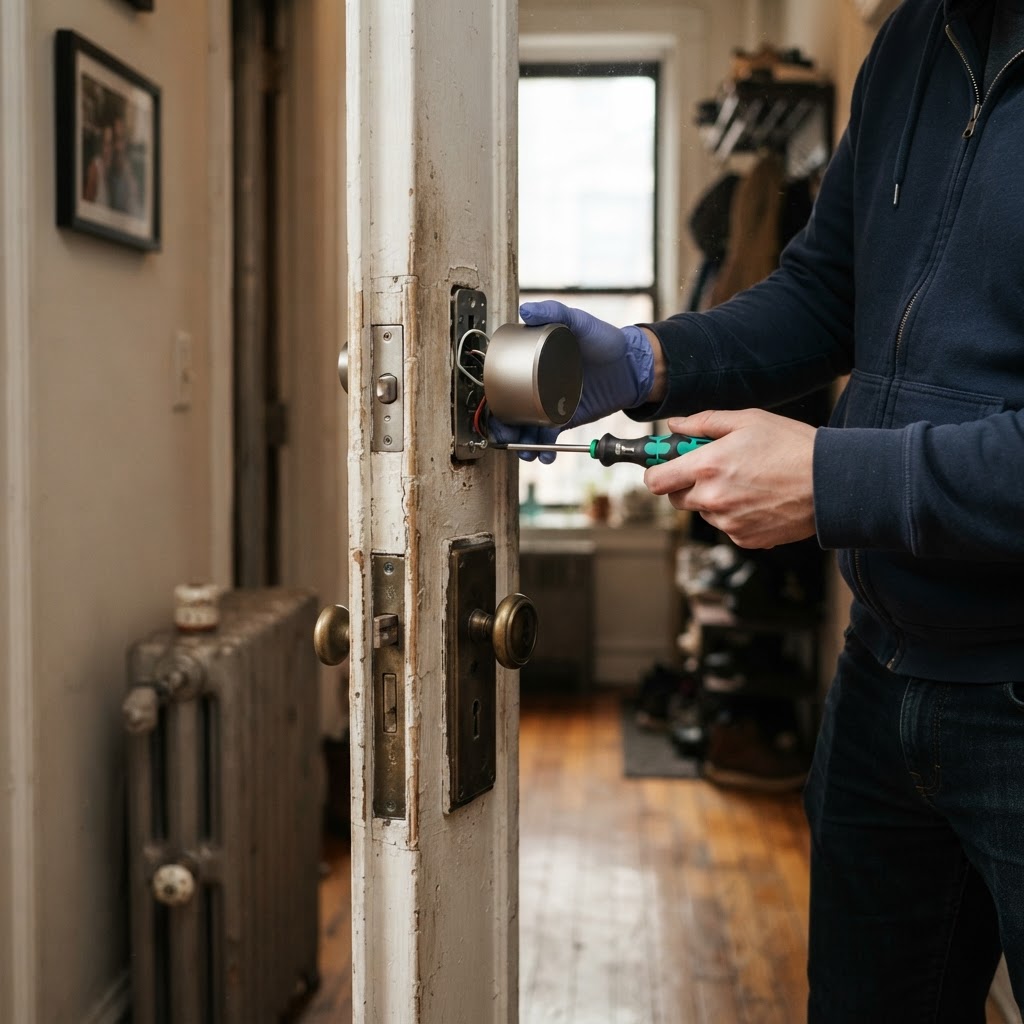
Upgrading to a smart lock in an older New York apartment is a great way to manage keyless entry for dog walkers or guests. However, a smart lock on a pre-war door requires a careful touch because these historic entryways often feature thick wood, custom mortise locks, or tight clearance frames that modern hardware was not designed to accommodate. Before you start, check your co-op or condo board rules, as they may have strict requirements regarding the exterior finish or style of your apartment door hardware.
Assessing compatibility for a smart lock on a pre-war door
Most smart locks are built for standard US deadbolts. In many NYC brownstones or pre-war elevator buildings, you might find a mortise lock, which is an all-in-one handle and deadbolt mechanism recessed into the side of the door. If you have a mortise lock, installing a retail smart lock can be incredibly difficult because you cannot simply swap the bolt. You need to measure the backset, which is the distance from the edge of the door to the center of the keyhole. Standard locks usually come in 2-3/8 inch or 2-3/4 inch sizes. If your hardware is older, you may need a specialized retrofit kit or professional assistance.
Tools and measurements you will need
To begin, gather a tape measure, a set of precision screwdrivers, and a level. Remove your current interior escutcheon plate to see how the inner components attach. If you notice a complex internal gear system typical of old mortise locks, stop and evaluate if your specific smart lock model is compatible. Do not force any pieces. If you need help determining if your door setup will accept a modern unit, you can always book a handyman to assess the situation before you purchase a lock that might not fit. Ensure you check the door thickness as well, as many pre-war doors are thicker than modern residential doors, potentially requiring longer spindle extensions or custom mounting hardware.
When DIY becomes risky
If the smart lock instructions require you to drill new holes through original wood or metal plating, consider the historical value of your door. Drilling into a pre-war door is permanent and often impossible to patch perfectly. If you are not comfortable handling precision tools, you might prefer to book tech setup for a professional who understands how to handle delicate, older hardware without damaging the finish or the door structure itself. A slip of the drill can splinter century-old wood or scratch expensive antique finish, so weigh the risk before acting.
Understanding New York City building compliance and rules
Before purchasing any hardware, verify the specific requirements of your building management. Most co-ops require that the exterior face of the door remain consistent with the rest of the floor to maintain the aesthetic of the hallway. If your smart lock features a keypad or a bulky external housing that differs from the building standard, you may be forced to remove it. Some management companies require that a locksmith or a licensed handyman perform the installation to ensure the door remains fire-rated compliant. Always request written approval from the board if you are changing the exterior appearance of your unit entrance.
Managing long-term maintenance and battery life
Older apartment doors often have heavy, solid-core construction that exerts more pressure on the door latch. Smart locks rely on internal motors to retract the latch or bolt. If the door is not perfectly aligned, the motor will struggle against the strike plate, leading to rapid battery depletion. To maintain your lock, clean the strike plate area periodically and check that no paint buildup from years of hallway updates is causing friction. During winter months, check if the wood has expanded due to humidity or temperature shifts, which can make a previously smooth-operating lock suddenly stick. Keep a physical key hidden in a secure location, as smart locks can occasionally lose connectivity or power during a power outage or app service disruption.
The installation process
Once you have verified the dimensions, start by removing the interior thumb turn. Keep all original screws in a marked bag; if you ever move or sell the unit, having the original parts to revert to the old hardware is essential. Attach the smart lock mounting plate using the provided hardware. Ensure the plate is level, as even a slight tilt can cause the motorized bolt to bind, which wears out your lock motor prematurely. If you find the door is sagging, you may need to address that before the smart lock will function reliably. In those cases, you might benefit from professional furniture assembly or general repairs to ensure the door closes flush. Always hand-tighten screws to avoid stripping the pre-existing holes in the wooden door frame.
Testing and calibration
After mounting the unit, install the batteries and the accompanying app.
Calibration is the most important step. The app will ask the lock to extend and retract the bolt to identify the distance it needs to travel. If the lock stalls or indicates an obstruction, you likely have friction between the bolt and the strike plate. In pre-war frames, shifting walls or settled wood can cause the door to sit slightly off-center. If you struggle with this alignment, do not over-tighten the mounting screws in an attempt to force the fit. Instead, book TV mounting specialists or our general handymen to help you fine-tune the door strike, which often requires professional metal filing or wood chiseling. Verify that the deadbolt extends fully into the strike box without dragging. If the bolt meets resistance, take a small metal file to the interior edges of the strike plate until the bolt moves freely in and out of the cavity when the door is closed.
Frequently Asked Questions
Can I install a smart lock on a mortise lock door?
Most standard smart locks are not compatible with mortise locks because they rely on a different internal mechanism. You will likely need a specific retrofit kit or a smart lock designed explicitly for mortise hardware to avoid replacing the entire assembly.
Will my co-op allow a smart lock?
Many buildings have strict rules about the appearance of exterior hardware to maintain a uniform aesthetic in the hallway. Always consult your board or management office before replacing the hardware on the outside of your door.
How do I know if my door is too old for a smart lock?
If your door uses a unique or antique locking system that cannot be removed without damaging the wood or original hardware, it is likely best to keep it as is. A professional can help you determine if a surface-mounted or hidden smart lock alternative is a viable option for your specific setup.
Book help in
New York If the installation seems more complex than expected, our pros are ready to assist with your smart home project. You can book a handyman to ensure your security hardware is installed safely and correctly.