
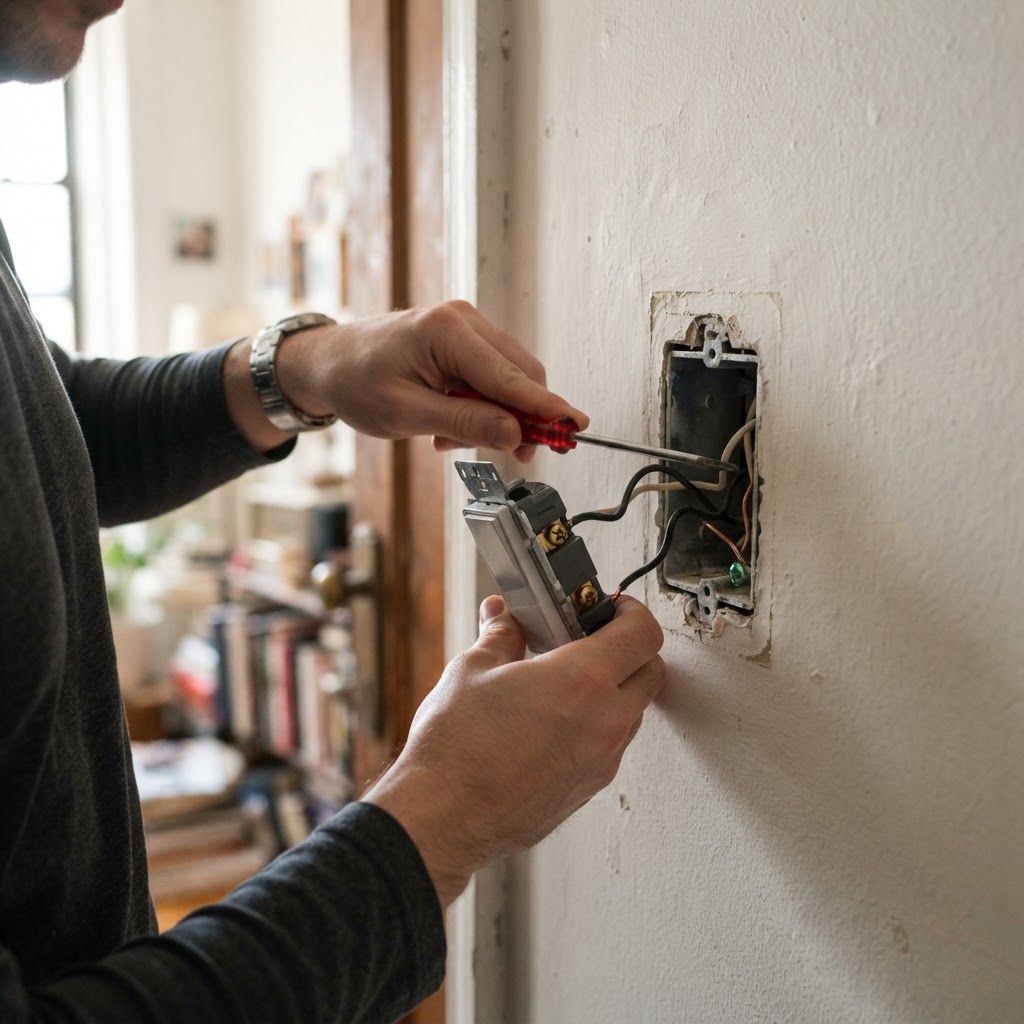
Installing a dimmer switch in an older New York City apartment can transform your space, but many pre-war homes lack a neutral wire in the switch box. If you open your switch box and only see two black wires or one black and one red wire, you are dealing with a non-neutral setup. Modern smart dimmers usually require a neutral wire to power their internal electronics. Fortunately, you can still find legacy or specific smart-compatible dimmers designed for these older configurations.
Assess Your Electrical Situation
Before you buy a new switch, you need to verify what is inside your wall. Turn off the power at the circuit breaker that controls the room. Use a non-contact voltage tester to ensure the power is completely off. Once you unscrew the existing switch, gently pull it out of the wall box. In many New York buildings, these boxes are metal, which can make pulling wires out tricky. If you see two black wires connected to the switch and no white wire grouped in the back of the box, you have a two-wire system. Use a screwdriver to check if the box is grounded, which is sometimes indicated by a copper wire attached to the back of the metal housing.
The Reality of Pre-War Wiring
Pre-war buildings in Manhattan and Brooklyn often feature knob-and-tube or early conduit wiring. These systems did not account for the neutral return wire needed for modern automated light switches. If your apartment has original wiring, you should be extremely cautious. These wires can be brittle, and handling them too much may cause the insulation to crumble. If you see frayed or cracked insulation, stop immediately and book a handyman to inspect your electrical safety before proceeding. Older BX cable, which uses the metal casing as a ground, can also be challenging because the casing can become disconnected or loose over time, compromising safety.
Choosing the Right Dimmer
When buying a dimmer switch no neutral wire is required for, look for products specifically labeled as non-neutral or two-wire compatible. These switches work by drawing a tiny amount of current through the bulb itself. This means your light bulbs must also be compatible. If you use a non-neutral dimmer with standard LED bulbs that are not dimmable, you will likely experience flickering or buzzing. Always check the packaging to ensure the switch is compatible with the specific LED technology in your lighting fixtures. Look for bulbs marked as dimmable and ensure the total wattage of the bulbs does not exceed the dimmer switch rating, typically 150 watts for most LED-specific dimmers.
Building Rules and NYC Regulations
Before starting any electrical work in an NYC co-op or condo, check your building bylaws. Some boards mandate that a licensed electrician must perform any work that involves opening an electrical box to minimize fire risk. Even if you are a DIY enthusiast, verify that your building does not require an insurance certificate from the person doing the work. Additionally, NYC electrical codes are strict about box fill capacity. Adding a bulky smart switch to a small metal box can result in overcrowding. If you cannot comfortably push the wires back into the box without force, you are at risk of a short circuit. Professional installers use shallow-depth switches or extenders if the box is too packed.
Timing and Cost Factors
Budgeting for electrical upgrades involves more than just the cost of the switch. A simple swap might take an hour, but unexpected wire decay can turn a quick job into a half-day project. If you are hiring a pro, remember that many NYC handymen have a one-hour minimum. You can optimize costs by grouping multiple switch replacements into a single visit. Maintenance after the job is also crucial. Once installed, test the dimming range slowly. If the lights buzz at low levels, you may need to adjust the dimmer's sensitivity settings, which many modern smart switches allow through a companion mobile app.
Steps for Installation
- Confirm the power is off at the breaker. Always verify with a meter again after switching the breaker.
- Label your existing wires using masking tape before disconnecting them so you know which is the load and which is the line.
- Connect the ground wire if your box allows for it, though many older metal boxes in NYC lack a dedicated ground wire path. If the box is grounded, use a pigtail wire to connect the switch to the metal box screw.
- Attach the line and load wires to the new dimmer terminals as specified in the manufacturer instructions. Secure the wires tightly under the terminal screws; do not leave exposed copper.
- Carefully fold the wires back into the box. Use a zig-zag folding pattern to avoid crimping or nicking the wire insulation against the sharp metal edges of the box.
- Screw the switch into place and attach the wall plate, ensuring it sits flush against the wall.
If you find the wires are too short or the box is too cramped, consider seeking professional help. We also handle tasks like furniture assembly if you need a hand setting up your space after your lighting upgrade.
When to Stop DIY Efforts
There are clear signs that a project is no longer suitable for a DIY approach. If you notice signs of arcing, such as black marks on the wires or a burning smell, call a professional immediately. If the wire colors do not match standard conventions, or if you find more than two wires entering the box from a single conduit, you may have a complex wiring loop that requires a professional map. Additionally, if you need help with TV mounting or tech setup for your newly dimmed room, keep in mind that our pros provide reliable hourly services. Our handyman rate is $85/hour. If the job requires more than a simple swap, or if you feel uncomfortable handling electrical components, do not hesitate to contact us. Safety is always more important than a minor home improvement project.
Frequently Asked Questions
Can I install a smart dimmer without a neutral wire?
Yes, there are smart dimmers available that do not require a neutral wire. However, you must ensure the specific model you purchase is explicitly designed for that configuration to avoid flickering or device failure.
Why do I need a neutral wire in my switch box?
Most modern electronics, such as smart switches, require a constant power connection to stay active even when the light is off. A neutral wire provides this return path, which is absent in older two-wire lighting circuits.
Is it dangerous to work on old NYC electrical wiring?
Yes, it can be hazardous if the insulation is degraded or the wiring is brittle. If you encounter frayed wires or do not see a clear path for grounding, it is safer to call an experienced professional.
Book help in New York
If your lighting project feels too complex or you encounter unexpected electrical issues, our team is ready to assist. You can book a handyman to ensure your switches are installed correctly and safely.