
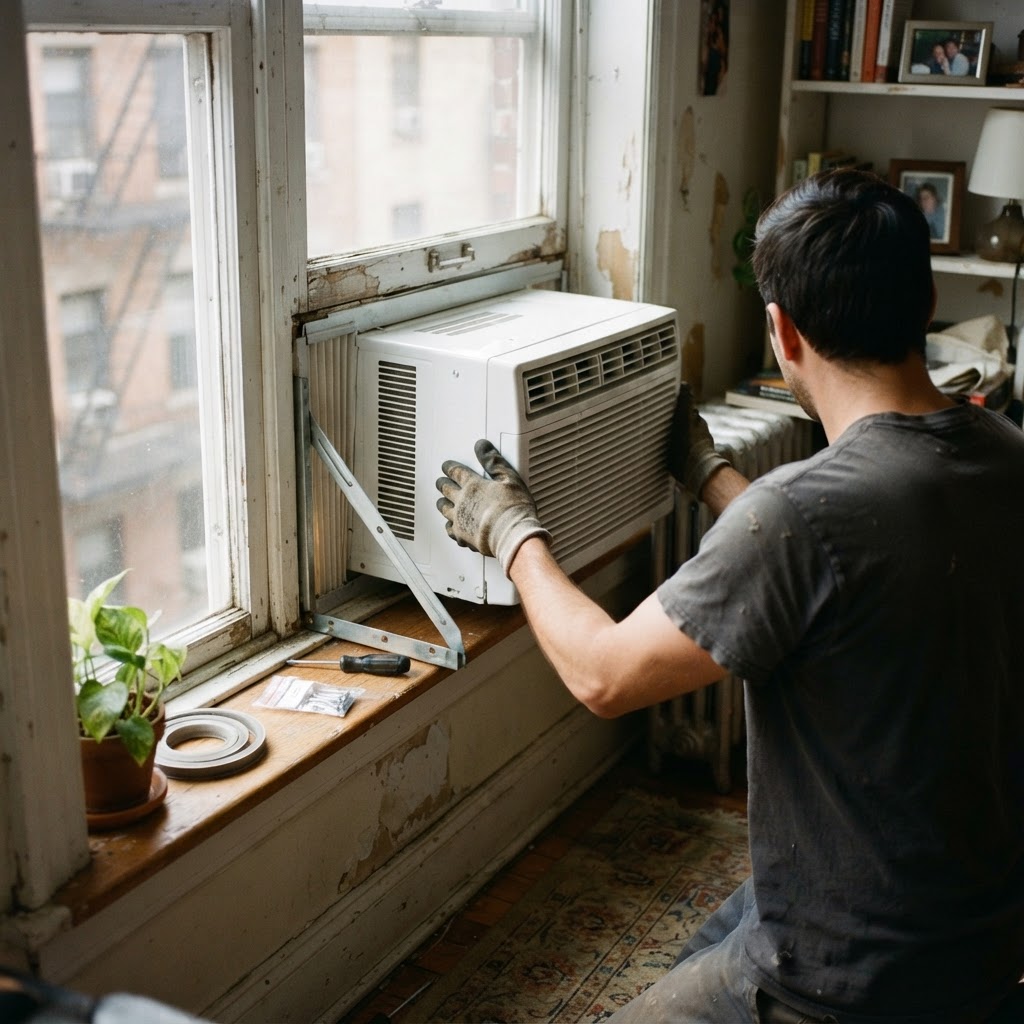
Installing a window AC unit in a one-window apartment is a common rite of passage for New Yorkers, but it is also one of the most nerve-wracking tasks for any renter. When you only have one window, you must balance the need for cool air with the necessity of keeping the room functional and secure. If your window is in a historic pre-war building or a tight space where you cannot afford a mistake, getting it right the first time is essential.
Understanding the window ac one window apartment challenge
The primary difficulty in a one-window apartment is that you lose your only source of natural light and airflow once the unit is in place. If you are doing this yourself, you must prioritize weight distribution. Most modern AC units are heavy, and if they are not pitched correctly toward the outside, you will end up with water pooling on your windowsill, which can damage the wood or leak into the apartment below. You need to calculate the weight capacity of your window sill. Many NYC sills are covered in thin metal that can bend under the weight of a heavy BTU unit. Inspect your sill for rot or loose mortar. If it feels spongy, that is a red flag. Always use a level to verify the pitch. The unit should tilt outward by a fraction of an inch, just enough to ensure the internal condensation tray drains externally rather than overflowing into your living room. A common mistake is tilting it too far, which can compromise the exterior stability and cause the unit to vibrate or shift over time.
Preparing the window frame
Before you even lift the unit, ensure the track is clean. Old windows in NYC often have layers of paint or debris in the tracks. Use a stiff brush to clear it out. If your window is loose, you may need to add foam weatherstripping to create a tight seal. A solid base is mandatory; if the bottom sash is not stable, the entire unit risks shifting. If you find the frame is rotted or the wood is splintering, do not attempt the installation yourself. You can book a handyman to assess the structure before you jeopardize the window. Check the sash lock to ensure it functions. If the lock is missing or broken, buy a sash lock kit at a local hardware store. The bottom sash should be secured to the AC top rail using wood screws or an L-bracket. This prevents the window from being nudged upward from the outside. If the window frame is deep, you may need additional support blocks to reach the unit.
Mounting and sealing the unit
Slide the unit onto the sill, ensuring the bottom rail is firmly seated. Most units come with side curtains, but in an apartment, these are rarely enough to block the summer humidity. Use rigid foam insulation boards cut to size instead of the flimsy plastic accordion sides. This provides better noise dampening and thermal efficiency. Always check that the unit tilts slightly outward to facilitate drainage, but ensure it is braced securely on the exterior so it does not tilt too far. If you are mounting a heavy unit and feel nervous about the exterior ledge, consider using professional TV mounting experts who are insured for exterior work to handle your AC installation instead. Measure the gap between the unit and the window frame carefully. Use a sharp utility knife to trim your foam board for a snug fit. Seal the seams with high-quality exterior weather tape or foam tape to prevent air leaks. A drafty seal is the most common reason for high electricity bills in the summer. Once sealed, check the weight distribution one last time. If the unit wobbles when you touch it, add more shims between the sash and the top of the AC unit.
NYC building rules and compliance
Navigating the rules for window AC units in New York City is as important as the physical labor. Most buildings require that units are installed with a professional-grade exterior support bracket. This is not just a suggestion; it is a legal safety requirement in many co-ops and condos to prevent the unit from falling onto the street. Check your building's house rules or ask your superintendent if there are specific brands or types of brackets that are required for your facade. Some pre-war buildings have strict regulations about the aesthetic impact on the exterior, meaning you might need a bracket that minimizes visibility from the street level. Always prioritize building compliance to avoid fines or forced removal of your cooling system.
Maintenance for seasonal efficiency
Once the installation is complete, maintenance throughout the season keeps the unit running efficiently. NYC air is notoriously dusty, and your filter will clog faster than expected. Check the air filter at least once a month. If it is a mesh filter, rinse it in the bathtub with warm water and a mild soap. If it is a disposable paper filter, replace it entirely to keep the airflow consistent. If the unit begins to rattle, check the exterior brackets to ensure the screws have not loosened due to heat expansion. Clear any leaves or debris that might have collected in the exterior drain hole to ensure water continues to exit properly. Proper seasonal upkeep extends the life of your motor significantly.
When to call a professional for ac installation
There is a point where DIY stops being worth the risk. If you live in a high-rise and the window does not slide up easily, or if you do not have a secure exterior support bracket, stop immediately. Attempting to install a heavy appliance outside a multi-story building window is a liability that is not worth the stress. Pros have the specific brackets and tools to ensure the unit is anchored into the building structure properly. If you have already spent hours wrestling with a heavy unit, you might want to look into other ways to improve your space. Sometimes, moving furniture is the real solution to cooling, and you can book furniture assembly to help reconfigure your layout so that the airflow actually reaches your bed or work desk. Furthermore, if you are struggling with the digital settings or smart features of your new unit, book tech setup for a quick, efficient way to integrate your appliances with your home automation system.
Frequently Asked Questions
Do I need a support bracket for a window AC unit?
Yes, in almost all cases. Even if the window sash feels secure, a metal support bracket is necessary to take the weight off the window frame and prevent the unit from slipping outward, which is a major safety concern in NYC.
How can I make my AC unit more energy efficient?
Seal any gaps around the sides of the unit using high-quality foam or rigid insulation boards. Blocking the air leaks prevents hot city air from entering your apartment and keeps your unit from running constantly.
Can I install an AC in a window that opens horizontally?
Most standard window AC units are designed for vertical sliding windows. If you have a sliding window that moves horizontally, you will likely need a specific vertical AC unit or a custom-built frame insert to ensure the unit stays secure.
Book help in
New York If you find yourself stuck or worried about the safety of your window AC installation, our team is ready to help. You can easily schedule an appointment for professional assistance by visiting our book a handyman page.