
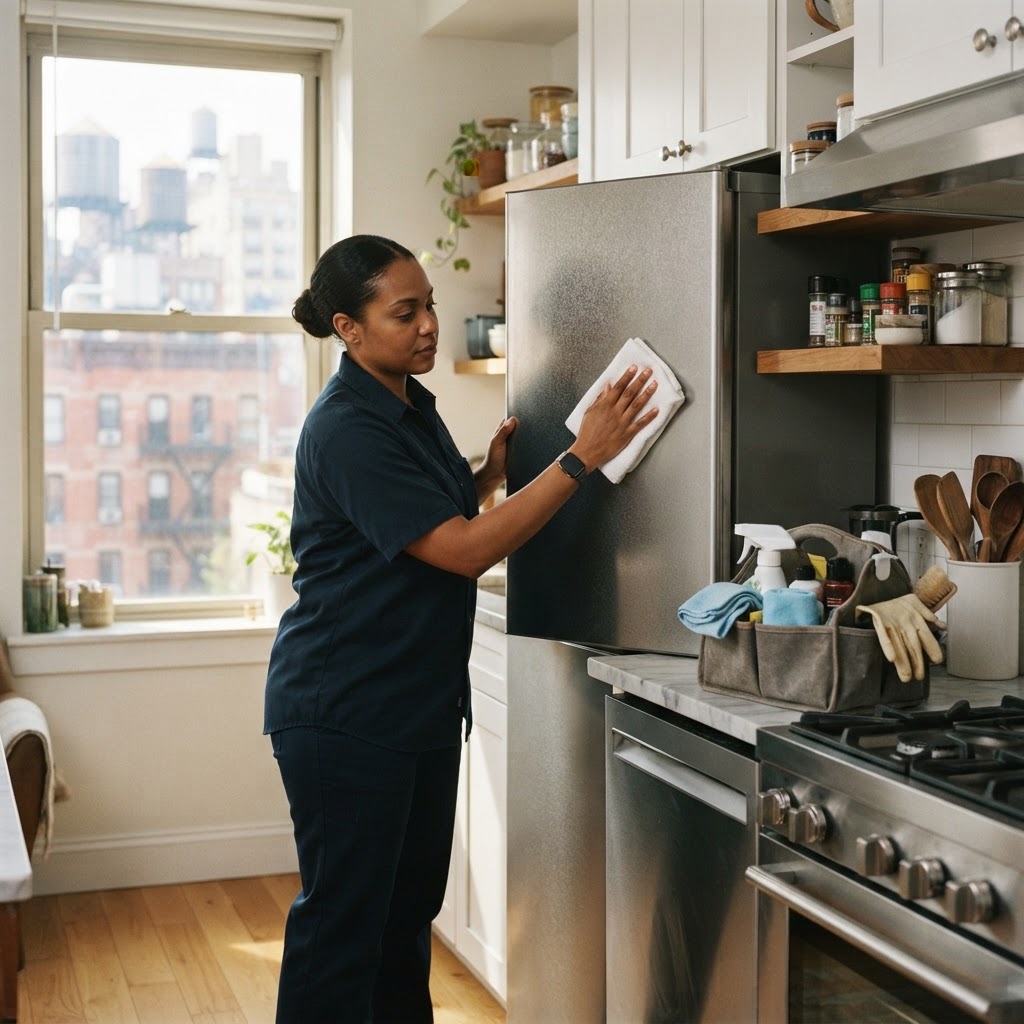
Maintaining the finish on stainless steel appliances in a rental apartment is a balancing act between regular upkeep and avoiding permanent surface damage. In New York City apartments, where kitchens are often compact and shared, keeping your fridge or stove clean helps prevent grease buildup that can eventually dull the metal. Regular maintenance is the most effective way to ensure your appliances look like new without the need for harsh chemicals that might strip away the protective sheen. Consistency prevents the need for aggressive restoration later on.
Proper tools to clean stainless steel appliances
When you clean stainless steel appliances, you must prioritize the direction of the grain. Much like wood, stainless steel has a brushed pattern. If you scrub against this grain, you risk embedding dirt into the microscopic grooves, which causes streaks and can eventually lead to permanent scratches. Use a microfiber cloth rather than paper towels, as the latter can leave small fibers behind or even cause light abrasions on softer stainless finishes. You should always keep at least three clean cloths on hand: one for the initial soap application, one for rinsing, and one for final buffing.
Essential cleaning supplies for city kitchens
For daily maintenance, a small amount of mild dish soap mixed with warm water is sufficient. Fill a spray bottle with one teaspoon of mild liquid detergent per quart of warm water. Wipe the surface with the grain, then immediately dry it with a clean, dry microfiber cloth to prevent water spots. In hard-water areas, these spots can become stubborn quickly. Avoid abrasive pads, steel wool, or bleach at all costs. These materials scratch the protective chromium oxide layer that prevents stainless steel from rusting. If you are dealing with heavy grime from years of cooking in a pre-war building, it may be time to schedule a professional house cleaning service to reset the kitchen surfaces.
Dealing with stubborn buildup
If you find sticky residue or fingerprints that refuse to budge, use a small amount of white vinegar. Spray it lightly on a microfiber cloth rather than directly on the appliance to prevent liquid from dripping into internal components or electrical seams. High-moisture areas like near the oven handle often collect the most residue. Work in small sections, roughly six inches square at a time, to ensure you do not miss spots. Once the grime is lifted, buff the area with a tiny drop of mineral oil or olive oil. This adds a protective layer that resists future fingerprints. If the kitchen grease has become overwhelming throughout your space, consider booking a deep cleaning to restore the entire area.
Understanding building rules and appliance care
Living in a New York apartment often comes with building regulations that limit what you can do to fixtures. Many landlords require tenants to maintain appliances in their original condition. Using harsh solvents or abrasive scouring powders can strip the finish, which may lead to deductions from your security deposit. If you notice rust spots forming on an older fridge, contact your management office before attempting a chemical fix, as some surfaces require specific coatings. Always check your lease for clauses regarding appliance maintenance. Proper care reduces the risk of liability when you eventually move out of the unit.
Long term maintenance and preventing oxidation
Humidity in NYC can accelerate oxidation on stainless steel. To maintain the luster, perform a deep cleaning of your appliance exterior once a month. Use a specialized stainless steel polish sparingly to prevent a waxy buildup that attracts dust. Before applying any product, test it on an inconspicuous area, such as the back corner of a fridge door. If the finish changes color, discontinue use immediately. Consistent care prevents deep grease from hardening. If you find your stove is consistently covered in oil, consider using a splatter guard during cooking. Taking these small, preventative steps keeps your appliances in top condition throughout your entire lease term.
Preventing common appliance damage
Kitchen maintenance is not just about aesthetics; it is about preventing repairs that could impact your security deposit. In NYC walk-ups or tight galley kitchens, appliances often suffer from poor ventilation. This leads to grease accumulation on the exterior of your stove and fridge. By wiping these surfaces down weekly, you prevent the grease from baking onto the metal during daily cooking, which saves you from heavy scrubbing later on. If you fail to clean, the heat from your stove will turn airborne grease into a gummy film that is nearly impossible to remove with standard soap.
If you are nearing the end of your lease, a clean kitchen is essential for protecting your move-out cleaning deposit. For those who are moving into a new place or clearing out an old one, sometimes the buildup is too deep for standard home supplies. In these cases, it is safer to hire experts who can handle tough degreasing. If you have neglected your appliances for too long and find other clutter or waste accumulating, you can book junk removal to clear the path for a thorough kitchen maintenance routine.
When to call a professional
Sometimes, despite your best efforts, stainless steel can suffer from deep scratches or heavy oxidation that requires professional attention. If you are unsure about the finish on your specific appliances, do not experiment with industrial cleaners. Professional cleaners know how to evaluate the specific needs of high-end appliances found in luxury buildings versus the standard models in older brownstones. If the job is more than you can handle, remember that professional cleaning is available at a rate of $65 per hour.
Frequently Asked Questions
Can I use store-bought stainless steel sprays?
Most commercial sprays are fine for occasional use, but they often leave behind a waxy film that attracts more dust and fingerprints over time. Natural soap and water are usually safer for daily maintenance in rental apartments.
Why is my stainless steel showing streaks?
Streaks almost always happen because you are wiping against the grain of the metal or using a cloth that is not completely clean. Always wipe in the direction of the brush marks and use a dry secondary cloth to buff the surface.
What should I do if I accidentally scratch the surface?
Small scratches can sometimes be buffed out with specific stainless steel polishing kits, but deep gouges are usually permanent. Avoid using DIY abrasive pastes, as they will remove the brushed finish and leave a shiny, dull spot that stands out.
Book help in New York
If your kitchen requires a professional touch, our team is ready to assist you. You can schedule your next house cleaning service online to ensure your appliances and home look their best.