
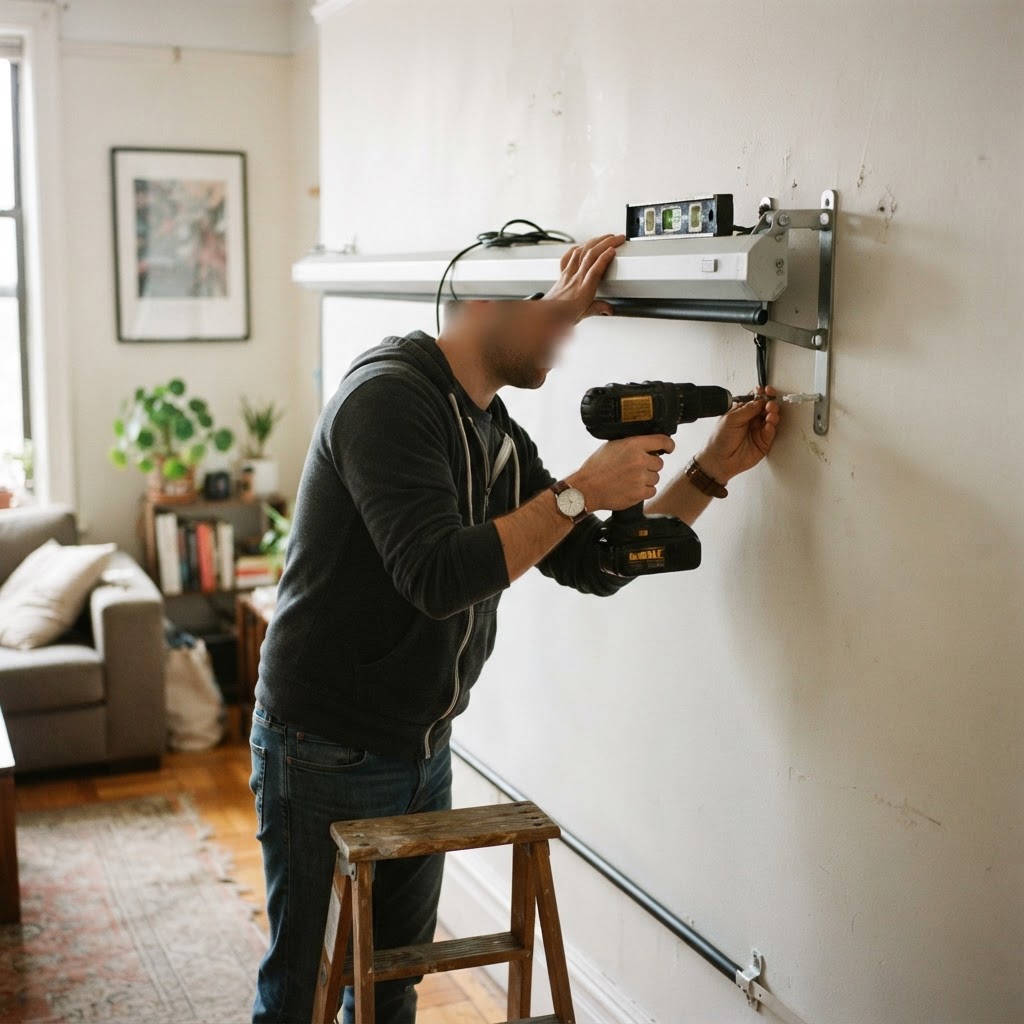
Mounting a projector screen in a rental apartment is a balancing act between achieving a home cinema experience and avoiding expensive lease penalties for wall damage. In a city where landlords are strict about property conditions, your approach depends entirely on the type of wall you have and the weight of your screen. If you are handy, you can mount most lightweight screens using proper anchors, but once you move into heavy-duty hardware or plaster lath, it is often better to book a handyman to ensure the job is done right.
Assess Your Wall Type Before Starting
The first step to hanging a projector screen rental wall is identifying your wall material. New York apartments are notorious for being a mix of drywall, plaster, and masonry. Modern high-rises often use standard drywall, which is straightforward to anchor. Pre-war brownstones, however, feature thick plaster over wood lath, which crumbles easily if you try to force a screw into it without the right preparation.
Drilling Into Drywall
If you have standard drywall, use toggle bolts or heavy-duty drywall anchors. Never trust the plastic anchors that come in the box with cheaper projector screens. They are rarely rated for the vibration and weight of a screen over time. First, use a stud finder to locate the vertical wood framing. If you hit a stud, use wood screws at least two inches long. If you hit a hollow cavity, use metal toggle bolts. Drill a hole, push the toggle through, and tighten the screw until the bracket is flush against the wall. Always use a level to ensure your image remains square, as even a slight tilt will look glaringly obvious once the projector is running.
Dealing With Plaster and Masonry
For plaster walls, avoid large drill bits that can cause the surface to crack or crumble. If you are lucky enough to hit a stud behind the plaster, drive your screws directly into the wood. If you cannot find a stud, you must use specialized toggle anchors. If your walls are brick, you will need a hammer drill and masonry bits. If you are not comfortable using power tools on brick, our team can help you with TV mounting and screen installation to keep your setup secure. Always start with a small pilot hole to prevent the plaster from spider-webbing, then increase to the size required by your wall anchor.
Navigating Building Management and COIs
In New York City, many co-ops and managed buildings strictly regulate who can perform installations. If your projector screen involves drilling into walls or ceilings in common areas or shared walls, management may require a Certificate of Insurance. This document proves that your contractor carries proper liability coverage. A DIY project that ends in a water pipe puncture or a structural crack can result in heavy fines or lease termination. Before you start, check your lease agreement for clauses regarding permanent wall alterations. Always keep a digital copy of your COI handy if your building is high-security or requires advanced notice for deliveries and installation services.
Maintaining Alignment and Longevity
Once the screen is installed, you should perform a weight-bearing test by pulling gently on the housing before attaching the fabric. Check for any bowing in the bracket. Motorized screens are particularly sensitive to mounting errors. If the bracket is slightly misaligned, the motor will work harder, leading to fraying along the edges of the screen fabric. Every few months, inspect the anchor points. NYC apartments experience temperature fluctuations that cause building materials to expand and contract, which can occasionally loosen screw fittings over time. Tighten any loose hardware immediately to prevent vibrations during movie nights from widening the holes in your drywall or plaster.
When DIY Becomes a Liability
There is a point where DIY projects stop being cost-effective. If your projector screen is a massive motorized unit, it will likely require two people to lift and secure it safely. Trying to hoist a heavy unit while balancing on a ladder in a small living room is a recipe for scuffed paint and damaged equipment.
If you find yourself needing to move heavy items or assemble complex structures before your screen goes up, consider help for furniture assembly to clear the space first. Additionally, if you need to integrate your screen with a complex surround sound system, you might want to look into tech setup services to hide cables and calibrate the hardware properly. If the job requires a Certificate of Insurance for your building management, a pro tasker can provide that documentation, whereas a DIY attempt might leave you liable for any building damage.
Patching and Moving Out
When you eventually move out, you will need to repair every hole you drilled. Use spackle for small holes and mesh tape for larger ones. Sand the area until smooth, prime it, and paint over it with the original wall color. If you are not confident in your patching skills, the cost of a professional repair can be significant. Sometimes it is cheaper to hire a pro to install the screen correctly the first time rather than paying for professional wall repairs later.
Frequently Asked Questions
Can I use command strips for a heavy projector screen?
No, command strips are designed for light frames and decor. A projector screen, especially a motorized one, is too heavy for adhesive strips and will likely fall, causing damage to your screen and the wall.
How do I know if I have a stud in a plaster wall?
A high-quality stud finder that includes a deep-scan mode is necessary for older NYC buildings. Plaster is dense, so you may need to check for wall studs by identifying where trim is nailed or using a magnetic stud finder to locate the lath nails.
Is professional installation worth the cost?
Professional installation is worth it if your screen is heavy, motorized, or if you live in a building that requires a COI. We charge $85 per hour for handyman services, which ensures the job is done safely, level, and to code.
Book help in New York
If you need an extra set of hands to get your home theater setup completed safely and efficiently, we are ready to assist. You can schedule a visit at our handyman booking page.