
Why Location Matters in NYC Apartments
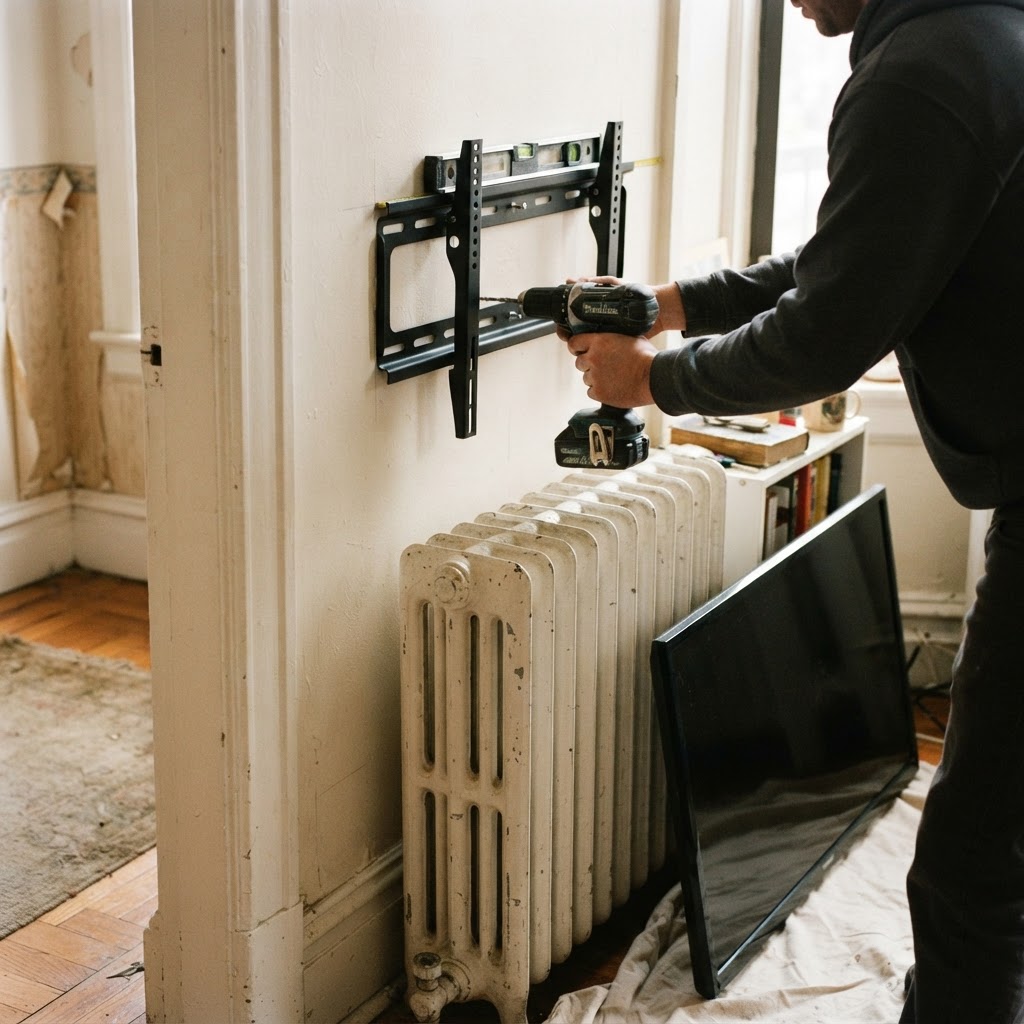
In New York City, space is a luxury. When you are living in a pre-war building or a tight studio, you might feel like your only wall space is directly above your cast-iron radiator. While it seems like the most logical place for your screen, you have to be careful. Heat rises, and modern electronics are not designed to endure constant thermal cycles. Before you drill into your wall, you must determine if the heat output will degrade your TV components or warp the plastic casing over time. Evaluating the proximity of your radiator is the first step in protecting your investment.
The Risks of Heat and DIY Mounting
Thermal Damage to Electronics
Radiators in older buildings often run very hot during the winter months. Even if you turn the valve down, the surface temperature can be significant. Mounting a screen directly above this source can cook the internal circuit boards. If you must place it there, use a high-quality thermometer to check the temperature at the wall where the TV will sit. If it exceeds 85 degrees Fahrenheit, you should reconsider your layout. You might find it easier to book furniture assembly to move your shelving or entertainment unit to a different wall entirely.
Secure Wall Anchoring
Most NYC apartment walls are plaster and lath. Drilling into these requires specific drill bits and masonry anchors. If you are not hitting a stud, your TV is at risk of pulling away from the wall. If you are uncertain about the structural integrity of your wall, it is much safer to book a handyman to ensure your mount is properly secured. Professionals know how to navigate the quirks of NYC building materials without cracking your plaster. Attempting to force a standard plastic screw anchor into crumbly plaster often leads to failure.
Proper Mounting Techniques
If you decide to proceed, you need to ensure there is a buffer zone. Ideally, you want at least 18 to 24 inches of clearance between the top of the radiator and the bottom of your television. You should also consider using a full-motion mount rather than a static one. This allows you to pull the TV away from the wall when the heat is on, preventing trapped air pockets from forming behind the screen. If you find the job is more complex than expected, you can book TV mounting services to handle the precise measurements and leveling.
Once the mount is secure, you will likely need to deal with cable management. Avoid running cables directly down behind the radiator, as the heat can melt the protective coating on your HDMI and power cords. Use cable raceways to route your cords to the side, away from the heat source. For help configuring your new setup once it is mounted, you can book tech setup for a clean, professional finish.
Understanding Building Requirements and Permits
Before you start drilling in an NYC apartment, consult your lease. Some co-op and condo boards have strict rules regarding wall modifications. If you live in a historic landmark building, you might be restricted from altering certain wall surfaces. Always verify if your board requires a Certificate of Insurance from your technician. Professional installers typically carry the necessary insurance to satisfy building management requirements. When you book a tasker, ensure they are prepared to provide documentation so your project proceeds without friction from building staff.
Maintenance and Long-term Heat Management
Even after a successful installation, you must remain vigilant. Test the wall temperature during the coldest week of January. If you notice a hot spot developing on the back of the TV casing, you must intervene. Consider installing a decorative metal shield or a heat-resistant panel between the radiator and the wall. Periodically check that your mounting bolts remain tight, as the expansion and contraction caused by heating cycles can loosen hardware over time. A quick quarterly inspection ensures your setup remains safe, level, and functional for years to come.
Frequently Asked Questions
Can I mount a TV over a radiator if I have a shelf in between?
A shelf can act as a heat shield, but it must be installed correctly. It needs to be wide enough to deflect the rising heat away from the bottom of the TV, and it should be securely anchored to the wall studs.
What should I use to mount a TV in a plaster wall?
Standard drywall anchors will not hold in plaster and lath. You must use specialized toggle bolts or heavy-duty anchors designed specifically for plaster. If you are unsure about the condition of your walls, a professional should assess them first.
When is the radiator heat too intense for a TV?
If the wall temperature directly above the radiator exceeds 85 degrees Fahrenheit, your TV is at high risk of internal damage. Extended exposure to these temperatures will cause premature failure of electronic components.
Book help in New York
We provide professional installation services across all five boroughs, Long Island, Westchester, New Jersey and Connecticut. If you want to ensure your setup is safe and level, book TV mounting with us today.