
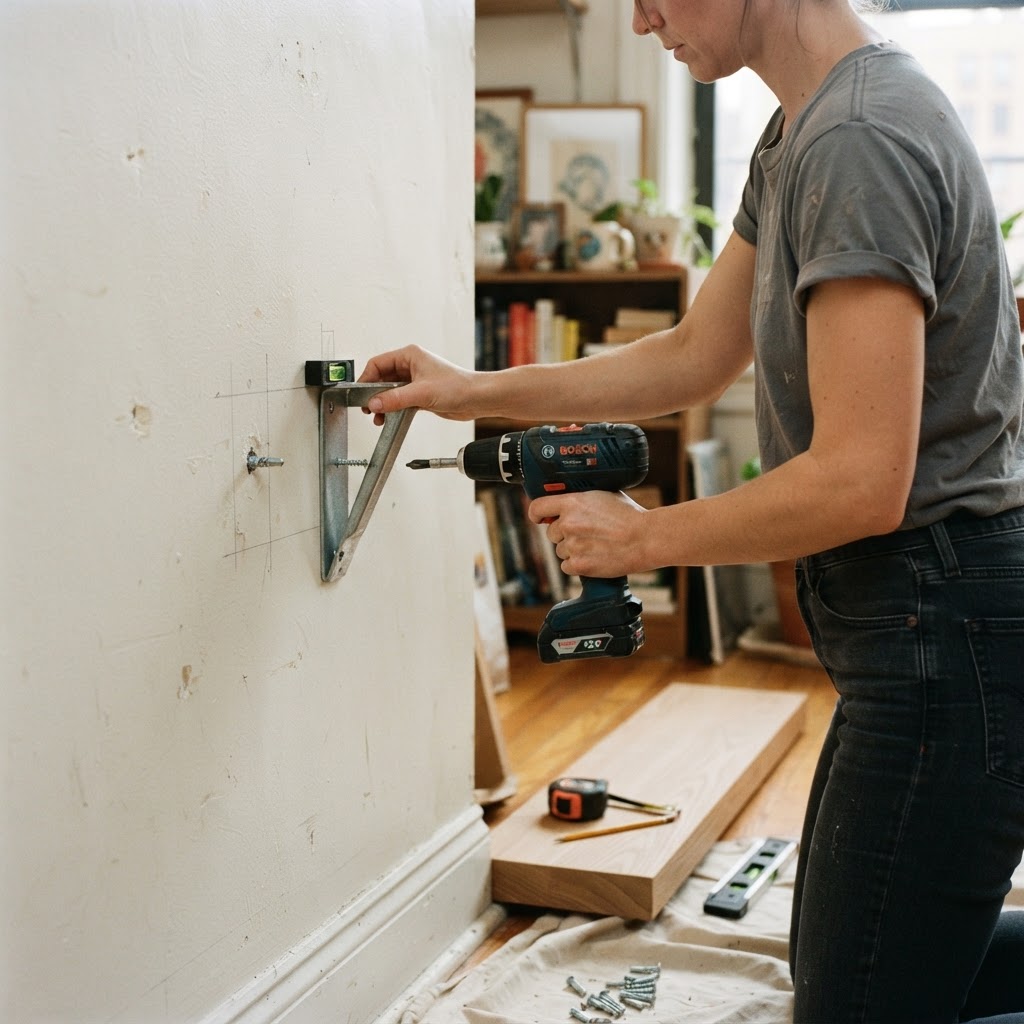
Floating shelves are a staple in cramped NYC apartments, but finding a stud in an older pre-war building or a modern condo with metal framing can feel impossible. While it is technically possible to mount lightweight items using heavy-duty drywall anchors, you must be realistic about weight limits. When you need to install floating shelves no studs, the safety of your walls depends entirely on the hardware you choose and your precision during installation.
Understanding your wall limitations
Before you drill, check your wall type. If you live in a pre-war building, you likely have plaster and lath rather than standard drywall. Plaster is brittle and prone to cracking, which makes traditional drywall anchors a risky choice. If the wall feels solid, you might be dealing with masonry or high-density brick. In these cases, standard screw-in anchors will fail immediately. Always tap the wall to hear for a hollow sound, which confirms you are working with drywall. You can also use a strong magnet to search for metal studs in modern buildings. If the magnet does not stick anywhere, you are likely looking at metal studs or wood framing that you simply cannot locate with a basic sensor.
Choosing the right hardware
Never rely on the cheap plastic anchors that come in the box with your shelves. For a secure hold without a stud, you need toggle bolts or high-strength metal expansion anchors. Toggle bolts work by folding through a hole in the wall and expanding on the other side, creating a bridge that supports significant weight. If you are uncertain about your hardware, it is worth your time to consult with a professional. You can book a handyman to ensure your installation is secure and level. When selecting hardware, choose a bolt length that accounts for the thickness of the shelf bracket plus the wall thickness. Most NYC drywall is half an inch to five-eighths of an inch thick.
The installation process
Start by measuring your shelf height and marking the holes on your wall with a pencil. Use a level to ensure the bracket is perfectly horizontal; even a slight tilt will be noticeable once the shelf is mounted. If you are using toggle bolts, you will need a larger drill bit than the screw size to allow the toggle to pass through the drywall. Drill slowly to avoid creating a jagged hole. If the hole is too wide, the toggle will not have enough surface area to grip the back of the wall securely. Clear away any drywall dust from the site to ensure the bracket sits flush against the wall surface.
Once the holes are drilled, insert the toggle bolt through the bracket, then thread the toggle onto the end. Push the toggle through the hole until you hear it pop open behind the drywall. Pull back on the bolt to keep the toggle tight against the inside of the wall, then tighten the screw until the bracket is flush. If you struggle with the assembly or alignment, consider that we also provide furniture assembly to keep your items functional. Always check for electrical wires before drilling by using a voltage detector. Many NYC units have outdated wiring that may not be run through metal conduit.
Managing building management rules
New York City apartment buildings often have strict rules regarding wall modifications. Before you start drilling, check your lease agreement or contact your building superintendent. Some co-ops require written approval before you perform any work that involves penetrating the wall surface. This is especially true in buildings with historic plaster walls, which can be expensive to repair if you crack them while installing hardware. Always keep a small container of spackle on hand to patch the inevitable test holes you might make while trying to locate a hidden beam or avoiding a pipe.
Long term maintenance and load limits
Once your floating shelves are up, the work is not finished. Over time, weight and gravity can cause even the best anchors to shift. Every few months, check the screws to ensure they have not worked themselves loose. Never exceed the weight capacity recommended by the manufacturer. If you notice the shelf beginning to sag or pulling away from the wall, remove your items immediately. Do not attempt to tighten the screws if the anchor is spinning; this means the drywall has been stripped. You will need to remove the hardware, patch the hole with high-strength filler, and relocate the shelf at least two inches away from the damaged area.
When to stop and call a professional
DIY shelving is best reserved for light decor, picture frames, or small books. If you plan to store heavy items, high-end ceramics, or large collections, the risk of tearing the drywall increases significantly. If you hear crunching or feel the anchor spinning, stop immediately. You have likely damaged the drywall and created a larger hole that needs patching. For complex layouts, expensive shelving units, or sensitive electronics, you may want to book TV mounting or a professional install if you feel out of your depth. When you need complex wall work or smart home setup for your apartment, professional labor ensures your security deposit stays safe and your walls remain intact.
Frequently Asked Questions
Can I mount heavy items without a stud?
It is not recommended. Drywall anchors have specific weight limits, and even the best ones can fail if the load is too heavy or vibrates. For heavy items, you should always anchor into a structural stud or use a mounting board secured to multiple studs.
What should I do if the wall is plaster instead of drywall?
Plaster is much more delicate and prone to crumbling. If you must mount to plaster, you should use specialized toggle anchors and be prepared for potential cracking. If you are nervous about damaging your walls, it is better to have an experienced professional handle the installation.
Are floating shelves sturdy without studs?
They can be sturdy enough for light items if you use high-quality metal toggle bolts. However, they will never be as secure as shelves mounted directly into wooden or metal studs. Always test the shelf for movement before placing expensive items on it.
Book help in New York
If you want your shelves hung correctly the first time without risking damage to your walls, we are here to help. You can view our services and schedule an expert to assist with your home project at our booking page.