
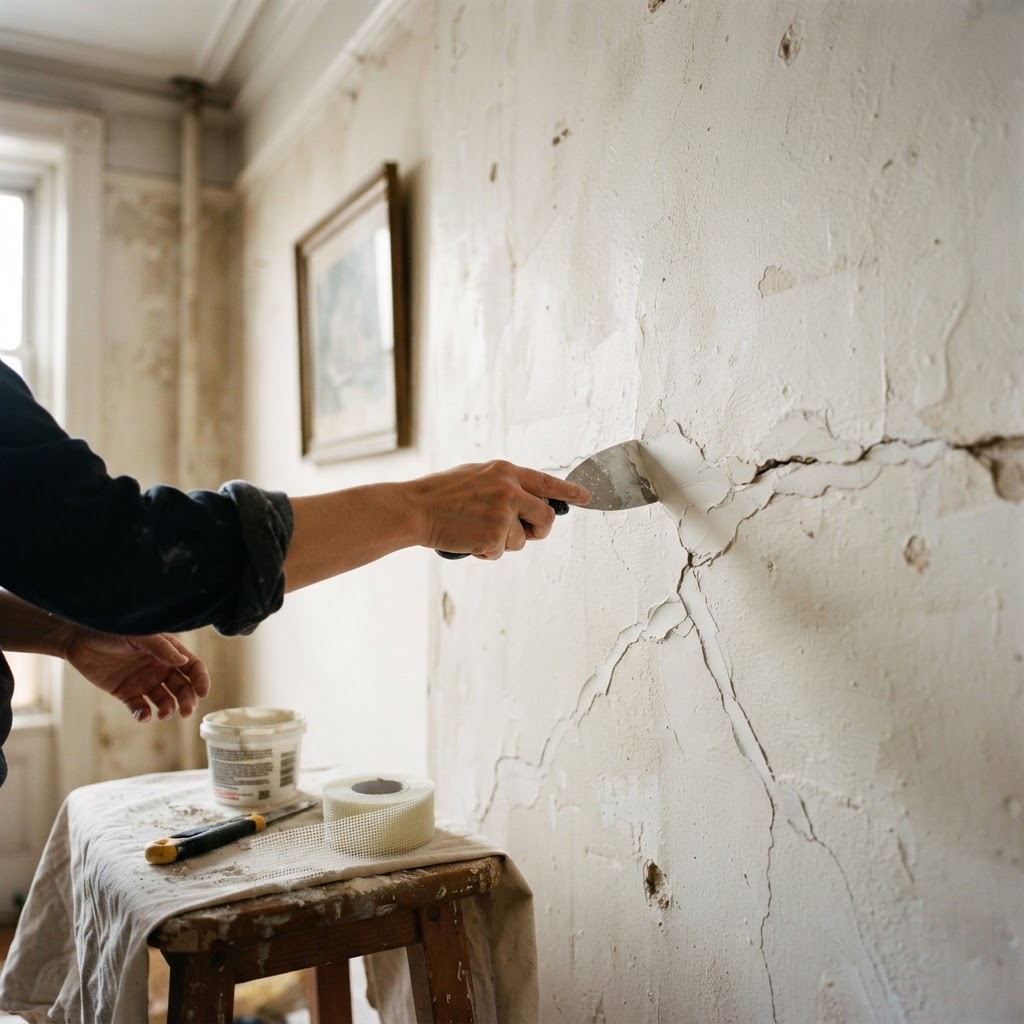
Living in a pre-war apartment often means dealing with the charm of original architectural details, along with the reality of aging walls. Those hairline fissures running through your foyer or bedroom are common, but they can be a headache when you want to hang new shelves or a mirror. If the crack is thin and stable, you can fix it yourself with a few supplies from the local hardware store. However, if the plaster is crumbling or the crack is wider than a nickel, it is time to stop and book a handyman to prevent further damage to your wall.
The Professional Approach to
Patch Plaster Cracks Fixing plaster is not the same as working with modern drywall. Plaster is denser and more brittle, meaning it reacts differently to expansion and contraction in buildings that settle over time. To patch plaster cracks effectively, you need to widen the area slightly to create a clean surface for your filler to grab. Do not just smear putty over the crack. If you do, the movement of the building will cause the repair to pop out within a few months.
Preparing the Surface
Start by taking a utility knife or a rigid putty knife and scraping along the length of the crack. You want to create a small V-shaped groove. This gives your patching compound more surface area to bond to the surrounding material. Once you have cleared out any loose debris, use a damp sponge to wipe away the dust. Dust is the enemy of a clean patch, especially in buildings where old lead paint might be present. Always wear a mask if you are working on walls in an older brownstone or pre-war walk-up. After scraping, check if the plaster behind the crack is soft or hollow. If you tap the wall and it sounds like a drum, the plaster is loose from the lath. You may need to use plaster washers to secure the loose material back to the wooden lath before patching.
Choosing the Right Compound
For most plaster repairs, you should use a setting-type joint compound rather than the pre-mixed tub of lightweight spackle. The pre-mixed stuff often shrinks too much when it dries. Once you have filled the groove, use your taping knife to smooth it level with the wall surface. Because plaster walls are often slightly uneven, you might need to feather the edges out a bit. Let it dry completely, sand it lightly, and then assess if it needs a second coat before you are ready to proceed with your project. If you are struggling with the finish, you might want to book furniture assembly or other tasks while a pro handles the wall repairs. For a seamless finish, use 120-grit sandpaper to smooth the compound. Avoid aggressive sanding, which can damage the surrounding paper or plaster finish. Always wipe the dust away with a tack cloth before painting.
Navigating NYC Building
Regulations and Coordination Living in a co-op or condo building adds complexity to wall repairs.
Many New York building boards require notification for heavy renovation, though simple patching is usually exempt. However, if you are planning to mount heavy items after patching, check your building bylaws. Some buildings have strict rules about drilling into plaster because of the risk of damaging lath or triggering lead dust hazards. Always verify if your building requires a certificate of insurance from any professional you hire. It is also wise to inform your neighbors if your repair requires noisy power tools, as noise ordinances vary between residential neighborhoods.
Managing Timing and
Cost Drivers in the City Repair costs in New York often depend on the density of the damage and the number of trips required. A single, small crack can usually be addressed in one visit. However, large areas of failing plaster require multiple stages of work, including drying time for the compound. If a pro has to return to sand and prime, the cost increases. To save money, clear the work area completely before your appointment. Move furniture away from the wall and protect your flooring with plastic sheeting. If the handyman does not have to spend time cleaning or moving your belongings, they can focus entirely on the quality of the wall repair.
When DIY Efforts Fall Short
There is a point where the effort of a DIY repair outweighs the result. If your walls have deep, spider-webbing cracks, it might indicate that the plaster key has detached from the wood lath behind it. In this case, no amount of putty will keep the wall stable. If you ignore these structural issues, your attempt at TV mounting could result in the wall failing under the weight of the bracket. Professional repairs ensure the substrate is solid before any hardware is driven into the wall. If you have already filled your walls but are having trouble getting everything aligned for your home office or smart home gear, we are here to help. You can easily book tech setup for your devices once your walls are smooth and ready for installation. Professional handymen understand the nuances of lath and plaster, and they have the tools to ensure your anchors hold securely without causing extra cracks.
Frequently Asked Questions
Can I use drywall tape on plaster cracks?
Yes, if the crack is larger than a hairline, you should use mesh fiberglass tape to help bridge the movement of the wall. Apply the tape over the crack before filling with your compound to give the patch extra structural strength.
How long should I wait before painting over a patch?
Wait until the patch is completely dry and white throughout. If you paint while the compound is still damp, the moisture will be trapped and the paint finish will likely bubble or peel shortly after application.
Do I need to remove old paint before patching?
It is best to lightly sand the area around the crack to remove loose paint and provide a slightly rough surface for the new compound to stick to. You do not need to strip the whole wall, but cleaning and scuffing the immediate area is necessary.
Book help in
New York When your home improvement project feels like too much to handle alone, our team is ready to assist with your repairs. You can view our services and schedule your appointment today at the link below. Book a handyman