
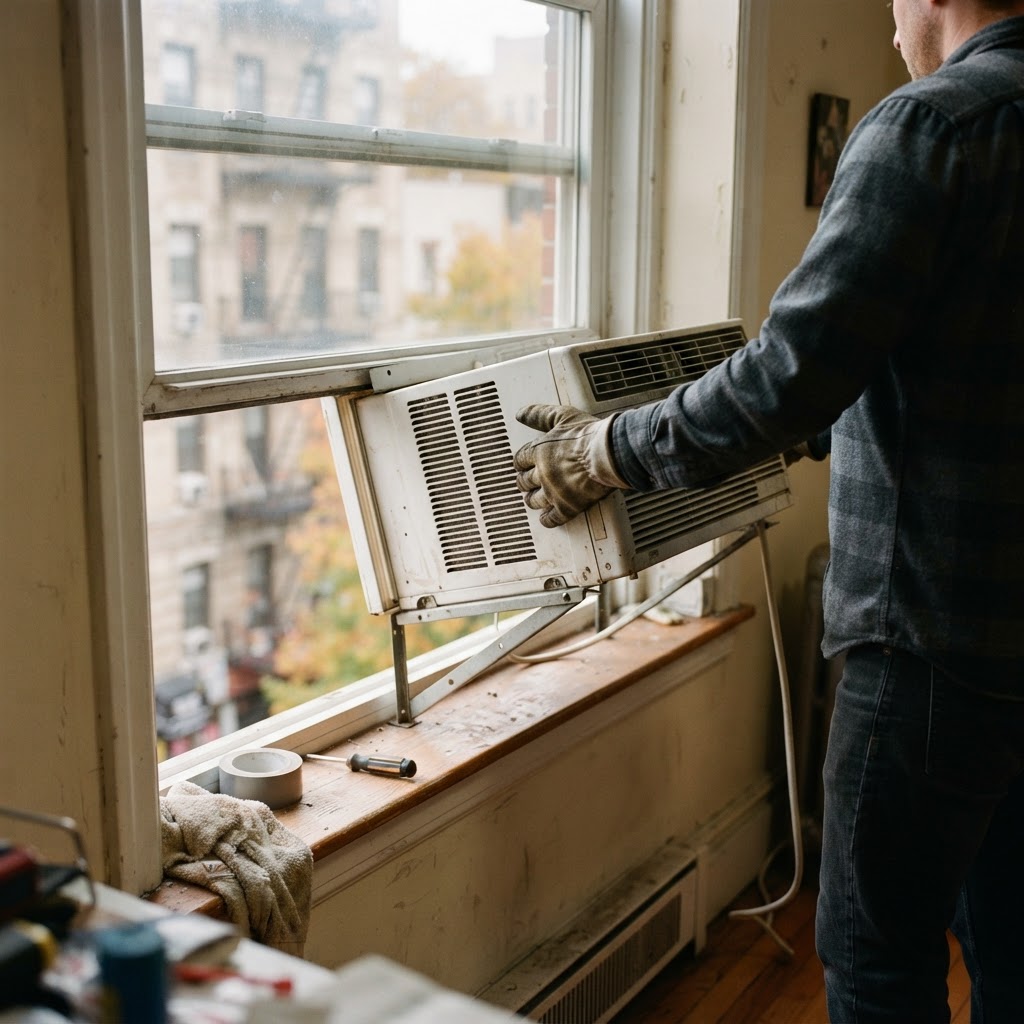
Preparing to remove a window AC unit
Removing a window AC unit is a classic seasonal chore for any New Yorker. As the temperatures drop, that heavy piece of hardware needs to come out so you can properly seal your window for the winter. Before you start, check your building rules. Some co-ops and condos have strict policies regarding exterior window attachments, and you want to ensure you are not violating a lease or house rule when you disturb the window frame.
First, gather the right gear. You will need a cordless drill with a magnetic bit set, a screwdriver, a sturdy step ladder if your unit is high up, and a reliable friend. Never attempt this alone if you are on a high floor or if the unit is larger than a standard bedroom model. The safety risks of a unit slipping out the window are simply too high in a dense city environment. Ensure you have clear floor space inside your apartment for the landing zone before you begin.
The step-by-step removal process
Once you have your help, start by unplugging the unit and removing the front decorative panel. Most units have filters you can clean now so it is ready for storage. Unscrew the side accordion panels from the window frame. These are often held in by small screws that have rusted over the summer. If they are stuck, do not force them. Use a bit of penetrating oil to loosen the threads before you strip the head of the screw. If the screw head is already stripped, use a pair of locking pliers to grip the outer rim and rotate it counter-clockwise.
Clearing the seals and brackets
After the side panels are loose, check for a top mounting bracket or foam insulation that keeps the unit angled downward. In many pre-war buildings with old wooden window frames, these brackets are nailed in rather than screwed. Use a flat-head pry bar gently to lift the seal without damaging the historic wood trim. Once the unit is free from the window track, tilt it slightly backward to ensure the condensation pan inside does not spill water onto your floor or down the side of the building. Have your helper stand ready with a roll of paper towels to catch any residual moisture that drips from the coils.
Sliding the unit to safety
With two people holding the weight, slide the unit inward. It is helpful to have a large towel on the floor to catch any lingering water or dust. Once the unit is on the floor, inspect your window tracks. You will likely need to clear out old tape, foam, and debris. If you find the window frame is damaged or the lock is loose, it might be time to book a handyman to ensure your apartment is secure for the cold months ahead. If the window track is warped, a pro can install weatherstripping or a new locking mechanism to prevent drafts.
Cost drivers and professional considerations
When hiring a professional for AC removal in New York City, several factors influence the final cost. The most significant is the accessibility of the unit. Units located on higher floors with custom security cages or exterior bolts require more time and specialized safety equipment. If a Tasker needs to provide their own insurance coverage or bring a second person to assist with a heavy unit, expect the labor cost to reflect that added capacity.
Another cost driver is the condition of the window frame. If your windows are painted shut or if the original hardware has rusted through, the removal process takes longer. Professionals charge by the hour, so having clear access to the window and clearing your living room of clutter before they arrive will keep your bill lower. Always clarify if the service includes cleaning the window track and applying fresh foam seals, as these add time to the job but are essential for preventing winter heat loss.
Managing your window health and maintenance
Many New Yorkers make the mistake of leaving their windows unsealed after the unit comes out. Once the AC is gone, use a putty knife to carefully remove old adhesive tape residue from the frame. If you notice cracks in the paint or the wood, apply a thin bead of interior caulking to seal air gaps. For metal frames, inspect the weep holes to ensure they are not clogged with debris. A clean, smooth track ensures that your window closes tightly, which saves on your heating bills all winter long.
If you have older windows that rattle or let in significant street noise, consider installing a temporary clear film insulator over the entire frame. This is a common practice in drafty pre-war units. By taking these extra steps in October, you prevent the mold growth that often occurs when humid city air meets the cold interior temperature of a poorly sealed apartment window during the winter months.
When DIY becomes a liability
There is a point where taking the AC out becomes a job for a professional. If you live in a walk-up and the unit is heavy, or if you do not have a secure landing spot, do not risk it. A dropped unit is a major liability in NYC. If your AC was installed with custom exterior bracing that you cannot reach, do not attempt to reach out the window to undo those bolts.
If you have other tasks to handle while the house is being prepped for winter, such as book furniture assembly for seasonal storage units or book TV mounting to change your living room layout, consider bundling those with a pro visit. Even if you consider yourself handy, some jobs require specific tools like a laser level or drill bits for masonry, which you might not have on hand. If you need help integrating smart features into your home, you can also book tech setup services to get everything running correctly before the holidays.
Frequently Asked Questions
Do I need a COI to remove my own AC unit?
Usually, individual apartment owners or renters do not need a Certificate of Insurance for their own units unless their building management specifically requests it for work involving exterior structural elements. Always check your building handbook to see if they require specific safety measures for window work.
What do I do with the unit once it is inside?
Clean the exterior casing with a damp cloth and make sure the filter is dried completely before putting it in a plastic storage bag. Store it in a cool, dry place like a closet or under a bed to prevent rust and dust buildup during the winter.
Is it safe to leave a window AC unit in all year?
It is highly discouraged. Leaving a unit in year-round creates significant drafts, increases your heating bills, and can lead to rust and water damage in your window frames. It also poses a security risk and can lead to ice buildup that damages the AC unit components.
Book help in New York
If the job feels too heavy or you are worried about your building's specific safety rules, our team is ready to assist with professional, insured service. You can book a handyman to handle your AC removal and help with any other seasonal maintenance tasks today.