
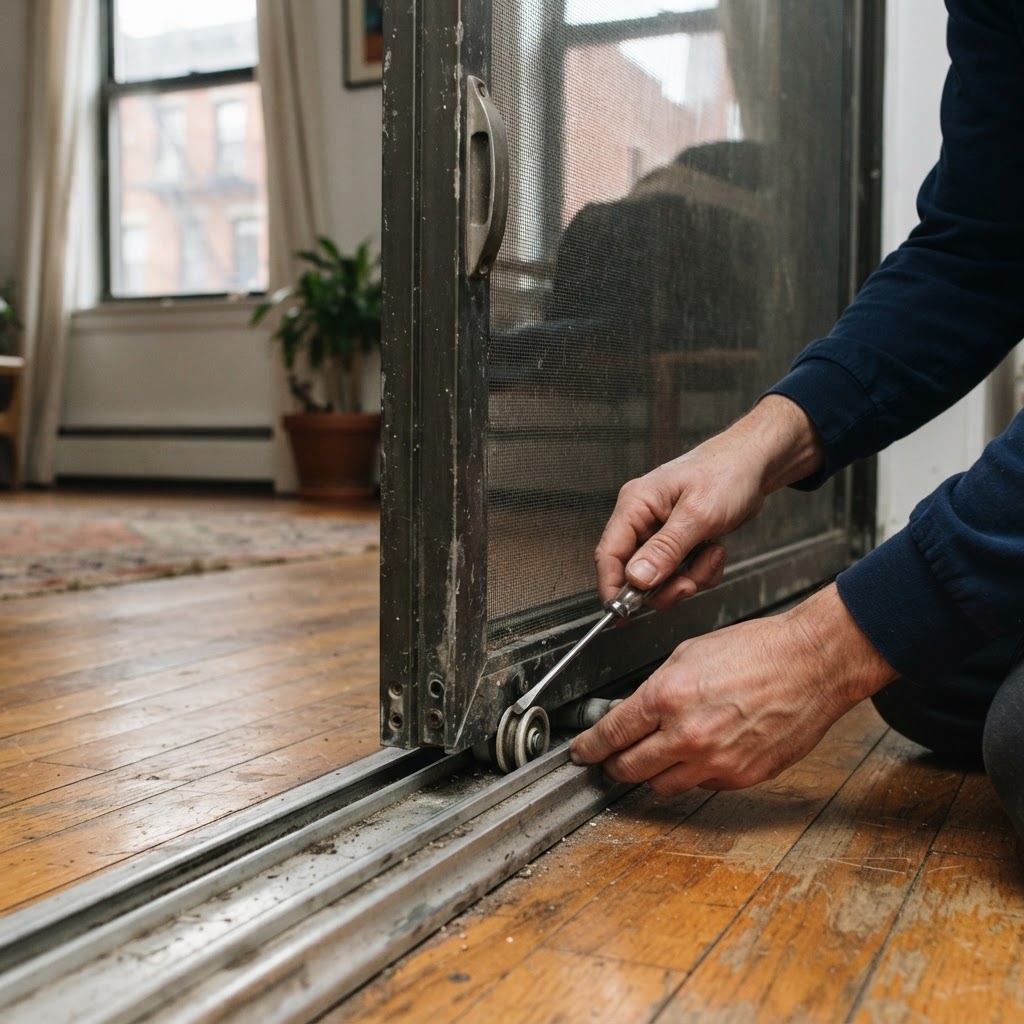
Diagnosing your sticky screen door
If your screen door is jumping off the track or refusing to slide, the issue is almost always found in the rollers or the track itself. In NYC apartments, these tracks collect dust, grit, and debris quickly. Before you assume the door is broken, check for obstructions in the lower rail. If the door moves with a grating sound, debris is likely your main culprit. If the door feels heavy or hangs at an angle, the rollers have likely failed or come loose from the frame.
To diagnose the root cause, start by checking if the door is seated correctly. Gently push the bottom of the frame toward the wall and see if it snaps back into the groove. If the frame is distorted or the track is bent, no amount of cleaning will solve the issue. Look closely for hairline cracks in the plastic roller housing. Often, the metal tracks in older city buildings develop small burs that snag the wheels. If you see metal shavings, your track is degrading and may need sanding with fine-grit emery cloth.
How to clean the bottom track
Most screen door troubles start with a clogged track. Use a vacuum with a narrow crevice tool to pull out years of buildup. Once the loose dirt is gone, wipe the track with a damp cloth and mild soap. If the track is sticky due to old grease, use a bit of mineral spirits on a rag to cut through the grime. Avoid using thick lubricants like grease or oil, as these attract more dust in a city environment, which will make your door stick again in a few months.
For a thorough clean, wrap a flat-head screwdriver in a thin microfiber cloth. Run this assembly along the length of the track to dislodge caked-on dirt. If your apartment has windows that have not been opened in years, the track might have paint overspray on it. Carefully scrape the paint off with a plastic putty knife to avoid gouging the track surface. After cleaning, ensure the track is bone dry. Moisture trapped in the track can lead to oxidation, especially on older aluminum frames found in pre-war buildings.
Adjusting the door tension
If the track is clean but the door still binds, you need to adjust the rollers. Look at the bottom of your screen door for two small access holes. Behind these holes are adjustment screws that raise or lower the door. Use a screwdriver to turn these clockwise to lift the door or counter-clockwise to lower it. You want the door to sit level so that it glides evenly. If the rollers are cracked or won't turn, they must be replaced. This often requires removing the entire door from the frame, which can be tricky in a tight hallway.
When adjusting, start by backing the screws off completely to release tension. Then, turn each screw one full rotation at a time. The goal is to lift the door just enough to clear the bottom track lip while maintaining a tight seal against the top guide. If you lift the door too high, it may slip out of the top channel during a gust of wind. Always test the movement after each half-turn of the screwdriver. If the door still tilts, you likely have a seized roller on one side that needs immediate attention.
NYC building rules and maintenance schedules
Many New York City apartment buildings have strict rules regarding exterior modifications. If your screen door is visible from the street or common areas, your management company may require you to stick to specific colors or materials to maintain building uniformity. Before you remove or replace a door, check your lease or building bylaws. Some co-ops and condos define screen doors as building property, meaning you are technically not allowed to perform major repairs yourself. Always ensure that your work does not impact the building security or the integrity of the window frame structure.
Maintenance is key to avoiding repeat issues in the city. Plan to vacuum your tracks every time you perform seasonal cleaning, usually twice a year. If you live on a lower floor near a busy street, soot and road grime will accumulate faster. Once you have a clean track, you can apply a tiny amount of high-quality dry silicone lubricant. Apply the spray to a rag first, then wipe it along the track to create a slick surface. Never spray directly into the mechanism, as this causes overspray to coat your floors and walls, creating a slipping hazard.
When to call for professional help
Not every repair is a simple DIY fix. If the door frame is bent, the track is rusted through, or the rollers are corroded into the housing, you might do more harm than good by forcing it. If you need a pro to handle the heavy lifting, you can book a handyman to diagnose and resolve the mechanical failure. We serve all five boroughs and surrounding areas, ensuring your hardware works correctly without damaging your door frame.
If you find that your home projects go beyond just door issues, we can help with other tasks. Whether you need to book furniture assembly for new arrivals or require help with smart home setup, our background-checked pros are ready. Sometimes, the frustration of a DIY repair is not worth the time, especially when a pro can handle it efficiently. For example, if your living space feels cramped while you work, consider that we also provide TV mounting to clear up floor space.
Troubleshooting common roller issues
Sometimes the problem is not the door, but the actual rollers at the bottom. Over time, the plastic or nylon wheels wear down and become flat on one side. Once they develop a flat spot, the door will not roll smoothly. If you determine the wheels are the issue, you will need to buy an exact replacement set from a hardware store. Bring your old roller to the store to ensure a match, as there are dozens of proprietary sizes for NYC window and door systems.
To remove the rollers, you usually need to unscrew the bottom rail cover or access them from the side of the door panel. If the door uses steel ball-bearing rollers, be prepared for a stiffer operation if the bearings have rusted. If you decide to upgrade to stainless steel rollers, you will notice a significant improvement in longevity. When reinstalling, make sure the roller is seated in the track before you tighten the tension screw. If you tighten the screw while the roller is sitting on top of the track edge, you will permanently deform the housing.
Frequently Asked Questions
Can I use WD-40 to make the door slide better?
No, do not use WD-40 on screen door tracks. It acts as a solvent and can leave a sticky residue that attracts more dirt and debris, making the door perform worse over time. Use a dry silicone spray if you need a lubricant, but only after the track is perfectly clean.
How much does it cost to have a professional fix a door?
If you choose to hire a professional, our handyman services are billed at $85 per hour. The final price is always confirmed at checkout before any payment is processed, ensuring transparency for your home repair.
What if my screen door is completely off the track?
If the door has jumped off the track, you will need to lift the door frame up and angle the bottom outward to reseat the rollers. This is much easier with two people, especially if the door is heavy. If you cannot lift it safely, it is safer to contact a professional for assistance.
Book help in New York
If your door continues to stick despite your best efforts, let our team take over. We offer professional repairs for doors and windows across all boroughs. You can easily book a handyman to get your home back in working order today.