
Start with the water supply.
The constant sound of a dripping faucet is enough to drive anyone crazy, especially in the quiet corners of a pre-war brownstone. Before you grab your wrench, find the shut-off valves under your sink. Most NYC sinks have two valves, one for hot and one for cold. Turn them clockwise until they stop. If you live in an older building without individual shut-offs, you will need to turn off the main water supply for your unit. Make sure to plug the drain with a rag so you do not lose those tiny screws down the pipe, which is a common disaster in cramped city bathrooms. Always test the faucet after shutting the water to ensure the pressure is fully relieved before beginning any work.
Tools and the cartridge process.
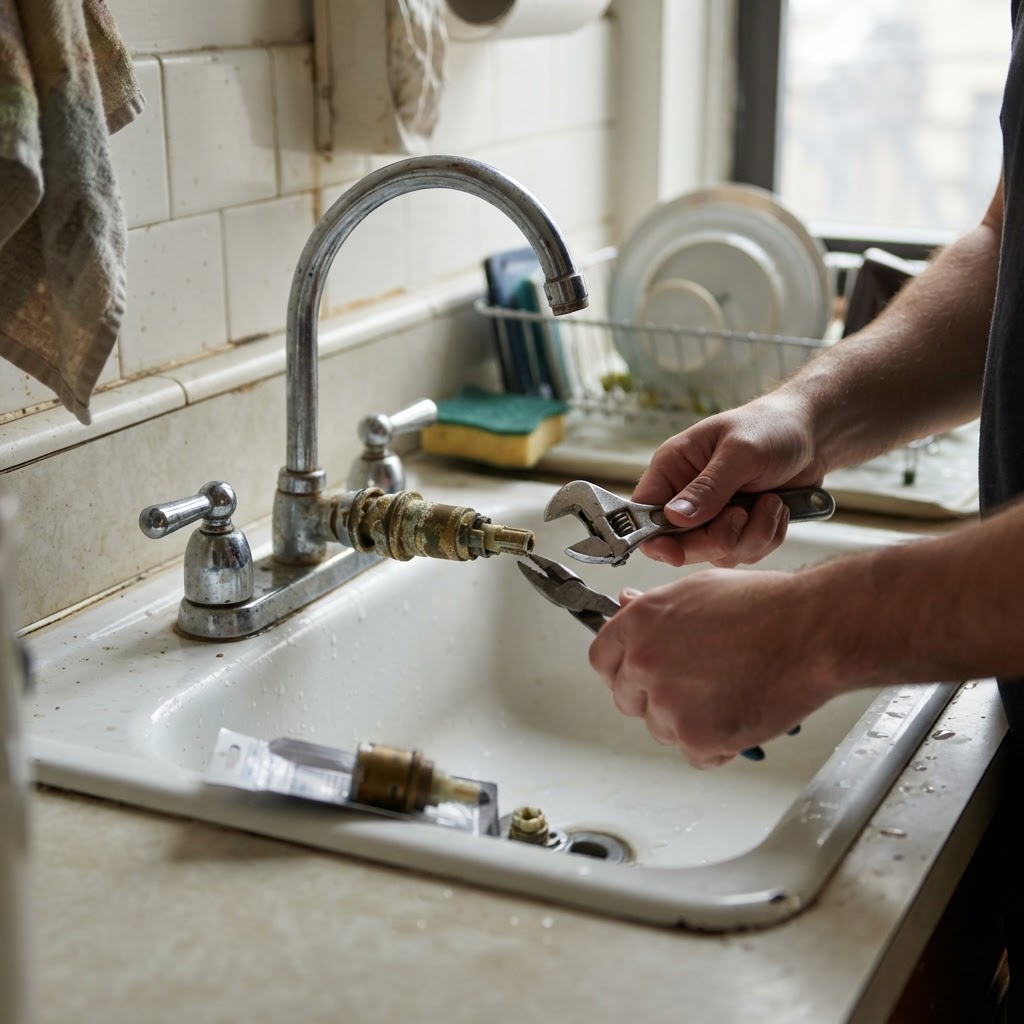
To perform a faucet cartridge replacement yourself, you need an adjustable wrench, a screwdriver, and an Allen key set. Most modern faucets require you to remove the handle first. Look for a small set screw under a decorative cap or on the side of the handle. Use a flathead screwdriver to pry the cap off gently if it is decorative. Once the handle is off, use your wrench to loosen the bonnet nut holding the cartridge in place. Be careful here. In older buildings, these nuts can be corroded or stuck tight. If you feel it resisting, stop. Forcing it can damage the internal pipes behind your wall. Applying a small amount of penetrating oil can help loosen a seized nut. Wait ten minutes for it to soak into the threads before trying again with a steady, firm pressure.
Removing the old cartridge.
Pull the cartridge straight out. If it is stuck, you may need a cartridge puller tool. Note the orientation of the old piece before you pull it. Sometimes taking a photo with your phone is the best way to remember the alignment. When you buy the replacement, bring the old one to a local hardware store in your neighborhood to ensure a perfect match. Mixing up parts for different faucet brands is a common mistake that leads to leaks returning within days. Check the O-rings on the old cartridge to see if they are cracked, which is often the actual cause of the drip.
Installing the new part.
Slide the new cartridge into the valve body. Ensure the notches line up exactly with the slots inside the faucet housing. If it does not slide in smoothly, do not force it. It should seat firmly. Reinstall the bonnet nut, tighten it just enough to be snug, and put your handle back on. Turn the water back on slowly to check for leaks. Open the faucet fully to clear any air trapped in the lines. If you prefer not to deal with the frustration of a stuck part, you can always book a handyman to handle the repair for you.
NYC building rules and plumbing logistics.
In many New York City apartment buildings, plumbing work must be scheduled during specific hours to minimize disruption to neighbors. If your shut-off valve is located in a common hallway or requires access to a basement utility closet, you must coordinate with your building superintendent. Always check your building bylaws or reach out to your landlord before shutting off water to the unit. Furthermore, verify if your building requires a licensed plumber for certain repairs. Many co-op boards have strict requirements regarding who is permitted to perform work that involves potential water damage risks. Working during off-peak hours is generally preferred to ensure you have time to resolve unexpected complications without causing a building-wide water service outage.
Long-term maintenance tips for NYC faucets.
New York City water is relatively soft, but sediment can still build up in your aerators and cartridges over time. To extend the life of your new cartridge, unscrew the aerator at the tip of your faucet once every few months. Soak it in a mixture of white vinegar and water to remove mineral deposits that can cause back pressure and lead to leaks. Additionally, avoid overtightening the handle after use. The constant torque on the cartridge can wear out the internal gaskets prematurely. If you notice a sudden drop in water pressure after a city water main maintenance project on your street, check your aerators first before assuming the cartridge has failed again. Keeping a clean faucet head ensures that your plumbing system operates efficiently without unnecessary strain on the internal seals.
When DIY becomes too much.
DIY repairs are great for small tasks, but plumbing in New York City comes with unique challenges. If your pipes are wrapped in years of paint or your building has high-pressure systems that require specific flow restrictors, it is easy to make a small leak a big headache. If you do not have the right tools, or if you find that the handle assembly is rusted solid, it is time to stop. We handle various home needs, including furniture assembly and TV mounting, but our handymen are specifically trained to manage stubborn plumbing issues without damaging your fixtures.
Frequently Asked Questions.
How do I know if I need a new cartridge?
If your faucet continues to drip from the spout even after the handle is turned off tightly, the internal seal or the cartridge itself is likely worn out. Replacing the cartridge usually solves the leak without needing to replace the entire faucet unit.
Can I damage my pipes by doing this myself?
Yes, if you use too much force on a seized nut, you can twist the copper or plastic pipes behind the wall. This can lead to significant water damage in your unit or even the apartment below, which is a major concern in multi-family buildings.
Is it better to replace the whole faucet?
If the faucet body is corroded or the finish is peeling, a simple cartridge swap might not be enough to improve function and aesthetics. In those cases, a full replacement is often more cost-effective than repeatedly repairing old hardware.
Book help in New York.
If you would rather spend your weekend enjoying the city than wrestling with a stuck faucet, our team is ready to assist. You can book a handyman for an expert, insured repair. We also provide tech setup and general labor services across all five boroughs.