
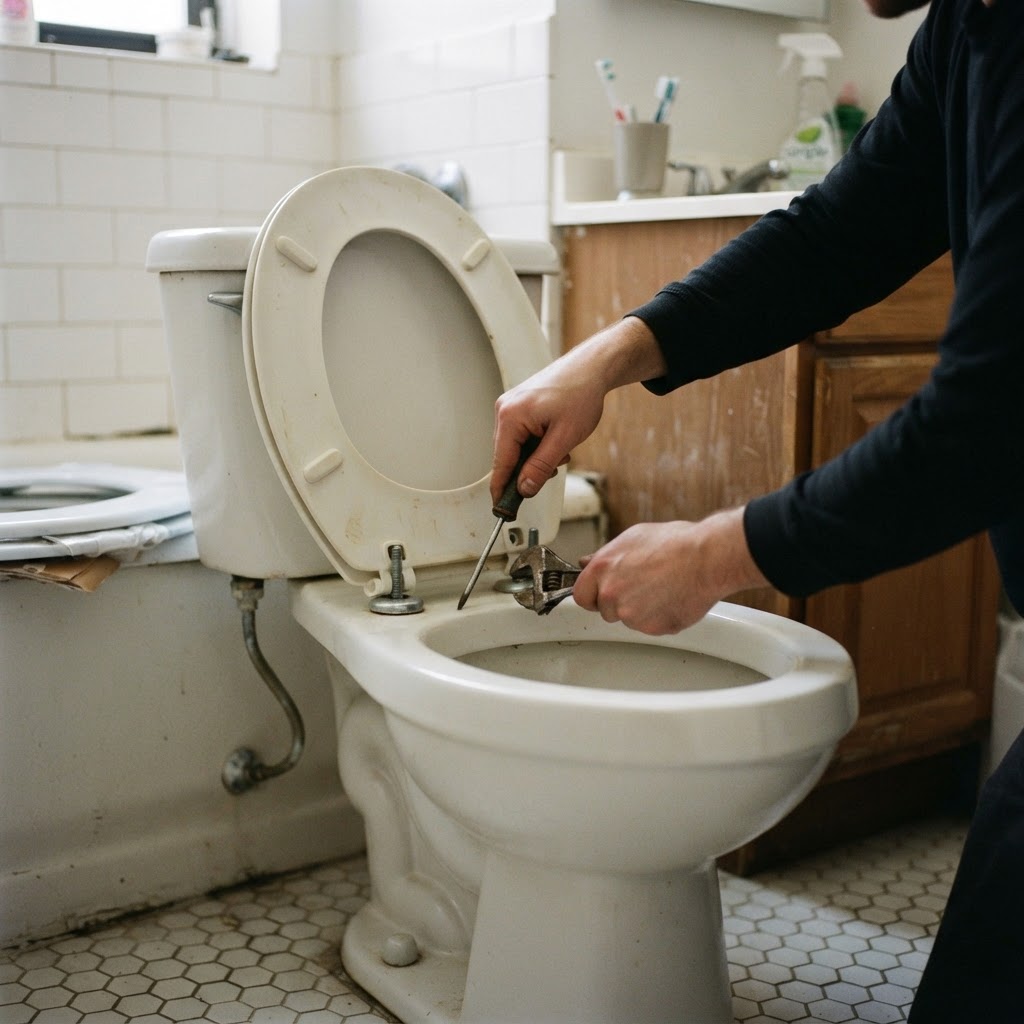
When to handle the swap yourself
Replacing a toilet seat is one of the most straightforward home maintenance tasks for NYC renters. If you are dealing with a standard seat that has loose bolts or has simply aged, you can likely fix it in fifteen minutes with a basic screwdriver and a pair of pliers. However, if the bolts are rusted solid into a pre-war porcelain fixture, or if the bowl itself is cracked, stop immediately. Forcing these parts can lead to expensive plumbing damage that affects your security deposit. If you feel hesitant about the condition of your porcelain, it is safer to leave it to someone with experience.
Tools and preparation for the job
Before you start, verify the shape of your bowl. Most New York apartments feature either a round or elongated seat. Measure the distance between the two bolt holes on the bowl to ensure your new seat fits. The standard measurement is 5.5 inches from the center of one hole to the center of the other. You will need a flat-head or Phillips screwdriver, and if the nuts underneath are stuck, a pair of tongue-and-groove pliers or a wrench. If you find yourself struggling with hardware that refuses to budge, you can book a handyman to ensure the job gets done without damaging the porcelain. Prepare a bucket and a cleaning cloth, as there is often hidden debris behind the seat hinges that should be cleaned before the new seat is placed.
Removing the old seat
Start by opening the plastic bolt covers at the back of the seat. If they are stubborn, use a flat-head screwdriver to gently pry them open. You will see two metal or plastic bolts. Use your screwdriver on the top while holding the nut steady underneath the bowl with your pliers. If the bolts are plastic, they are usually hand-tightened or secured with a plastic nut that turns easily. If you encounter metal bolts that are completely corroded, do not use excessive force. Snapping a bolt inside the fixture is a major headache that often requires a professional repair. If a bolt is seized, spray a small amount of penetrating oil and let it sit for ten minutes before trying again.
Installing the new hardware
Once the old seat is off, clean the area around the bolt holes. This is a rare chance to scrub away grime that typically builds up behind the hinges. Place the new seat over the holes and insert the new bolts from the top. Secure the nuts from underneath. Tighten them firmly but do not over-tighten, especially on older toilets where the ceramic might have hairline fractures. Use your hand to tighten the nut until it feels secure, then add a final quarter-turn with your pliers. If the seat wobbles, check that the washers are placed correctly between the bowl and the bolt head. If you need help with other bathroom upgrades, we also offer professional wall hanging service for towel racks or shelving that keeps your space organized.
Understanding NYC building rules for bathroom upgrades
New York City apartments are subject to specific lease agreements regarding property modifications. While a toilet seat is generally classified as personal property, some luxury buildings in Manhattan or brownstones in Brooklyn have specific plumbing fixtures that require proprietary hardware. Always check your building handbook before buying a specialty seat, such as a heavy wooden model or an electronic bidet. If you live in a rent-stabilized unit, it is even more important to avoid drilling into tiles or changing permanent fixtures. Always store the original seat in a closet or under-bed storage unit. This ensures you can return the bathroom to its original state when your lease ends, preventing any potential disputes with management regarding the apartment condition.
Timing and cost factors for
NYC plumbing repairs Residents often ask how long a repair should take. A simple seat replacement takes fifteen to twenty minutes for an experienced person. However, hardware issues can quickly turn a short task into a two-hour ordeal. Common cost drivers in NYC include difficult-to-reach nuts behind pedestal sinks or confined spaces in small studio bathrooms. If you decide to upgrade to a complex bidet seat, consider that these units often require access to a power outlet or a dedicated water line adapter. If your installation requires moving existing piping, the scope changes from a simple swap to a plumbing project. By addressing the seat replacement when you first notice wobbling, you avoid the risk of the old hardware snapping or scratching the porcelain bowl finish.
When to call in the experts
If you are worried about the integrity of your fixtures or need assistance with more complex tasks like installing a bidet attachment or deep cleaning, it is often safer to rely on pros. Our team handles everything from complex hardware installs to general maintenance. We can also assist if you need expert furniture assembly to make the most of a tight bedroom or need help with smart home setup for your security devices. Our handyman rate is $85/hour, which ensures your apartment stays in top condition without the stress of potential DIY disasters.
Frequently Asked Questions
Do I need permission from my landlord to replace a toilet seat?
Generally, no. As long as you install a seat that fits correctly and does not damage the existing fixture, it is considered a minor improvement. Keep the original seat to re-install when you move out.
What if I cannot get the old bolts off?
If the bolts are rusted, do not force them. You risk cracking the porcelain toilet bowl, which is a major expense. It is much cheaper to pay for an hour of professional time to handle the removal safely.
Can I upgrade to a soft-close seat in a rental?
Yes, you can. A soft-close seat is a great low-cost upgrade that makes a shared bathroom much quieter. Just be sure to measure your bowl accurately before buying your replacement.
Book help in
New York If you would rather let a pro handle your apartment repairs, our team is ready to assist across all five boroughs. You can book a handyman here to get started today.