
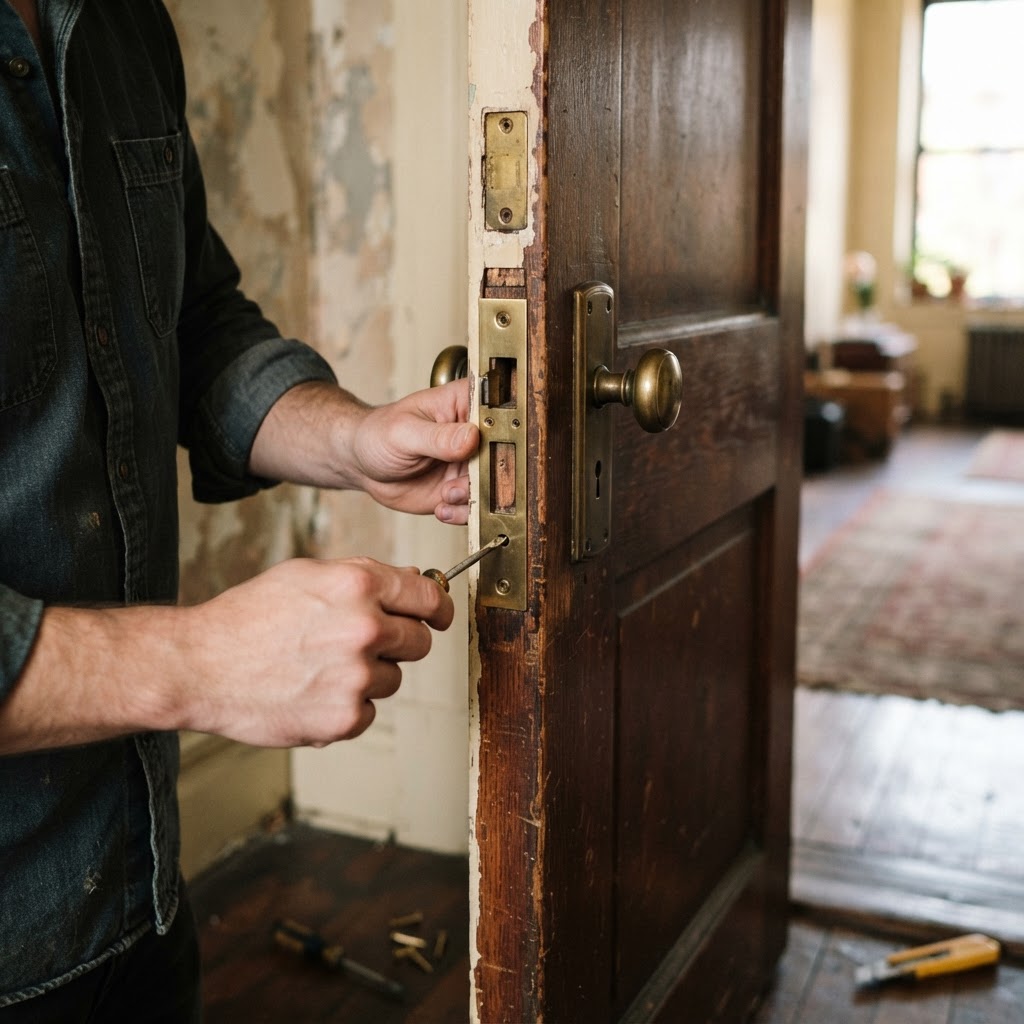
Replacing a lock in an older New York building can feel nerve-wracking because the wood is often original and impossible to replicate. You can replace a door lock on a pre-war door yourself, but you must move slowly to avoid splintering the frame or stripping the antique screws. If you are handy with a screwdriver, the job is straightforward, but it requires patience to keep the original aesthetic of your apartment intact.
Tools and Preparation
Before you start, assess your current hardware. Pre-war doors in buildings throughout Manhattan, Brooklyn, and the Bronx often use mortise locks, which are housed inside a deep cavity in the door edge. These are much more complex than the standard cylindrical locks found in modern construction. You will need a high-quality screwdriver set, a tape measure, and perhaps a small putty knife to gently pry away old escutcheon plates that have been painted over many times. Use a set of precision screwdrivers to ensure the bit size matches the screw slot perfectly to prevent slippage.
Verify your measurements
Measure the backset, which is the distance from the edge of the door to the center of the keyhole. Standard modern locks might not align with your existing mortise pocket. Measure the height and width of the strike plate as well. If you find the measurements do not match, do not force the fit. Forcing a new lock into a hole designed for a different mechanism will likely crack the surrounding veneer. If you need a hand ensuring the hardware fits perfectly, you can always book a handyman to handle the installation safely.
Dealing with painted screws
In many pre-war brownstones, hardware has been painted over for decades. Use a utility knife to score the paint around the edge of the plates before you attempt to turn the screws. If you skip this, the screwdriver will slip and mar the wood. If the screw head is stripped, use a pair of locking pliers to grip the head and turn it slowly. Do not use an electric drill, as it creates too much torque and can easily rip the wood fibers in a soft, aged door. Always use hand tools to maintain control over the resistance.
Navigating Co-op and Condo Regulations
Living in a New York apartment often means answering to a building board or management company. Before purchasing a new lock, check your building bylaws. Many co-ops mandate that all exterior door hardware must be uniform in color, finish, and style to maintain the hallway aesthetic. If you install a modern deadbolt with a different faceplate shape or finish, you may be forced to revert the change at your own expense. Always ask the super or management office if there is a preferred vendor or a specific model of mortise lock they require for replacements.
Maintenance and Long-term Care
Once you have successfully replaced or repaired your lock, keep it functioning smoothly. Old mortise locks often suffer from friction within the internal box. If the key feels stiff, avoid spraying oil-based lubricants inside, as these can attract dust and eventually clog the mechanism. Instead, use a dry graphite powder designed for locksmithing. If the door itself has shifted due to humidity or building settling, the latch might stop clicking shut. Do not force the door. Inspect the strike plate for rubbing marks, which indicate where the alignment is off, and adjust the plate position slightly to accommodate the door drift.
When to Stop and Call a Pro
DIY is a great way to save money on simple tasks, but there are clear limits. If you need to chisel out more wood to make a modern deadbolt fit, the integrity of the door is at risk. A compromised door edge is a security liability and an eyesore. Additionally, many co-op boards have strict rules regarding exterior door appearance. If you are unsure, book a handyman who is experienced with historic hardware.
If you find that the internal mortise box is rusted or seized, replacing it is a specialized task. While you might be comfortable with basic repairs, you might also have other projects piling up, such as needing help with furniture assembly or requiring professional TV mounting to avoid hitting old wiring in your walls. Save yourself the stress of potential property damage by knowing when to delegate.
Frequently Asked Questions
Can I upgrade my lock if I live in a co-op?
Most NYC co-op boards require that any changes to your apartment door match the building's hallway standards. Always check your building rules before changing the color or style of your exterior hardware to avoid fines.
Why are pre-war locks different from modern ones?
Pre-war doors were designed for mortise locks, which sit inside the door rather than just through it. These locks are often larger and require a specific cavity, making modern replacements difficult without professional woodworking adjustments.
How do I avoid damaging the paint on my door?
Always use a utility knife to cut the paint seal around any plate or escutcheon before unscrewing it. This prevents the paint from peeling away in large, jagged chunks when you remove the hardware.
Book help in New York
If your door project turns out to be more complicated than expected, we are ready to assist with your lock installation and any other repairs in your apartment. You can easily view our pricing and availability to book a handyman online.