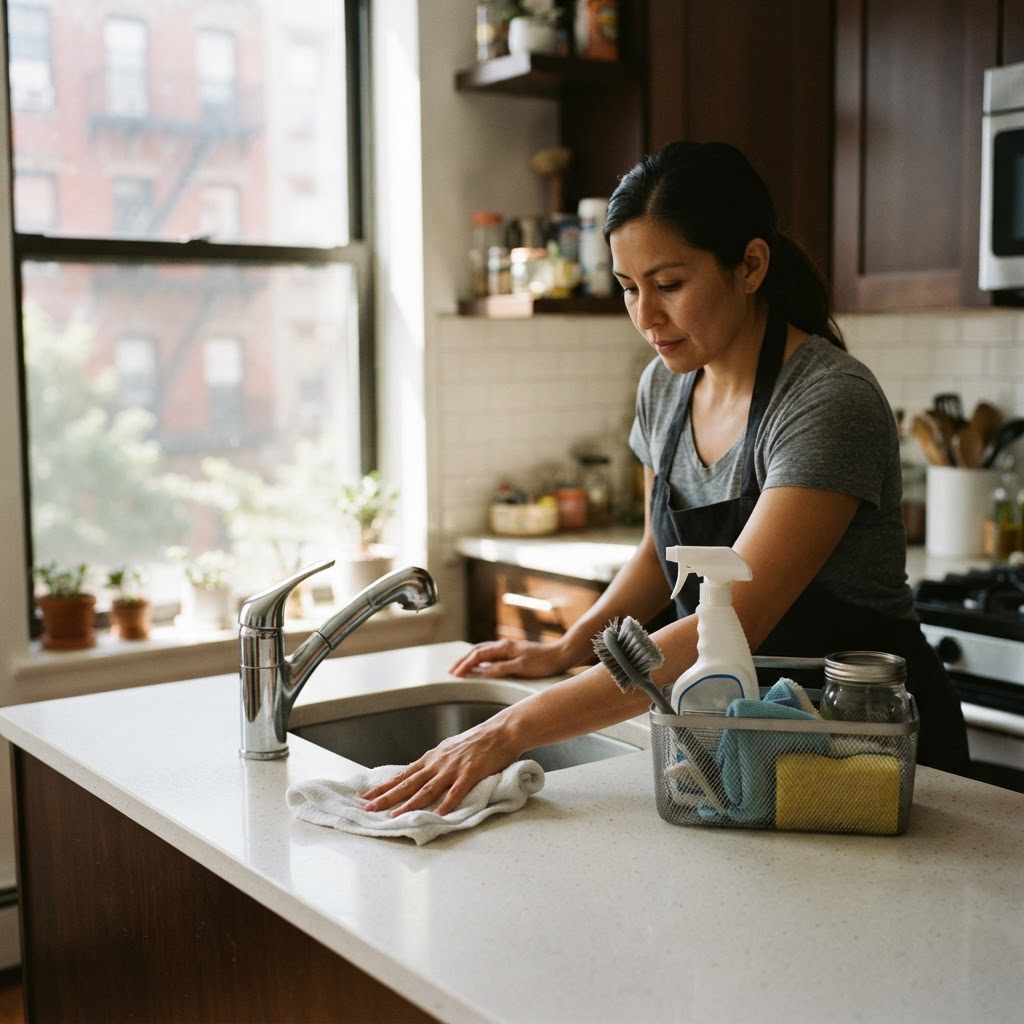
To sanitize kitchen sponge materials effectively, you should microwave a damp sponge for one minute, boil cloths for five minutes, or use a dishwasher on a hot cycle. Kitchen sponges are often the dirtiest item in an NYC home, acting as a breeding ground for bacteria because they stay damp and trap food particles. By making sanitation a part of your weekly routine, you stop cross-contamination before it starts. Proper maintenance ensures that your sponges do not track bacteria onto your plates and countertops.
Effective Methods to Sanitize Kitchen Sponges
There are several reliable ways to clean your cleaning tools. The microwave method is popular for those with limited space, but it requires that your sponge has no metal components. Simply soak the sponge in water, place it in the microwave for one minute, and let it cool before touching it. This extreme heat kills most microbes.
To ensure success, your sponge must be soaking wet. If you place a dry sponge in the microwave, it poses a significant fire risk. Always check for loose plastic or metallic fibers before starting the timer. Another reliable technique is using your dishwasher.
If you run a load of dishes, place your sponge on the top rack and use the heated dry cycle. The sustained high temperature provides a deep clean that reaches deep into the pores of the material. Place the sponge in the silverware basket or secure it on the top rack to prevent it from falling onto the heating element. If these methods fail to remove odors, it is time to replace the sponge entirely.
Maintaining Dish Cloths
Unlike synthetic sponges, cotton dish cloths should be laundered in a washing machine using hot water and a high-heat drying cycle. In tight city apartments, it is common to leave cloths draped over the faucet, but this encourages mildew. Always hang them over a rack to air dry completely. When washing, use a heavy-duty detergent and a sanitation cycle if your machine offers one.
For the best results, use a dedicated mesh laundry bag to prevent cloths from clogging the drain pump. If you feel your kitchen needs a deeper refresh beyond simple maintenance, you may want to look into house cleaning service options to ensure every corner of your galley kitchen is addressed.
Knowing When to Discard
Even with consistent sanitizing, sponges have a finite lifespan.
If a sponge smells even after a thorough wash, or if it is physically disintegrating, toss it in the bin. Small pieces of sponge foam can easily wash down your drain and contribute to plumbing clogs, which is a headache no New Yorker wants to deal with. Check your sponge for fraying every three days. If the abrasive layer is peeling, that is your cue to switch to a fresh one immediately. If you are dealing with a larger kitchen cleanup or a massive accumulation of waste from old supplies, it is often more efficient to book junk removal to clear your space effectively.
Navigating Building Rules for Kitchen Maintenance
Many NYC buildings, especially historic co-ops and brownstones, have strict rules about plumbing and appliance usage. When cleaning your kitchen, avoid using harsh chemical drain cleaners that can corrode old pipes. Instead, use a simple mix of baking soda and vinegar
If you are replacing major appliances or undergoing a renovation that involves plumbing work, check your proprietary lease to see if you need approval from the building board. Always document your maintenance history to ensure you remain in compliance with building management policies.
Managing Kitchen Waste and Odors
In the compact layout of a typical New York City apartment, kitchen odors can become a major issue. Bacteria trapped in sponges, rags, and food scraps in the bin can make the entire home feel unclean. To manage this, empty your trash daily regardless of whether the bag is full. Use a trash can with a tight-fitting lid to trap smells.
Keep your sink basin dry after every use, as stagnant water in the drain attracts fruit flies and creates a mildew scent. If your sink smells despite regular cleaning, you might have a buildup of debris in your P-trap. Periodically flushing the drain with boiling water can prevent these smells from becoming a permanent fixture in your living space.
Preventative Maintenance for Kitchen Hygiene
Beyond keeping your tools clean, the structure of your kitchen maintenance matters. In older NYC buildings, sinks and pipes can harbor buildup that contributes to odors. If you are preparing for a major transition, a thorough move-out cleaning can help restore the space, but daily habits remain your best defense. Keep your counters clear and dry to reduce the environment where bacteria thrive.
When you keep the workspace tidy, you spend less time scrubbing and more time enjoying your home. Sometimes, even with the best intentions, a kitchen needs a professional touch to reach the level of cleanliness expected in a rental or co-op. If you are overwhelmed by the state of your kitchen, scheduling a deep cleaning can remove years of grease and grime. Our professionals handle the heavy lifting, allowing you to maintain the small details on your own.
Frequently Asked Questions
Can I put a sponge with metal scrubbers in the microwave?
No, you should never put a sponge containing metallic scouring pads into the microwave. The metal can spark, create a fire hazard, and damage your appliance.
How often should I replace my kitchen sponge?
In a busy NYC apartment, you should replace your kitchen sponge every one to two weeks depending on usage. If the sponge becomes frayed or develops a permanent odor, replace it immediately.
Does vinegar actually sanitize a sponge?
While vinegar is a great cleaning agent for surfaces, it is not as effective as heat for sanitizing. Soaking a sponge in vinegar helps with odors, but for true sanitation, use heat through the microwave or dishwasher.
Book help in New York
If you need professional assistance with your kitchen or a full home refresh, we are here to help. You can view our available options and schedule your next house cleaning service online.