
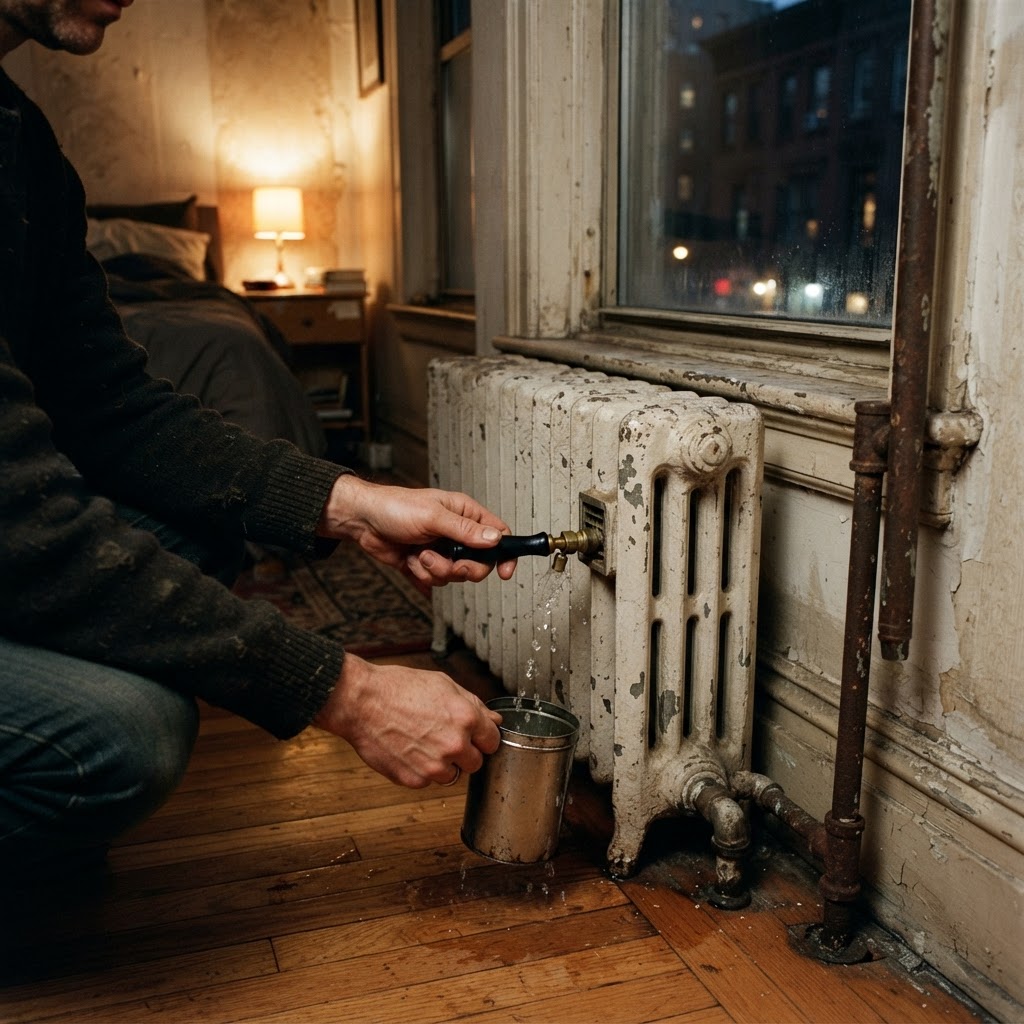
If you live in a pre-war brownstone or a classic walk-up, you likely know the sound: a sudden, rhythmic clanging coming from your steam radiator in the middle of the night. It is a common New York City annoyance, but it is actually a signal that your heating system is struggling with water drainage or pressure. While some minor adjustments can silence the noise, radiators are heavy, complex systems that involve high heat and pressure. Maintaining these systems is essential to keeping your home comfortable during the brutal NYC winters. Small maintenance tasks can prevent significant property damage and save you from freezing on the coldest nights of the year.
Understanding radiator knocking
Most steam radiators in older buildings operate on a single-pipe system. Steam rises from the boiler, travels through the pipes, and enters the radiator to heat your room. As the steam cools and turns back into water, it must flow back down the same pipe to the boiler. Radiator knocking usually happens when that returning water meets incoming steam. If the radiator is not angled correctly, the water gets trapped, and the steam hits it, causing that signature banging sound. This phenomenon is often called water hammer. The force of the steam hitting the standing water can shake pipes loose or cause valve seals to fail prematurely.
Check the pitch of the unit
The most frequent cause of the noise is a radiator that is no longer tilted toward the pipe. Over the decades, floorboards in NYC apartments settle or warp, which can shift the unit. Your radiator should have a slight downward pitch toward the end with the pipe connection. You can test this with a simple bubble level. Place the level directly on the top surface of the radiator. If the bubble is not leaning toward the pipe, you may need to shim the opposite side with a piece of metal or a heavy-duty spacer. Use a steel shim rather than wood, as wood can compress or become a fire hazard near high-heat components. Be very careful, as these units are extremely heavy and could crush a toe or damage your flooring if handled improperly.
Inspect the air valve
Every radiator has an air valve, typically located on the side opposite the pipe. This small component allows air to escape so steam can enter. If it is clogged, air stays trapped, and the system fails to circulate heat efficiently, often leading to water buildup. If you notice hissing or water spitting, the valve may be failing. You can try to unscrew it with a wrench once the system is cool, but if it is painted over or rusted shut, do not force it. You might damage the threads of the radiator itself, which turns a small fix into a major plumbing project. If you feel uncomfortable, we recommend you book a handyman to inspect the connections. Before removing a valve, wrap the threads with new pipe dope or Teflon tape to ensure a tight seal when reinstalling the new unit.
Managing radiator maintenance in NYC co-ops
When living in a New York co-op or condo, radiator maintenance is rarely a solo endeavor. Most boards consider the internal radiator unit to be the responsibility of the shareholder, but the piping and valves often fall under building management jurisdiction. Always check your proprietary lease or building handbook before modifying a unit. Some buildings require you to alert the super before draining any part of the system, as a mistake can cause a localized flood that damages units below you. If you hear a hissing sound that does not stop, or if you see water pooling around the radiator base, notify building management immediately. Attempting to fix a major leak on your own can lead to expensive liability issues in a multi-family building.
Preparation for professional winterization
As the cold season approaches, prepare your radiators by removing any surrounding debris or furniture. Radiators rely on convection to circulate heat; if your unit is blocked by a heavy bookshelf or thick curtains, the steam will not condense properly, which increases the likelihood of knocking. Keep at least six inches of clearance around the entire unit. Dust your radiator regularly to ensure the fins can transfer heat efficiently. During the first cold snap of the year, open your air valves slightly to check for airflow. If the unit remains cold after the building boiler is activated, you may need a professional to bleed the system or replace a stuck thermostatic trap. Taking these small steps in October will save you from emergency repair calls in January.
When to stop and call a professional
While leveling a radiator is a manageable task, there are limits to what you should handle as a tenant or owner. If the knocking persists after leveling, the issue might be deeper in the building's pipes or the boiler's pressure settings, neither of which you can access. Furthermore, if you live in a co-op or condo, your building rules may strictly forbid residents from tampering with steam valves or piping due to liability concerns. Before you dive into a project, remember that we also assist with other home tasks to keep your space running. If you are struggling with other setup needs, we can book tech setup for your home office or book TV mounting if you need to clear floor space for maintenance access. For those moving in or out, book furniture assembly to ensure your heavy pieces are built correctly and safely.
Frequently Asked Questions
Is radiator knocking dangerous?
In most cases, it is simply an annoying maintenance issue caused by trapped condensation. However, constant banging can eventually lead to leaks or damaged pipe threads. If you hear loud, metallic banging, it is best to address it rather than letting it persist throughout the winter.
Should I try to paint my radiator?
Avoid painting the air valve or the internal threads, as this can cause the valve to seize up or leak. If you must paint the exterior, use a high-heat enamel, but keep the paint away from any moving parts or adjustment knobs.
Why does my radiator only knock when the heat comes on?
The noise occurs because of the interaction between steam and cold water. As the system kicks in, the rapid change in temperature forces the water to move, and any obstructions in its path will result in that loud, signature knocking sound.
Book help in New York
If you have tried the basic steps and the noise remains, our team is ready to assist with professional repair services. You can easily schedule an appointment by visiting our book a handyman page.