
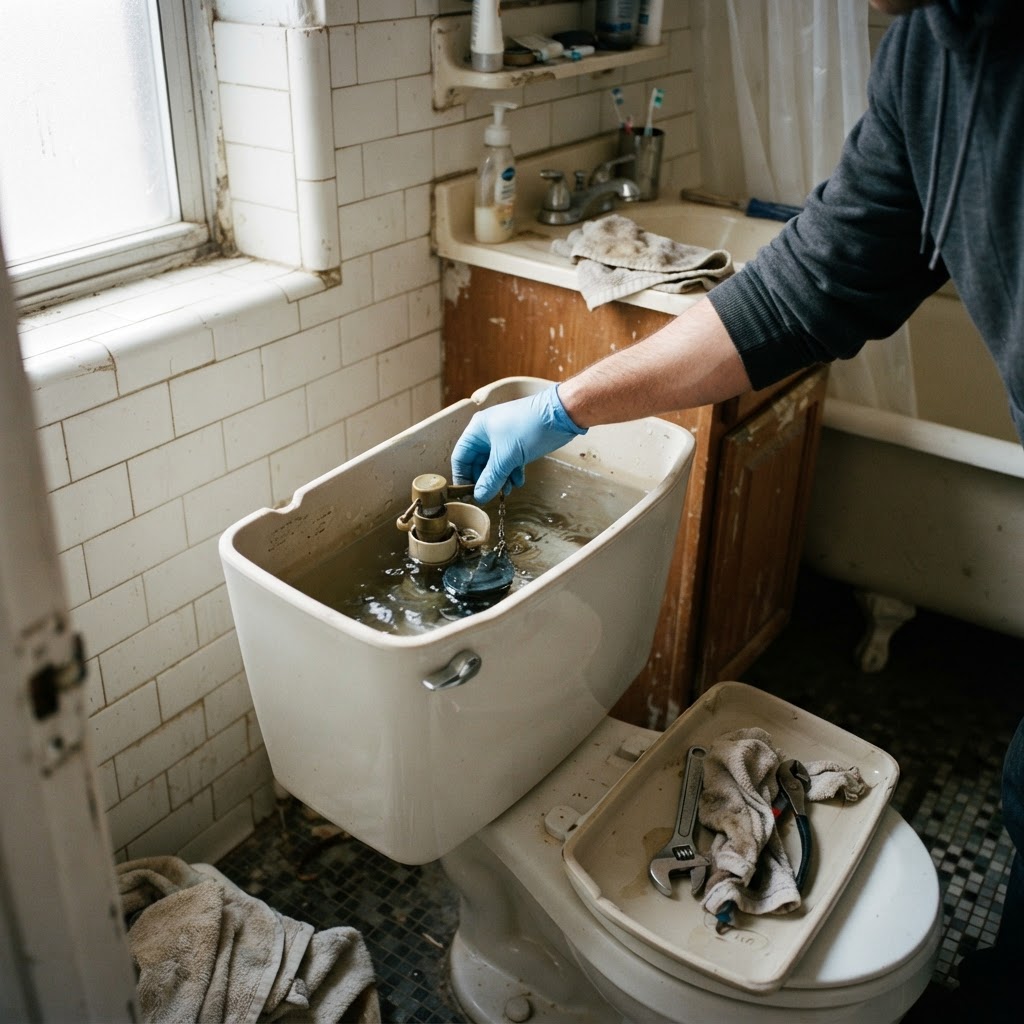
Why Your Toilet Won't Stop Running
A running toilet is one of the most annoying sounds in a quiet pre-war apartment, but it is also a major water waster. Most of the time, the issue is simple: the water in the tank is not reaching the correct level, or the flapper is failing to create a tight seal. In New York, where many buildings have original plumbing fixtures from decades ago, mineral buildup can also interfere with these components.
Before you start, turn off the water supply valve located behind the toilet. If you live in a building where the shut-off valve is stuck or rusted shut—a common issue in older NYC walk-ups—stop immediately. You do not want to force a rusty valve and trigger a flood in your building. If you can shut it off, you are ready to take a look inside. Always have a bucket and a few old towels nearby before you begin the work to catch residual drips from the supply line.
Troubleshooting the Flapper and Float
Most toilet issues are mechanical. Open the lid of the tank and observe the components. If you find the parts are crumbling or severely calcified, you might find it more efficient to book a handyman to handle the replacement while you focus on your day.
The Flapper Seal
The flapper is the rubber component at the bottom of the tank that lifts when you flush. If it is warped, cracked, or hardened by mineral deposits, water will constantly seep into the bowl, forcing the fill valve to run indefinitely. Check the chain connecting the handle to the flapper. If the chain is too short, it keeps the flapper slightly open; if it is too long, it can get caught under the seal. Adjust the length until there is about half an inch of slack. If you see water leaking past the seal, wipe the rim of the flush valve with a rag to clear away sediment.
The Fill Valve Level
If the water is constantly trickling into the overflow tube, the water level is set too high. Locate the float. This is either a ball on a metal rod or a plastic cylinder that slides along the fill valve shaft. There is usually a screw or a clip that allows you to lower the float. Adjust it so the water shuts off about an inch below the top of the overflow pipe. If your toilet is complex or requires specialty parts, remember that you can always book tech setup for your smart home needs or book furniture assembly for other tasks while a pro handles your plumbing repairs.
Navigating New York Building Regulations
Living in an NYC co-op or condo means you have strict rules regarding plumbing modifications. Most buildings require that any work involving the main supply line or structural plumbing be performed by a licensed professional to ensure compliance with building codes. This is primarily to prevent catastrophic water damage to units below yours. If your building requires a Certificate of Insurance from your technician, always confirm this before scheduling the work. Professional handymen working in the city are accustomed to these requirements and can coordinate with your building management office to ensure all paperwork is filed correctly before they arrive.
Maintenance and Long-term Prevention
To keep your toilet functioning efficiently after the repair, avoid dropping foreign objects into the bowl. This includes so-called flushable wipes, which are a major cause of clogs in aging NYC sewer lines. Inspect your tank components every six months. If you notice a faint sound of water running, check the flapper immediately. A small amount of preventive maintenance can stop a minor annoyance from turning into an expensive emergency plumbing situation. If you ever feel overwhelmed by these ongoing maintenance tasks, remember that local pros can provide a comprehensive review of your bathroom fixtures while they are onsite for other repairs.
When DIY Stops Being Worth It
There is a point where the DIY approach reaches its limit. If you have replaced the flapper and adjusted the float but the toilet still runs, you might have a cracked flush valve or a supply line issue. In a shared co-op or condo building, you have to be cautious about water damage to your neighbors below. If you are unsure about the internal integrity of your plumbing, it is better to stop. If you see water leaking from the base of the toilet, this indicates a broken wax ring or a cracked porcelain trapway, which requires significant disassembly and should be left to a professional.
Additionally, if you find yourself needing other repairs, such as book TV mounting, hiring a pro to bundle these tasks can save you time. Professional handymen charge $85/hour for their services. This is a flat, transparent rate that covers their expertise in dealing with the quirks of older city buildings, ensuring the job is done correctly without the risk of leaks or further damage.
Frequently Asked Questions
Why does my toilet run only at night?
It is likely running during the day too, but you only notice it at night when the apartment is quiet. Check the water level against the overflow pipe to see if it is constantly trickling.
Can I use store-bought chemicals to stop the leak?
Avoid using harsh chemical tabs in the tank. They can degrade the rubber flapper and seals over time, leading to more frequent leaks and potential damage to your pipes.
When should I call a professional?
If the shut-off valve is stuck, you see water leaking from the base of the toilet, or your attempts to replace parts haven't stopped the running water, call a professional to prevent property damage.
Book help in New York
If you are ready to let a professional take care of your home repairs, we are here to help across all five boroughs. You can book a handyman through our website to get your toilet fixed quickly.