
Finding the Source of the Noise.
There is nothing worse than settling into your couch after a long day of navigating the subway or walking up five flights of stairs only to be met with an annoying groan. A squeaky sofa usually comes from one of two places: the internal spring system or the wood frame rubbing against itself. Before you start taking things apart, clear the cushions off and apply pressure in different spots to isolate exactly where the sound originates. Focus on corners and areas near the armrests, as these bear the most weight during daily use. Use a flashlight to inspect the gaps between the seat decking and the frame while an assistant applies weight to the sofa. Watching for movement in the wood grain or metal coils will help you confirm the origin.
Checking the Wood Frame.
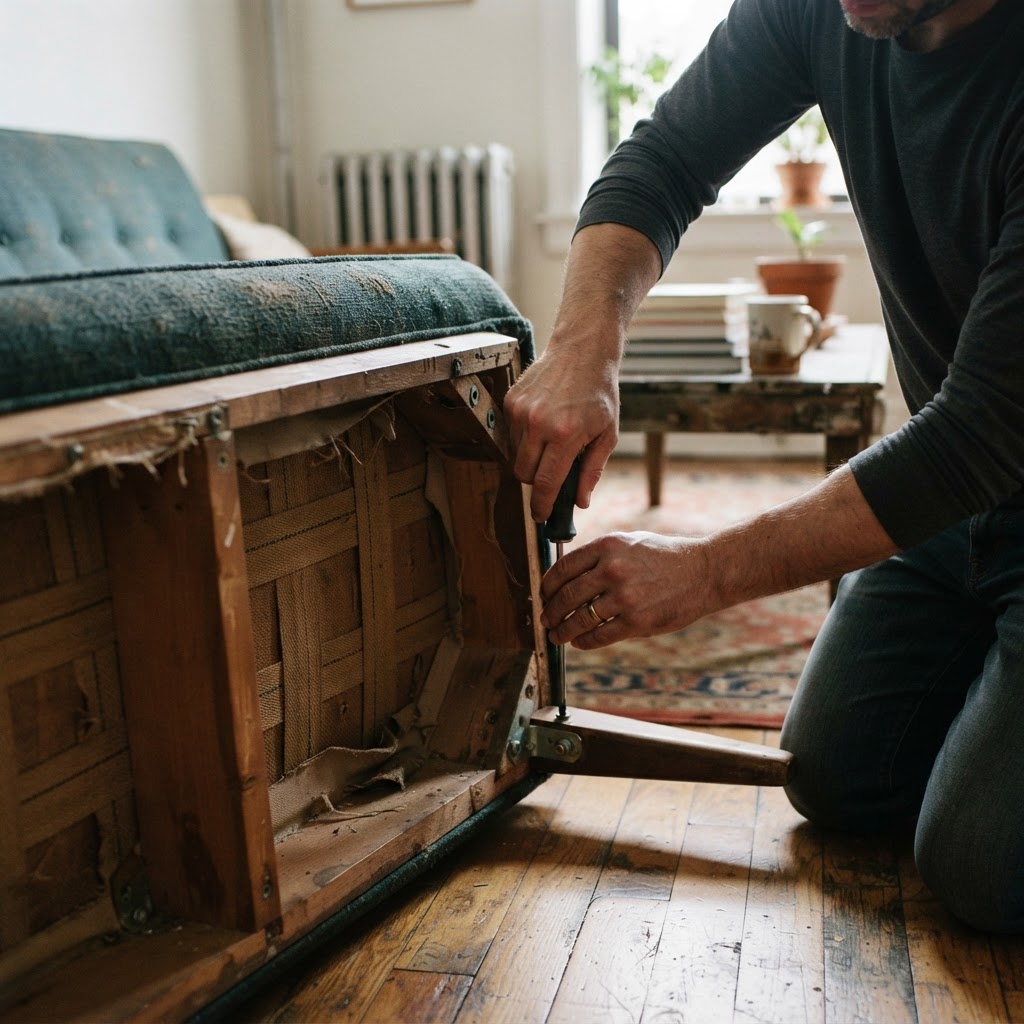
Many pre-war apartments have tight layouts that force us to squeeze furniture into corners, which can stress the frame. If the squeak is wood-on-wood, the joints have likely loosened over time. You might need to tighten the corner blocks or add a small amount of wood glue to the seams. Start by turning the sofa upside down or on its side on a clean rug to prevent scratches. Locate the corner blocks, which are the triangular pieces of wood inside the bottom frame. If they have shifted, check for loose screws or nails. You can tighten existing screws with a cordless drill on a low torque setting to avoid stripping the wood. If the joint is completely loose, clear away old debris, apply high-strength wood glue, and clamp the joint until it dries for 24 hours. If you cannot reach the frame because of the upholstery, you are dealing with a more complex issue that requires specialized tools. If you find the structure is compromised, you should book a handyman to evaluate the stability of your piece.
Addressing Spring and Fabric Friction.
If the sound is metallic, it is often a spring rubbing against the metal clips or the wire support mesh. Sometimes, simple fabric friction mimics a squeak. Use a silicone-based lubricant spray on the metal connections, but be extremely careful to protect your floors and rugs. NYC apartment living often means living with delicate textiles; you do not want to stain your upholstery or your hardwood floor. Use a piece of cardboard to shield surrounding fabric as you spray. Only use a light misting, as excess lubricant can attract dirt. If the noise persists after light lubrication, the springs may be fatigued or damaged beyond a quick fix. Check if a spring has become unhooked from the frame. If you notice a spring sagging significantly lower than the others, it has lost its tension and may require professional replacement.
Managing Building Regulations and Access.
In New York City, working on furniture inside your apartment comes with specific logistics. Many buildings require you to provide a Certificate of Insurance before a professional can bring tools into your unit. Always check your lease or contact your building superintendent before starting major repairs. If your couch is too large to move easily, ensure you have enough floor space to flip it without damaging light fixtures or nearby furniture. Remember that moving a heavy sofa alone can lead to back strain, especially in buildings without elevators. If you live in a walk-up, prioritize safety and avoid dragging heavy frames across hardwood floors, which are common in older city buildings. Use furniture pads or folded blankets to protect both your flooring and the underside of the sofa.
Long-term Maintenance for NYC Furniture.
To keep your furniture quiet, perform a quick check every six months. Tighten any visible bolts and ensure that the legs remain level on the floor. In older apartments with uneven floorboards, a sofa leg can hover slightly off the ground, causing the frame to torque and create new squeaks. Use adjustable furniture levelers or shim the feet to ensure even weight distribution across the frame. Vacuuming out debris like coins, keys, and crumbs from beneath the cushions is also vital. These items can trap dust that eventually works its way into spring mechanisms and acts as an abrasive, wearing down metal coatings. If your building has low humidity during the winter, wood frames can shrink, leading to new noises. A humidifier can help maintain the moisture levels in your home, protecting both your wood floors and your wood-framed furniture.
When DIY Efforts Are Not Enough.
It is tempting to try to fix every issue yourself, but some furniture repairs require more than a screwdriver and a can of spray. If you have to remove staples, cut through dust covers, or perform major carpentry work, you risk doing more harm than good to your furniture. High-quality couches are expensive, and damaging the internal mechanism can make the piece entirely unusable. If the noise is coming from a deep structural break, it is time to pause. If you find yourself struggling with assembly, alignment, or deep structural repairs, consider getting professional help. You can book furniture assembly if your sofa is new and arrived in pieces, or if you need help reassembling a piece you had to open up. For those who are also setting up their entertainment area, we offer services to book TV mounting to ensure your living room is perfectly arranged. If you are also configuring your home theater audio, you can book tech setup for a complete living space upgrade.
Frequently Asked Questions.
Can I use WD-40 to stop the squeak?
While standard WD-40 is a common household item, it is not the best choice for furniture. It can leave a residue that attracts dust and might smell for days in a small apartment. Use a dry silicone lubricant instead, as it is cleaner and designed specifically for preventing friction without the mess.
Should I take the dust cover off the bottom of the couch?
If you need to access the frame or springs, you might need to peel back the dust cover. Be careful because the staples holding it in place can be sharp and stubborn. If you are not comfortable using a staple gun to reattach it securely, do not remove it entirely.
How much does professional furniture repair cost?
Our professionals charge $75 per hour for furniture assembly and general maintenance work. Pricing for specific repairs is calculated at checkout before you commit, ensuring full transparency before we start the job.
Book help in New York.
If your sofa still makes noise after your best DIY attempts, do not let it ruin your downtime. Let our vetted and insured professionals handle the heavy lifting for you. Visit our booking page to get started.