
Mastering Flat-Pack Furniture in 2026: A Comprehensive Guide to IKEA and Wayfair Assembly
There is a familiar cycle that almost every New Yorker has experienced. It starts with excitement: you browse IKEA, Wayfair, or Amazon, find the perfect minimalist TV stand or a gorgeous mid-century modern dresser, and click "Buy." A few days later, the excitement turns to dread when a delivery driver drops off three incredibly dense, flat cardboard boxes that collectively weigh 150 pounds. You open the boxes to find hundreds of wooden panels, thousands of tiny metal screws, wooden dowels, and cam locks, accompanied by a 40-page instruction manual that contains absolutely zero words—only cryptic illustrations.
Welcome to the world of flat-pack furniture. It is economical, stylish, and an absolute nightmare to assemble. In this comprehensive guide, we will explore the psychology, the pitfalls, and the ultimate solutions for dealing with flat-pack furniture assembly in NYC. We will explain why DIY assembly so often goes wrong, and why hiring a professional furniture assembler is the best investment you can make for your home and your sanity.
Chapter 1: The Illusion of "Easy Assembly"
Retailers market flat-pack furniture as simple and accessible. The manuals feature smiling cartoon figures effortlessly piecing together a massive wardrobe with nothing but a tiny Allen wrench. But the reality is vastly different.
The Time Trap
A manufacturer might claim that a media console takes "60 minutes to assemble with two people." In reality, for someone who does not assemble furniture for a living, that 60 minutes easily becomes three to four hours. You spend the first hour just sorting out the hardware and trying to decipher which side of "Panel C" is the finished edge. In a fast-paced city like New York, your time is your most valuable asset. Spending your entire Saturday hunched over a pile of particleboard is a massive drain on your weekend.
The Physical Toll
Assembling large furniture is physically demanding. It requires you to work on your hands and knees on the floor, lifting heavy, awkward panels, and torquing screws by hand. The tiny L-shaped Allen keys provided in the box offer terrible leverage and quickly cause blisters and hand cramps. By the end of the process, your back aches, your knees are bruised, and your fingers are numb.
The Risk of Critical Errors
Flat-pack furniture is notoriously unforgiving of mistakes. If you attach a panel backward and secure it with wooden dowels and wood glue, reversing the mistake is nearly impossible without damaging the particleboard. A stripped screw, a broken cam lock, or an over-tightened hinge can ruin the structural integrity of the piece. A wardrobe that isn't perfectly squared during assembly will have doors that never close properly. A dresser with misaligned tracks will have drawers that stick and jam forever.
Chapter 2: The Evolution of Flat-Pack Furniture
Over the last decade, flat-pack furniture has evolved. It is no longer just simple Billy bookcases and Lack shelves. Consumers are now purchasing complex, high-end pieces online.
The IKEA PAX System
The IKEA PAX wardrobe system is the gold standard for modular, affordable closet organization. However, it is also one of the most difficult items to assemble in an NYC apartment. The frames are massive (often reaching nearly 8 feet tall). Assembling them requires clearing a massive amount of floor space—a luxury most NYC apartments do not have. Furthermore, because ceiling heights in the city can be unpredictable and floors are rarely perfectly level, building a PAX frame on the floor and then standing it up can result in the frame hitting the ceiling and getting stuck. Professional assemblers know the advanced techniques to build the PAX frame while it is standing up, bypassing the clearance issues entirely.
Murphy Beds and Wall Beds
With space at a premium, Murphy beds have surged in popularity. These beds fold up into a sleek cabinet against the wall, freeing up floor space during the day. However, Murphy beds utilize massive, high-tension gas springs or hydraulic pistons to assist in lifting the mattress. If installed incorrectly, these springs can be incredibly dangerous. Furthermore, a Murphy bed must be securely anchored into the wall studs to prevent the entire heavy unit from crashing down when opened. This is absolutely not a DIY project for a beginner; it requires professional tools, stud finders, and expert knowledge.
Office Furniture and Ergonomic Desks
Since the rise of remote work, ergonomic home offices are everywhere. Motorized standing desks, complex ergonomic chairs, and L-shaped corner desks arrive in dozens of pieces. The motors for standing desks require precise alignment of the drive shafts to ensure the desk raises and lowers evenly without burning out the electrical components.
Chapter 3: Why Professional Assembly is the Ultimate Hack
If flat-pack assembly is so difficult, what is the solution? The answer is hiring an experienced, professional furniture assembler from a platform like NYC Pro Tasker. Here is why outsourcing this task is the smartest decision you can make.
1. Speed and Efficiency
A professional assembler builds furniture every single day. They speak the language of IKEA manuals fluently. They can look at a pile of hardware and instantly categorize the cam locks, dowels, and euro screws. A complex dresser that might take a novice five hours to build, a professional can complete perfectly in 90 minutes. They have a systematized workflow that maximizes efficiency.
2. The Right Tools for the Job
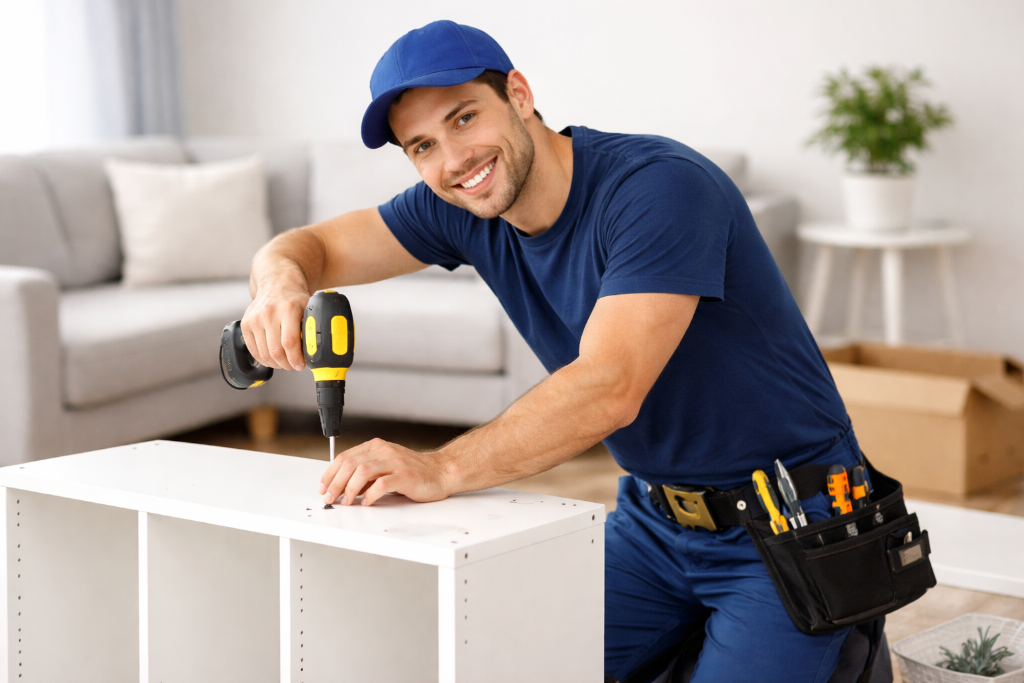
Professionals do not use the tiny, blister-inducing Allen wrenches that come in the box. They arrive equipped with high-end tool bags. They carry low-torque electric screwdrivers and impact drivers with specialized hex bits, allowing them to drive hundreds of screws quickly without stripping the heads or splitting the wood. They bring rubber mallets to gently tap panels together without denting the finish. They bring levels, squares, and stud finders to ensure everything is perfectly aligned and safely anchored.
3. Flawless Execution and Longevity
When flat-pack furniture is assembled correctly—with tight, flush joints, perfectly aligned hinges, and properly torqued hardware—it can last for years. A professional ensures that the back panels are nailed in perfectly square (which is what gives the furniture its lateral rigidity) and that the drawer tracks are pristine. They will adjust the multi-axis hinges on your cabinet doors until the gaps are perfectly even and the doors close with a satisfying click.
4. Safety and Liability
Tipping furniture is a severe hazard, particularly in households with children or pets. Dressers, bookcases, and wardrobes must be anchored to the wall. NYC walls are notoriously difficult—you might encounter standard drywall, 100-year-old crumbly plaster, or solid brick. A professional knows exactly which type of wall anchor (toggle bolts, masonry anchors, or standard stud screws) to use to ensure your heavy furniture is permanently secured to the wall, eliminating the risk of a dangerous tip-over.
5. Box Breakdown and Cleanup
The assembly is only half the battle; the other half is dealing with the mountain of cardboard packaging, plastic wrap, and styrofoam left behind. In NYC, you cannot simply throw massive cardboard boxes into the trash; they must be broken down, flattened, and tied with twine according to Department of Sanitation rules. Professional assemblers consider the job done only when your new furniture is in place and the packaging is neatly broken down and ready for recycling.
Chapter 4: How to Prepare for Your Assembly Appointment
To ensure a smooth, efficient experience when your NYC Pro Tasker professional arrives, follow these simple preparation steps:
- Clear the Area: Furniture assembly requires space. Clear as much floor space as possible in the room where the furniture will live. Move rugs, coffee tables, and fragile items out of the way. The assembler needs room to lay out the panels and the hardware safely.
- Move the Boxes to the Final Room: If possible, have the heavy boxes placed in the room where the furniture will be used. Building a large wardrobe in the living room and then trying to navigate it through a narrow hallway into the bedroom is a recipe for disaster.
- Do Not Open the Hardware: It is tempting to open the boxes and look at the pieces, but please leave the blister packs of hardware sealed. Once those tiny screws and dowels spill onto a carpet, they are incredibly difficult to find, and losing a single crucial cam lock can halt the entire assembly process.
- Know Where You Want It: Have a clear idea of exactly where the final piece should be placed. If the item needs to be anchored to the wall, point out exactly where it should go so the professional can check for studs and electrical wires behind the wall before beginning.
Conclusion: Reclaim Your Weekend
Your time is precious. Your weekends should be spent enjoying Central Park, brunching in Brooklyn, or relaxing with friends—not fighting with particleboard and Allen wrenches.
By hiring a professional furniture assembly expert from NYC Pro Tasker, you guarantee that your beautiful new IKEA, Wayfair, or West Elm pieces are built flawlessly, quickly, and safely. Our vetted technicians have built thousands of pieces of furniture across the five boroughs. We offer same-day availability, transparent hourly pricing, and a commitment to perfection. Don't let flat-pack furniture defeat you. Book a pro today and enjoy your fully furnished home without lifting a finger.
Ready to get your weekend back?
Need help building that new piece? Book a top-rated NYC furniture assembly pro today.