
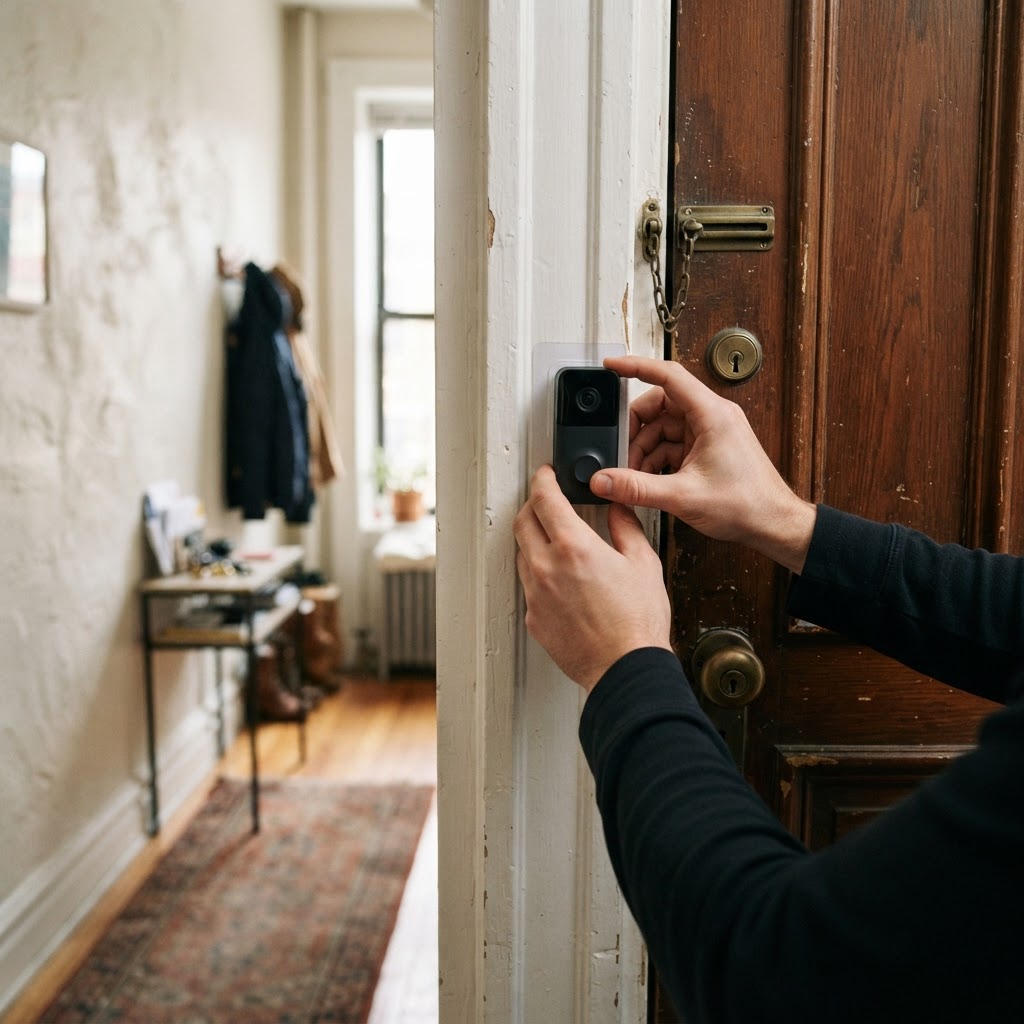
Avoiding Permanent Damage to Historic Facades
Mounting a doorbell camera on a brownstone often feels impossible. Many landlords and co-op boards forbid drilling into historic stone, brick, or ornate wood door frames. Using a doorbell camera brownstone no drill method is often the only way to satisfy building rules while keeping your home secure. The goal is to create a secure mount without violating lease terms or damaging surfaces that are costly to repair.
The No-Drill Mounting Strategy
Most modern video doorbells come with basic mounting plates designed for flat siding, not the textured stone or uneven molding found on many NYC brownstones. To avoid the drill, you need specialized mounting brackets that clamp around the edge of your door. These units use a tension-based system to grip the sides of the door, holding the camera firmly in place without a single screw hole. This system relies on a metal or high-density plastic frame that wraps around the door leaf. Tightening screws on the back of the clamp draws the two halves together, creating a pinch-fit that is nearly impossible to pull off without tools.
Choosing the Right Clamp
Measure the thickness of your door frame before purchasing any hardware. Most standard door mounts accommodate frames between 1.25 and 2.25 inches thick. Many old New York doors have deep decorative trim that standard clamps cannot accommodate. Look for adjustable mounting brackets that offer rubberized padding, which prevents scratches on painted wood or metal surfaces. If your door is recessed deep into the masonry, you may need a mount that allows for an angled view to ensure the camera captures visitors rather than just the side wall. Check your door swing path as well. A thick clamp might prevent your door from closing fully if the strike plate is too close to the door jamb. Always verify that the clamp does not interfere with your weatherstripping, as this can lead to drafts.
Protecting Your Tech Setup
Once the physical mount is secured, you must address power. Most apartment dwellers rely on battery-powered cameras to avoid hardwiring issues. If you do not have an existing doorbell wire, ensure your battery is fully charged before locking the unit into the mount. For those who need help with the initial configuration, you might want to book tech setup to ensure your Wi-Fi signal reaches the entryway, which can be tricky in thick-walled buildings. Stone and brick absorb Wi-Fi signals significantly more than drywall. If your camera keeps dropping the signal, a mesh Wi-Fi node or a signal booster placed near the front door is often required to maintain a consistent connection for live streaming.
Navigating Building Rules and Bylaws
New York City housing often involves strict oversight from management companies. Even when using a no-drill method, some co-op or condo boards consider any external attachment an alteration. Before installing your device, review your proprietary lease or building handbook. Some buildings restrict the color or size of devices to maintain a uniform facade appearance. If you live in a landmarked building, you must be extra cautious. While a temporary clamp is generally not considered a permanent architectural change, it is wise to confirm this with your superintendent. Keeping the camera color matched to your door hardware, such as choosing a matte black unit for a black iron door, can often help your request pass review.
Maintenance and Long-term Security
Once the camera is mounted, regular maintenance is vital. NYC weather extremes affect battery performance. Extreme cold can cause lithium-ion batteries to drain rapidly, sometimes losing 30 percent of their capacity overnight in January. Remove the camera during extreme cold snaps if possible to recharge it indoors. Every three months, remove the clamp entirely to inspect the wood or metal finish underneath. Dirt and salt can accumulate behind the rubber padding, creating an abrasive paste that might dull your finish over time. Gently wipe the surface with a damp cloth before re-securing the clamp to ensure your door remains pristine throughout the seasons.
When to Stop DIY and Call a Professional
Sometimes, the layout of a front entrance makes a DIY solution impossible. If your door is made of material that doesn't accept clamps, or if you need to run low-voltage wiring for a permanent power connection, the work becomes significantly more complex. Drilling into building infrastructure without permission can lead to fines or loss of your security deposit.
If you find yourself stuck, remember that pros have the tools to handle these tricky installations safely. You can book a handyman to evaluate your specific door frame and determine if a permanent mount is viable under your building rules. Professionals can also assist if you need to book TV mounting or require help with furniture assembly once you have your home organized. Our pros are background-checked and insured, giving you peace of mind when working on your property.
Frequently Asked Questions
Can I use adhesive strips instead of a clamp?
Avoid using adhesive strips on exterior stone or brick. NYC humidity and temperature swings will cause the adhesive to fail quickly, likely resulting in your camera falling and breaking. A mechanical clamp is far more secure for exterior use.
Do I need permission to install a camera?
Yes. Always check your lease agreement or consult your co-op or condo board before installing any device on the exterior of your building. Even without drilling, some buildings have specific aesthetic policies for common areas.
How much does it cost to have a pro mount a camera?
For simple mounting tasks that do not require complex wiring, this falls under our standard hourly handyman services at $85/hour. The exact price is always shown at checkout before you confirm your payment.
Book help in New York
If you need professional assistance mounting your security gear or handling other home repairs, we are ready to help. You can book a handyman to get the job done right the first time.