
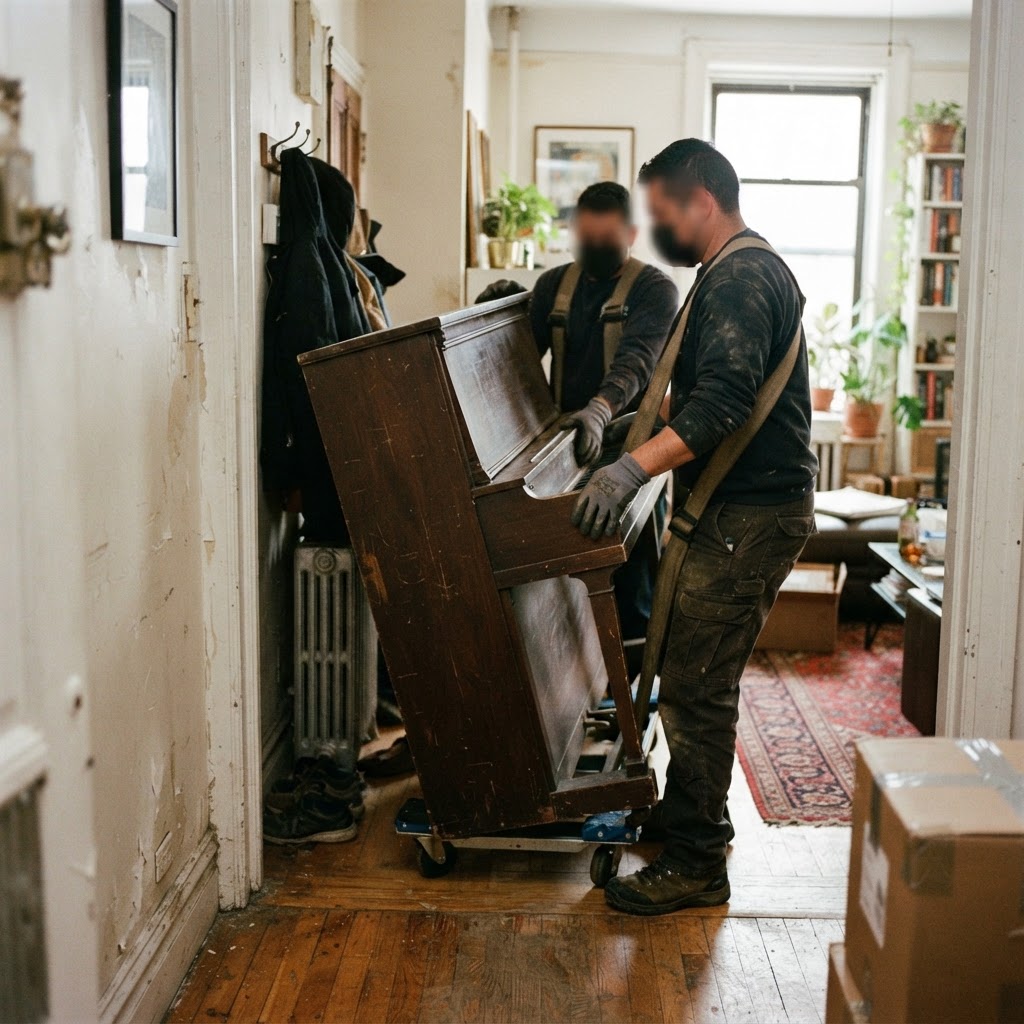
Moving a piano in New York City is not a standard furniture relocation. Between narrow hallways in pre-war buildings and restrictive co-op move-in rules, this instrument requires specialized attention to prevent damage to the piano and the surrounding property. Understanding the piano moving cost nyc involves more than just distance; it requires evaluating the logistics of your specific building and the type of instrument you own.
Factors Influencing Your Moving Quote
The total cost depends heavily on the accessibility of your origin and destination. A grand piano sitting in a ground-floor brownstone is a different project than an upright piano that needs to be maneuvered through a narrow stairwell in a fifth-floor walk-up. You must also consider whether the instrument will fit in your building's service elevator. If it does not, you are looking at manual labor that increases the time and manpower required.Builders and landlords dictate the flow of the move. You must account for the physical dimensions of every doorway, corner, and landing. Professionals measure the path before lifting. If a piano is 58 inches wide but a hallway corner allows only 54 inches of clearance, the move requires a professional teardown or specialized pivoting techniques.Building requirements also play a significant role. Many co-ops and condos require a Certificate of Insurance, or COI, before allowing professional movers to enter. Ensuring your chosen labor team is insured is a non-negotiable step to avoid issues with building management. Always verify if your building has restricted moving hours, as tight scheduling can sometimes impact the final quote for specialized services.
Preparing for a Smooth Move
Before you schedule, measure your piano, doorways, and hallways. A few extra inches can make or break a move. Measure the piano length, width, and height. Then, measure the narrowest point of your front door, any sharp corners in your hallway, and the elevator interior. If you have concerns about the instrument fitting or if it needs to be partially disassembled, you might need to hire a handyman to help with removing door frames or preparing the path. Remember that specialized moving labor often involves a two-hour minimum for basic service, which is a standard baseline in the city.Once you have measurements, clear the entire path. Remove wall hangings, trip hazards like rugs, and delicate floor lamps. Ensure that the staging area inside the truck is prepped with secure tie-down points. If the piano is coming from a climate-controlled room, let the instrument sit in its new location for 24 hours before tuning to allow the wood to adjust to the new humidity levels.
Protecting Your Floors and Walls
Moving a heavy object like a piano across hardwood floors or through narrow entryways poses a risk to your home. Pros use heavy-duty floor protection and padding to ensure no scratches occur during the transition. If you are also moving other items, it is often more efficient to request an instant quote for the entire job rather than splitting up services. This approach helps the movers understand the full scope of the project, including any furniture assembly cost if you need to dismantle beds or tables at the same time.Movers use professional-grade moving blankets specifically designed for high-finish wood surfaces. They secure these with industrial tape or stretch wrap. Dollies are used with rubber-coated wheels to prevent divots in parquet or hardwood flooring. For stairs, they use professional piano boards to balance the weight. If a piano is being forced through a tight turn, they apply corner guards to the walls to prevent drywall gouges.
Navigating NYC Building Regulations and Permits
Moving in New York often involves strict building management protocols. Before the move date, contact your building superintendent to reserve the service elevator. Most buildings have a specific window for moving, usually between 9 am and 4 pm. Do not assume your mover can arrive at any hour. If the elevator is not reserved, you might be denied entry, resulting in a wasted trip and labor fees.Check if your building requires a COI that specifies coverage limits. Most management firms in Manhattan and Brooklyn require a policy of at least one million dollars. Providing this documentation 48 hours in advance is essential. If you live in a walk-up, discuss the stair width with your lead mover. If the staircase is too narrow for a piano board, the move might require a crane lift, which involves extra permits and a completely different set of professional equipment.
Managing Long-Term Instrument Care
Post-move maintenance is just as important as the transit itself. Pianos are sensitive to the drastic changes in temperature and humidity found in NYC apartments. Keep your piano away from direct sunlight, radiators, and air conditioning vents. Excessive heat causes the soundboard to crack and the strings to stretch, forcing the instrument out of tune. After moving, wait for the instrument to acclimate to your apartment’s environment. A professional piano tuner should visit about two weeks after the move. Moving stress shifts the internal tension of the piano, and a follow-up tuning ensures the instrument remains in top condition for years to come.
Budgeting for Professional Labor
For basic moving labor, we charge $65 per hour for one mover or $160 per hour for two movers. However, pianos are heavy and awkward, often requiring two or more people for safety. Expect to pay for the time it takes to protect the instrument, safely navigate stairwells, and secure the piano in the truck. Being transparent about the number of steps and the weight of the piano ensures your estimate is accurate from the start.Avoid the temptation to move a piano yourself. The structural weight and the precision required for tight NYC turns can result in physical injury or permanent damage to the instrument. Professionals have the necessary equipment, such as dollies and padding, to handle these constraints safely.
Frequently Asked Questions
Does the piano moving cost nyc change based on the type of piano?
Yes, a grand piano is significantly more complex to move than an upright piano. The size, weight, and fragility of the instrument require different amounts of manpower and specialized equipment, which will be reflected in your final quote.
Why do building rules affect the price of my move?
Buildings with restricted hours, strict insurance requirements, or limited elevator access often require more planning. If a move takes longer because the piano must be carried up multiple flights of stairs instead of being wheeled into an elevator, the hourly labor costs will increase.
Can I move a piano by myself to save money?
It is not recommended. Pianos are extremely heavy and delicate. A single mistake in a tight NYC hallway can lead to structural damage to your home or the instrument, far exceeding the price of hiring professional help.
Book help in New York
If you are ready to relocate your instrument, we provide professional labor for your move across all five boroughs. You can book your moving help here to get started with our transparent pricing.