
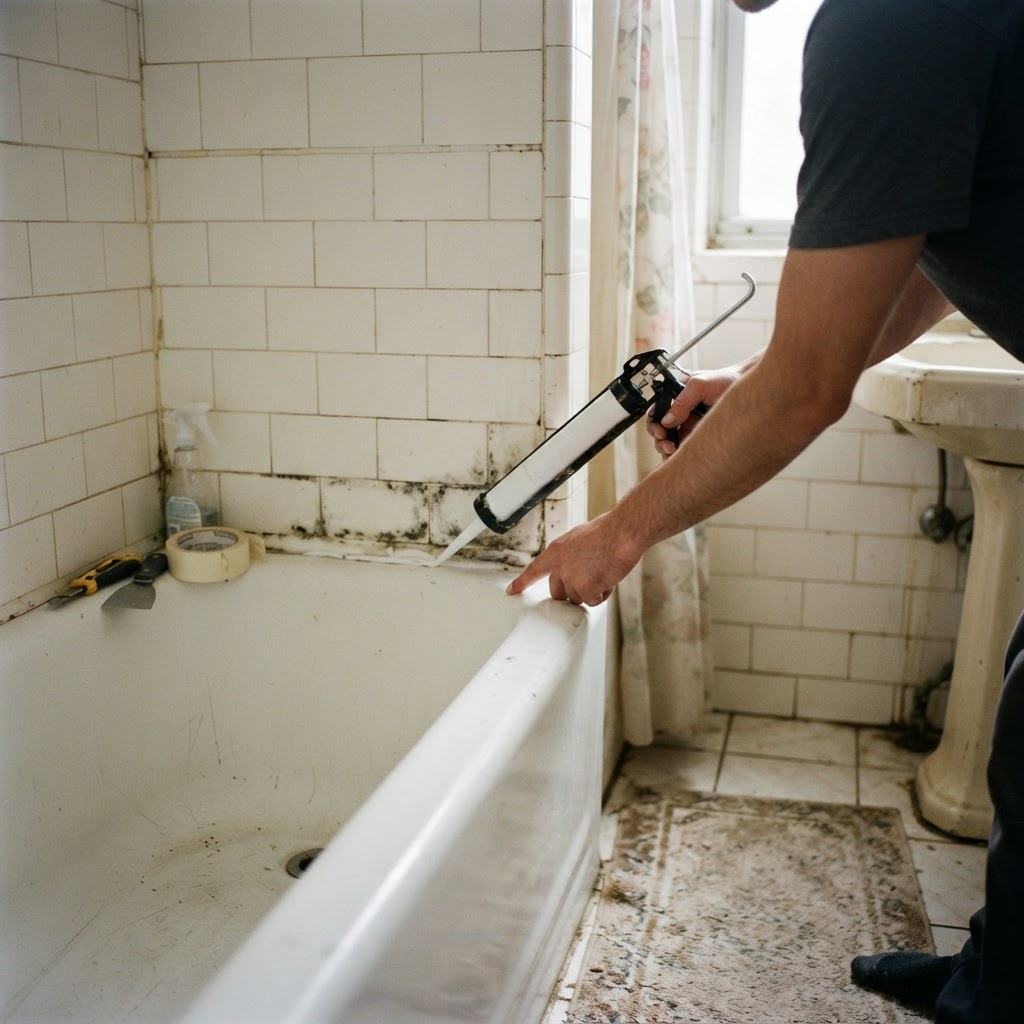
Understanding why mold persists
If you are staring at black spots along your tub edge that return every time you scrub them, you are likely dealing with a compromised seal. In many pre-war buildings or modern high-rises across the boroughs, constant humidity and building movement cause caulk to pull away from the wall. Once that microscopic gap opens, water gets trapped behind the bead, creating a perfect environment for mildew. If you can see gaps, peeling, or dark stains that do not lift with bleach, you need to remove the old material entirely rather than just layering new caulk on top. Building settling in older New York structures often exacerbates this by creating tiny shifts that snap the cured silicone bond.
The steps to properly recaulk bathtub mold
Removing the old seal is the most important part of the job. You will need a caulk removal tool, high-quality silicone caulk, and mineral spirits for cleanup. Use a plastic scraper to avoid gouging delicate tile or damaging an enamel finish, especially if you live in a unit with original fixtures that are hard to replace. Focus on removing every trace of residue, as even a thin layer of old sealant prevents the new bead from gripping the tile. Once you have cleared the channel, clean it thoroughly with rubbing alcohol. If the area remains damp, the new caulk will never bond properly, so use a hair dryer to ensure the space is bone dry before you start. Check that your ventilation is running to pull away any residual cleaning fumes before moving to the application phase.
Applying the new bead
Cut the tip of your caulk tube at a 45-degree angle. The size of the opening should match the width of the gap you are filling. A common mistake is cutting the tip too wide, which results in a messy, oversized bead that collects dirt. Apply steady, even pressure while pulling the gun toward you at a consistent speed. Try to lay a single, consistent line without stopping, as starts and stops are where air bubbles form and leak points develop. Once the bead is applied, use a caulk finishing tool or a gloved finger dipped in a mixture of water and a drop of dish soap to smooth it out. Do not overwork the material; one or two passes should be enough to create a clean, watertight seal. Wipe away excess material immediately to keep your lines crisp.
Managing bathroom ventilation in New York apartments
One major driver of recurring mold in New York City bathrooms is poor ventilation. Many older apartments lack windows or functional exhaust fans, leading to moisture lingering on walls for hours after a shower. If you are recaulking, consider installing a high-CFM exhaust fan or adding a smart timer to your existing switch. Ensuring the air cycles quickly reduces the work the caulk has to do. If you have a window, ensure it is clear of obstructions so you can crack it open after bathing. If you notice condensation dripping down the walls during showers, your humidity levels are likely too high for the caulk to survive long-term without these mechanical aids.
Building regulations and coordination
If you are living in a co-op or condo in New York, always check your house rules before starting larger bathroom repairs. Some boards require specific insurance documentation or restrict the hours when noisy work can occur. While minor recaulking is usually considered a maintenance task, any project involving wallboard replacement or significant demo may trigger a requirement for a formal permit or board notice. Always confirm if your building has specific requirements regarding the types of materials allowed for plumbing seals to ensure your repair remains compliant with local codes and building management expectations. Keeping a record of your maintenance work is also helpful if you eventually sell your unit.
When to hire a professional
If you find that the wall behind the tub is soft or crumbling, you have a bigger problem than just old caulk. This often happens in older walk-ups where water damage has compromised the wallboard or plaster over many years. In these cases, you might need more than a tube of silicone. If you find yourself needing other repairs while in the bathroom, like needing to book a handyman to address structural issues or a loose fixture, it is usually more efficient to have a pro handle the entire scope. A professional can identify if the sub-floor is damaged, which would be invisible to most homeowners during a simple cleaning task.
We also handle other home improvements if your bathroom project was just the start. You might want to book TV mounting to clear up clutter or book furniture assembly if your vanity is finally being replaced. Sometimes, organizing your space is the best way to prevent future moisture buildup, and you can even book tech setup for your smart home devices to manage exhaust fan timers automatically.
Frequently Asked Questions
Can I just put new caulk over the old moldy parts?
No, layering new caulk over mold will not stop the growth. You must remove all the old caulk, clean the surface with an anti-fungal solution or alcohol, and let it dry completely before applying a fresh bead.
How long does the new caulk need to dry before I can shower?
Most silicone-based bathroom caulks require at least 24 hours of curing time to ensure a waterproof seal. If you shower too soon, the steam and water will prevent the chemical bond from forming, leading to leaks.
How do I know if I need a professional?
If the wall behind the tub feels spongy or you see cracks in the grout that go deep into the wall, you likely have water damage. A professional should assess this because simple recaulking will not fix the underlying rot.
Book help in New York
If you have realized that your bathroom project is more complex than a simple afternoon fix, we are here to help. You can easily book a handyman to get the job done right, whether you are in a brownstone in Brooklyn or a condo in Queens.