
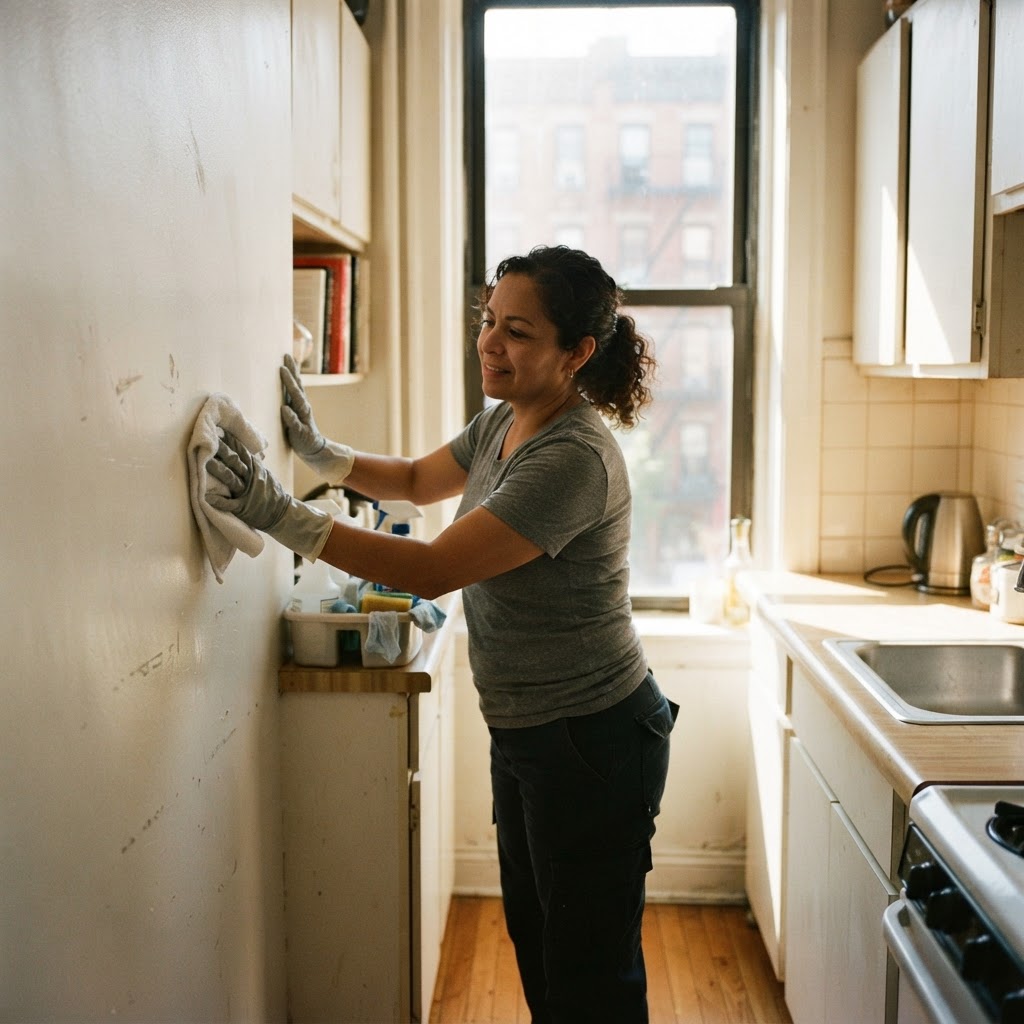
Easy methods to remove scuff marks from walls
Removing scuff marks from apartment walls is a common task for any New Yorker trying to maintain their space or prepare for a move. In tight apartments with narrow hallways and frequent furniture maneuvering, marks are often unavoidable. The good news is that most surface-level scuffs can be lifted with simple household items before you decide that painting is the only answer. Start with the least abrasive method.
Many scuffs are merely a transfer of rubber or plastic onto your paint. A damp microfiber cloth is often enough to rub away light marks. If that fails, a white eraser or a specialized melamine sponge can lift deeper marks without damaging the finish. Always test a small, inconspicuous area behind a door or near the baseboard to ensure your paint doesn't rub off with the mark.
When using a melamine sponge, cut it into smaller squares to control the pressure. Dampen the sponge and squeeze it until it is nearly dry. Use long, slow strokes rather than circular motions to avoid creating inconsistent textures on the wall surface. If you see paint color transferring onto the sponge, stop immediately because you are removing the finish.
Understanding your wall finish
Before you start scrubbing, identify your wall type.
NYC pre-war buildings often feature plaster walls with thick, historical paint layers, while modern condos might have standard drywall with matte or eggshell finishes. Matte paint is notoriously difficult to clean because it is porous; scrubbing too hard can create a shiny spot or pull the pigment off entirely.
Working with matte and flat paint
If you live in a building with flat or matte paint, avoid liquid cleaners. Moisture can soak into these finishes, leaving visible rings. Stick to a dry melamine sponge and use extremely light pressure. Think of it as buffing
If the scuff remains, it is often better to leave it rather than create a larger, lighter patch that draws more attention than the original mark. If you must use a liquid, mix a drop of mild dish soap into a quart of water. Dip a soft cloth, wring it out until it is barely damp, and test it in a closet corner. Allow the wall to air dry completely for ten minutes before inspecting for water marks.
Scrubbing satin or semi-gloss finishes
Satin and semi-gloss paints are more durable and handle moisture well. These are common in kitchens and bathrooms. You can use a mild soap solution with water on these surfaces. Apply the mixture to a soft cloth rather than the wall itself to avoid drips that can stain.
If your walls have accumulated significant grime alongside scuffs, you may need a deep cleaning to reset the surface before you attempt spot removal. Use a clean, dry towel to buff the area immediately after washing to prevent water streaks. For stubborn scuffs on semi-gloss trim, a paste made of baking soda and a teaspoon of water can act as a gentle abrasive. Apply the paste, wait thirty seconds, and wipe away with a damp cloth in a sequence that starts from the outside of the mark and moves toward the center.
Navigating building rules and management expectations
In many NYC co-ops and rentals, you should verify if your building management mandates specific paint brands or sheen levels for touch-ups. If you are moving out, check your original lease rider. Many landlords use flat paint because it hides imperfections in drywall, but it makes spot cleaning nearly impossible without leaving marks. If you attempt a DIY repair, ensure you are not creating a visible patch that differs from the surrounding wall.
If you have leftover paint from the management, always stir it well and use a high-quality foam brush. Dab the paint rather than brushing it to mimic the texture of the original roller application. If you don't have matching paint, use a small chip of paint from an inconspicuous area to get a color match at a local hardware store.
Managing maintenance and preventing future damage
Preventing scuffs is easier than removing them.
Consider installing clear adhesive bumpers on doors or furniture backs that frequently impact your walls. This is particularly useful in entryways where umbrellas or bags often leave black rubber marks. If you have high-traffic hallways, a satin finish paint is much easier to maintain than flat paint and should be your first choice if you plan to repaint. Regularly dusting your baseboards with a microfiber wand prevents dust buildup from turning into dark, oily scuffs when you vacuum or move furniture. If you notice a scuff, address it within a few days. Older marks can set into the paint layer, making them much harder to remove without damaging the underlying drywall or plaster.
When DIY isn't enough
If you are dealing with deep gouges, chips, or wall-to-wall scuffing, cleaning won't solve the problem. Sometimes a wall just needs a refresh to look right again. If you are preparing to move out and want to ensure you get your deposit back, you might find that professional move-out cleaning combined with minor wall repairs is a better investment than trying to patch everything yourself.
We can handle the heavy lifting if you decide to book junk removal for the items causing the damage. When you hire a pro for wall repairs or interior painting, you are paying for the precision needed to match existing paint or perform a clean repaint. Interior painting is priced at $85/hour. If the issue is simply that the apartment looks tired after years of occupancy, a professional house cleaning service can often make the entire space feel renewed without needing to pick up a paintbrush at all.
Frequently Asked Questions
Can I use a magic eraser on all wall types?
No, magic erasers are abrasive and can strip paint or leave shiny spots on matte and flat finishes. Use them cautiously on semi-gloss or high-gloss trim, but avoid them on delicate wall paint.
Will soap and water damage my apartment walls?
Excessive water can damage porous or flat paint finishes by causing them to soften or discolor. Always use a damp cloth, never a soaking wet one, and dry the area immediately after cleaning.
When is it time to hire a professional for wall scuffs?
If you have deep dents that require spackle, if the scuffs are widespread, or if you are worried about matching the exact paint color, it is best to hire a professional. You can call us for expert assistance with repairs or painting services.
Book help in New York
If you need help with repairs, painting, or a professional cleaning to get your home in order, we are ready to assist. You can schedule your appointment through our house cleaning service page.