
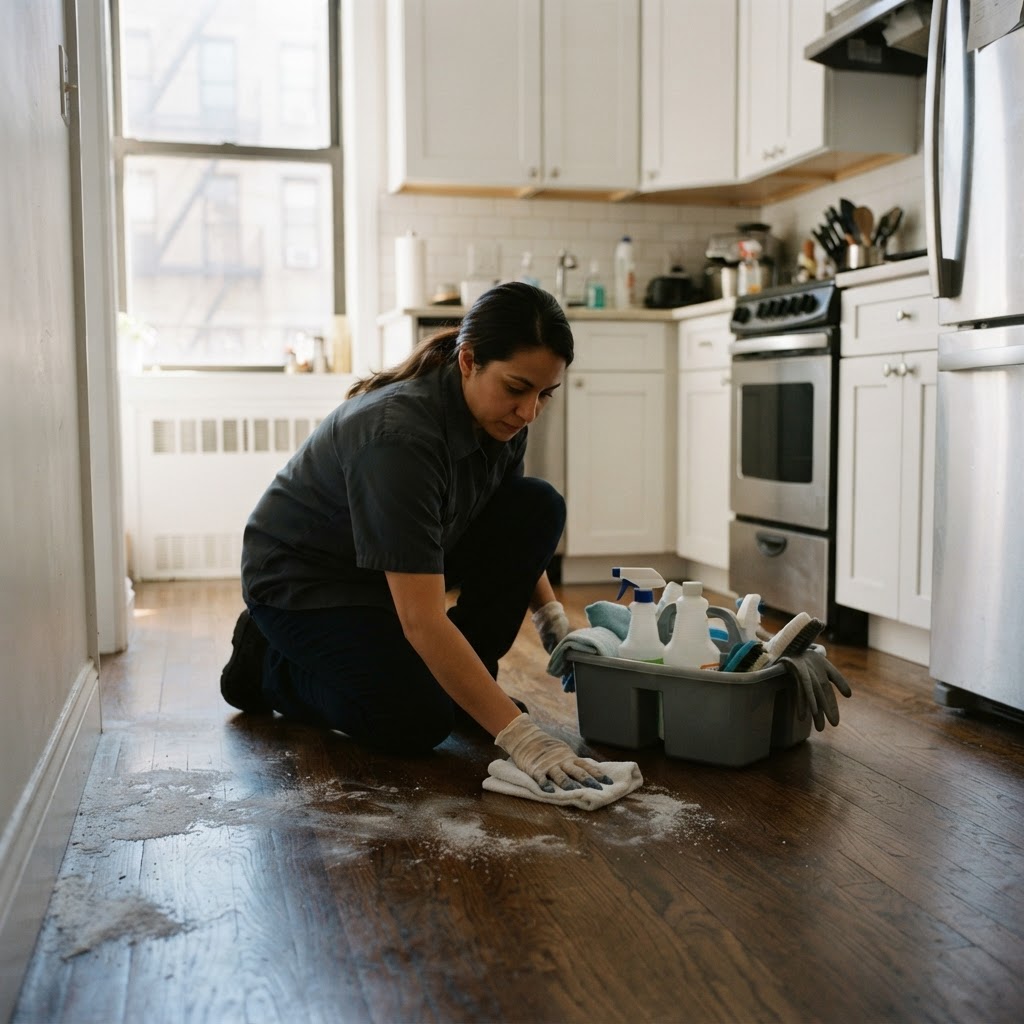
Why NYC salt requires immediate attention
The white, powdery haze that appears on your floors after a commute is more than just an eyesore. In New York, rock salt and calcium chloride are the standard tools for keeping sidewalks safe, but these minerals are corrosive. When tracked into your hallway or entryway, they act like sandpaper against your floor finish. If you leave them there, they draw moisture from the air, creating a chemical reaction that can permanently pit stone, dull hardwood finishes, and create unsightly residue that is difficult to shift later. Because NYC apartments often feature narrow layouts, this salt is concentrated in high traffic zones where it causes the most friction and physical damage to your flooring's protective layers.
Assess your flooring material
Before you grab a bucket, identify what you are dealing with. A pre-war brownstone often features original hardwood, while a newer condo might have engineered wood, porcelain tile, or vinyl. Hardwood is the most sensitive to moisture, so you must use a damp, not wet, approach. Tile is more forgiving, but grout lines can trap salt and become permanently discolored if not treated correctly. If you find the job is simply too big, you might consider booking a professional house cleaning service to reset your apartment after the winter peak.
When identifying your floor, check for a finish. If a drop of water beads on the surface, it is likely sealed. If the water soaks in quickly, your floor is porous and highly susceptible to salt infiltration. Porous surfaces require a dry-brushing technique first to remove loose salt crystals before any liquid solution is introduced to prevent the salt from dissolving and sinking deeper into the material grain.
The vinegar and water solution
For most non-porous surfaces, a mild acidic solution is the best way to remove salt stains from floor areas. Mix one part white vinegar with four parts warm water. The acidity helps dissolve the mineral bonds of the salt. Dip a microfiber mop into the solution and wring it out until it is nearly dry. You want to wipe the surface, not flood it. If you have deep-set salt buildup in a busy hallway, you might need a deep cleaning to ensure the finish is properly restored without damage.
When applying this, move in sections no larger than three feet by three feet. Overlapping your strokes slightly will ensure you do not miss spots. If the salt residue appears streaky, switch to a clean microfiber cloth and buff the area dry immediately after wiping. If streaks remain, it is likely you used too much vinegar. A second pass with plain, warm water will neutralize the surface and remove the sticky haze often left behind by improper cleaning ratios.
Specialized care for hardwood
If you have delicate hardwood, skip the heavy liquids. Instead, use a specific pH-neutral wood cleaner designed for floors. Spray the cleaner onto your cloth rather than directly on the floor to avoid water damage near door frames or under radiator pipes. Wipe the salt away gently in the direction of the grain. If the salt has already caused cloudy patches, professional intervention is recommended. Do not attempt to sand these down yourself as you may permanently damage the wood grain and require a full refinish.
When cleaning wood, the biggest mistake is over-saturation. Wood expands when wet. If salt-laden water seeps into the tongue and groove seams, the board edges will swell, leading to a permanent cupped effect that ruins the flat surface. Always keep a dry, absorbent towel on hand to immediately blot any pooled liquid. If you notice the finish is becoming thin or showing wear before winter arrives, applying a fresh coat of floor wax can provide an extra barrier against seasonal corrosion.
Understanding NYC salt regulations and timing
New Yorkers often wonder about the specific timing of salt application. Building management teams are legally required to keep pathways clear, which means salt is applied aggressively during storms. However, they rarely clean up the leftover grit once the threat of ice passes. This leads to a persistent buildup that stays on your floors for months. You should time your deep cleaning efforts during a dry spell in the forecast. If you attempt a deep scrub during a period of high humidity or active snow, the residual moisture will not evaporate effectively, potentially trapping salt ions in your floor boards even after you think the area is clean.
Minimizing long term structural repair costs
Salt damage acts as a slow-moving destructive force. While it may look like just a stain today, the salt crystals are actually stripping the protective polyurethane or wax finish from your flooring. Once this barrier is gone, the raw wood or tile becomes porous and will absorb grime, pet dander, and liquid spills throughout the rest of the year. Investing time in daily maintenance is not just about aesthetics. It prevents the need for expensive floor refinishing, which in Manhattan can cost thousands of dollars. A simple daily routine of checking the entryway and addressing spots keeps your apartment in good standing for future inspections.
Preventative maintenance for NYC apartments
The most effective way to clean is to stop the tracking before it starts. Place a high-quality, absorbent rubber-backed mat both outside and inside your entrance door. In tight NYC entryways, space is a premium, but a small footprint rug makes a massive difference in containment. When you enter, make it a habit to kick off your boots immediately. If you have accumulated trash and old boxes from holiday deliveries, don't let them sit near your clean floors. You can easily book junk removal to clear your entry space and keep the area clear for easy maintenance.
Regular upkeep is much cheaper than repairs. If you are moving out after a messy winter, remember that salt damage can often be cited by landlords during inspections, so a move-out cleaning is a wise investment to protect your security deposit.
Frequently Asked Questions
Is it safe to use vinegar on all floor types?
Vinegar is excellent for tile and vinyl, but you should avoid using it on natural stone like marble or limestone. The acidity can etch these materials over time, leaving dull spots. For stone floors, use a product specifically labeled for stone care.
How often should I clean my entryway during winter?
In New York, you should aim to wipe down your entryway floor at least once a day if there is active melting outside. A quick pass with a damp microfiber cloth prevents the salt from settling into the pores of your flooring material.
Can I use a steam mop on my floors?
We generally advise against using steam mops on hardwood or laminate floors. The intense heat and moisture can force water into the joints of your flooring, causing the boards to warp or cup, which is a very expensive repair.
Book help in New York
If you find the salt damage is stubborn or you just need a professional hand to refresh your home, we are here to help. You can view our house cleaning service options and schedule a pro today.