
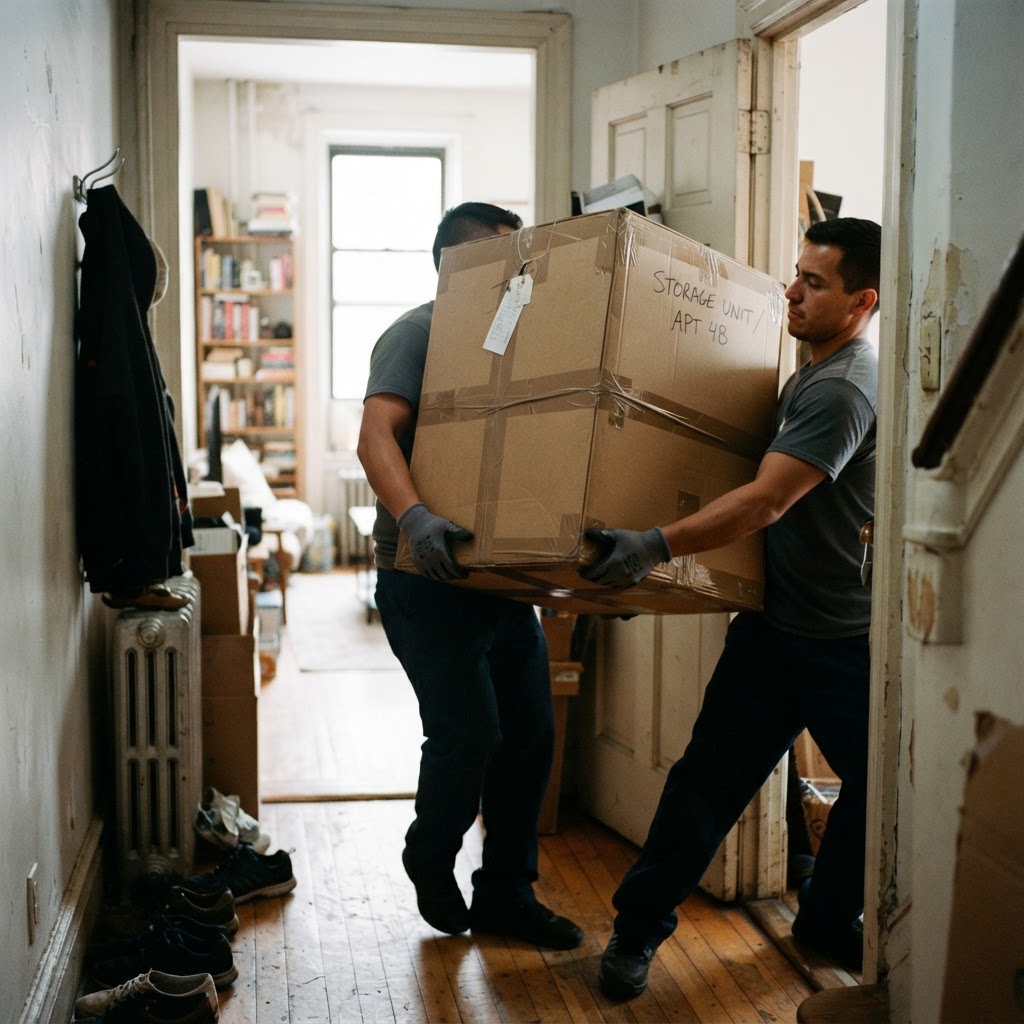
Moving items into or out of a storage unit in New York City involves more than just labor. Because of the unique constraints of city buildings, hallways, and elevators, your total investment depends on how well you prepare. Understanding the storage unit moving cost nyc residents face requires looking at hourly labor rates and the specific logistical challenges unique to the five boroughs.
Factors Influencing Your Moving Budget
The primary cost driver for any local move is the time required. At NYC Pro Tasker, our moving labor starts at $65/hour for one mover and $160/hour for two movers, with a 2-hour minimum. While that gives you a baseline, several factors can make your job take longer than expected.
Building Access and Constraints
Most New York apartment buildings require a Certificate of Insurance (COI) to allow movers inside. If your building management demands paperwork, get it early. Additionally, if you live in a fifth-floor walk-up or a building with a tiny service elevator, the sheer number of trips increases the duration of your move. Moving items through tight pre-war doors or narrow stairwells is slow work. Movers often have to pivot sofas or remove doors to gain clearance. Check if your sofa exceeds 80 inches in length or 30 inches in depth, as these items frequently require disassembly. If you have bulky items that need disassembly, you should consider our professional furniture assembly cost guide to ensure you have enough time allocated in your budget.
Parking and Traffic
Parking is the silent budget killer in New York. If your movers cannot find a legal spot near your front door, they will spend time circling the block or dealing with potential tickets. Always clear a space if you have a driveway or a designated loading zone. If you are moving during peak hours, factor in the time spent navigating gridlock. It is often cheaper to pay for two movers for a shorter, efficient window than to pay for one mover struggling to navigate these obstacles alone. You can get an instant price estimate to see how different labor configurations might change your outcome.
Preparing for Your Move
Efficiency is the best way to keep costs down. A well-organized storage unit allows the team to load or unload much faster. If you just throw boxes into the unit, you lose vertical space and make the unloading process a nightmare. Use uniform boxes whenever possible, as they stack securely and save time during the loading phase. Aim for medium boxes for books and small items, as large boxes become too heavy to lift safely. Always label the sides of your boxes, not just the tops, so you can identify contents while items are stacked four units high.
Disassembly and Reassembly
Many people wait until the movers arrive to start taking beds or desks apart. This is a mistake. Disassembling furniture before the crew arrives ensures that the time you pay for is spent strictly on moving items to the truck. Keep hardware like screws and bolts in clear plastic bags taped directly to the furniture piece. If you find yourself overwhelmed by complex furniture, you might need to book a handyman to help with structural issues or complex installations in your new space. Keeping walkways clear at both your apartment and your storage facility will help the team maintain a steady pace, reducing the total hours billed.
Navigating New York Storage Rules
Storage facilities in New York often have strict move-in policies that differ from residential buildings. Always verify the operating hours of your specific storage location. Some facilities lock their loading docks at 6 PM sharp. If your movers arrive at 5 PM, they may be forced to leave items outside or incur a penalty fee for overtime. Ask your storage manager if they provide push carts or dollies. If the facility is busy, these tools might be unavailable, slowing down your team significantly. Check for height restrictions in loading bays, as large rental trucks often cannot clear low-hanging pipes found in older, subterranean NYC storage garages. Always measure the height of the vehicle versus the entrance height to avoid a costly delay.
Protecting Your Belongings in Storage
Long-term storage in NYC requires proactive protection against the city environment. Humidity is a common issue in older basements, which can cause mildew on upholstery. Always use moisture-absorbing silica packs inside containers. When wrapping furniture, avoid using plastic stretch wrap on wood surfaces for long periods, as it can trap moisture and ruin the finish. Use moving blankets instead for air circulation. Consider purchasing a high-quality disc padlock for your unit. Disc locks are harder to cut with bolt cutters than standard padlocks, offering better security for your investment. Regularly check your insurance policy to see if your belongings are covered while sitting in a remote storage unit, as some renter policies do not extend coverage to off-site locations.
Frequently Asked Questions
Do I need to provide my own packing materials?
Yes, you should have all your items packed, taped, and ready to move before the team arrives. Having your belongings prepared in advance is the most effective way to keep your storage unit moving cost nyc project within your budget.
How does the two-hour minimum work?
Our hourly moving labor services require a two-hour minimum charge. This ensures that our team can account for the time spent traveling to your location and preparing the necessary equipment for your specific job.
Should I reserve a service elevator?
If your building has a service elevator, you must reserve it with building management as far in advance as possible. Movers cannot proceed efficiently if the elevator is tied up or if they are denied access, which could lead to additional time and costs.
Book help in New York
Whether you are clearing out a storage unit or moving items into one, our team is ready to assist. You can book moving help today to secure your date and ensure your project goes as smoothly as possible.