
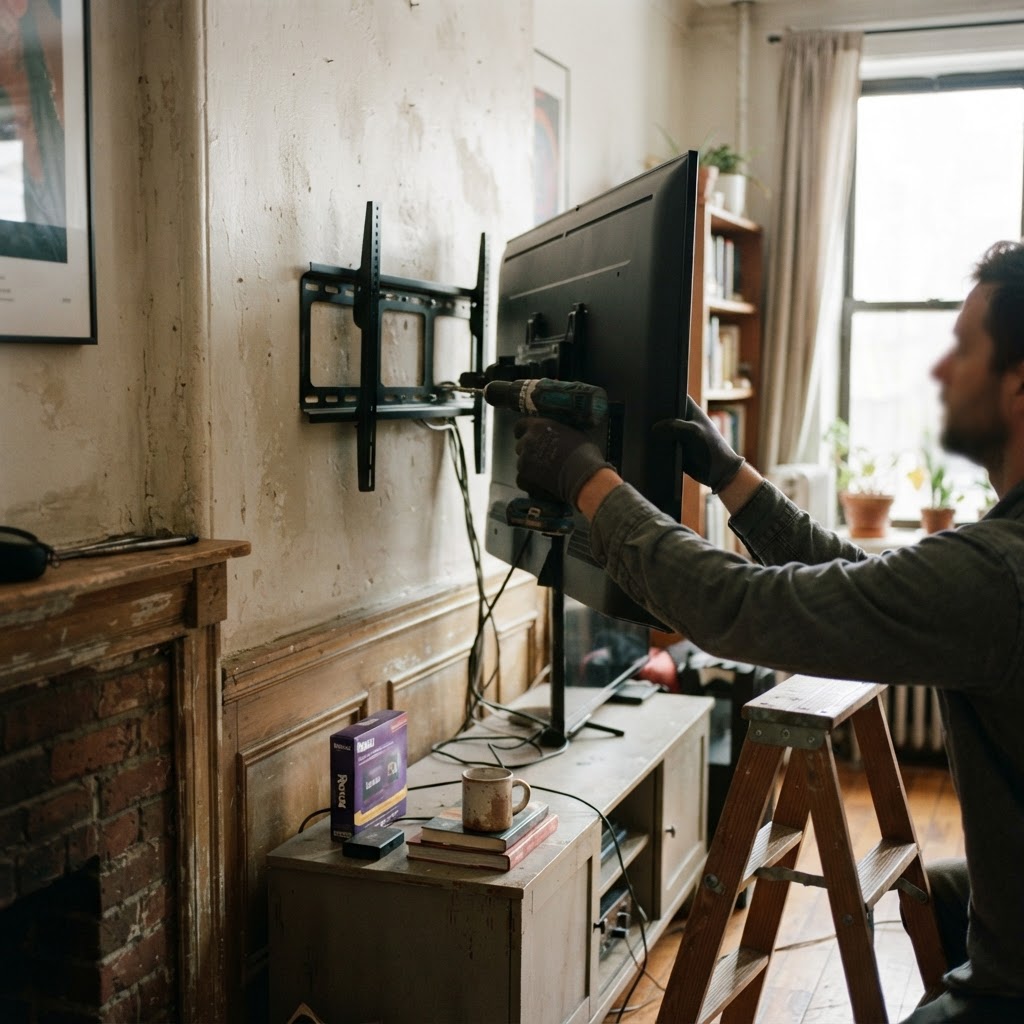
Understanding TV Mounting Cost NYC When you want to clear floor space in a cramped Manhattan apartment or a Brooklyn walk-up, mounting your television is the best solution. However, the tv mounting cost nyc varies based on your specific wall construction and the complexity of the setup. While standard drywall is straightforward, mounting into brick, concrete, or lath and plaster requires specialized tools and more time. At NYC Pro Tasker, we provide transparent pricing so you know exactly what to expect before we arrive at your door.
Factors Influencing Your Installation Price
Wall Material and Complexity The foundation of your walls matters more than the size of your TV. Drywall is generally the quickest to work with, but older New York buildings often feature plaster and lath. These materials are brittle and require extra care to prevent cracking. If you live in a pre-war building with solid brick or concrete walls, the job involves masonry bits and specific anchors, which increases the labor time. We always assess the wall type to ensure the mount remains secure and level for years to come. When working with drywall, we locate studs using high-precision magnetic sensors to ensure the bracket is anchored into wooden framing rather than just the hollow board. For concrete or brick, we use a hammer drill to bore holes and install heavy-duty masonry sleeves or expansion bolts. If we encounter lath and plaster, we often use a diamond-tip bit to drill through the plaster gently to avoid crumbling before anchoring into the wooden lath behind it. This multi-step process ensures a sturdy hold that can support the leverage of a full-motion mount.
Hardware and Equipment Your choice of mount also dictates the time required for installation.
A simple fixed mount is faster to install than a full-motion arm, which needs precise leveling to ensure it swings smoothly without hitting your wall or furniture. If you need help choosing the right hardware, or if you need other services like furniture assembly cost assistance, we are ready to help. Having the correct hardware on hand before the pro arrives saves you time and ensures a professional finish. Fixed mounts sit close to the wall, requiring very little clearance, but they lack flexibility. Tilting mounts add a few inches of depth and allow for adjustment if you mount the TV slightly higher than eye level to reduce glare from windows. Full-motion mounts are the most complex. They require us to calculate the center of gravity to ensure the mount does not pull away from the wall when fully extended. We verify the stud spacing, which is typically sixteen or twenty-four inches on center, and ensure the mount plate is centered perfectly.
Navigating Building Rules in New York Many co-ops and condos in New York City have strict insurance requirements. If your building manager asks for a Certificate of Insurance, ensure you have your request ready well in advance. Our team is fully insured and familiar with the unique challenges of booking a handyman in buildings that require elevator pads or specific service entrance hours. For those moving into a new space and needing extra hands, you can also book moving labor to handle heavy furniture before your TV installation. Always check your building handbook regarding wall modifications. Some historic buildings have protected surfaces or specific guidelines on how many holes can be drilled. If your building requires a service elevator reservation, make sure to book that slot for at least a two-hour window to account for equipment setup and testing. Having a clear path to the service entrance allows our team to transport necessary tools and ladders without violating building policies.
Essential Pre-Installation Checklist and Timing To ensure a successful installation, you should verify the weight capacity of your wall mount against your TV specifications. Most manufacturers provide the VESA pattern, which is the distance between the mounting holes on the back of the screen. We recommend measuring these holes before buying a mount to confirm they align with the bracket plate. On the day of the job, ensure the wall area is free of artwork or decorative mirrors. Our technicians will use a laser level to mark the drilling points. A common mistake is mounting the TV too high. The center of the screen should ideally be at eye level when you are seated. If the TV is too high, it creates neck strain. We also check for existing electrical outlets to ensure the power cord reaches without needing an extension cable, which is a fire hazard. The entire process for a standard drywall installation usually takes forty-five to sixty minutes, while masonry or complex cable management setups can take up to two hours.
Maintenance and Post-Installation Care After the TV is mounted, perform a monthly check of the tension bolts on your bracket. Over time, vibrations in high-traffic buildings can cause screws to loosen slightly, especially on full-motion arms. If you notice the TV tilting or swaying, tighten the adjustment knobs. Do not clean the screen with abrasive cloths or household glass cleaners, as these can strip the anti-glare coating. Use a microfiber cloth for the screen and a gentle dusting tool for the mount. If you plan to upgrade to a larger screen in the future, check if your current mount supports the new weight capacity. A mount rated for a forty-inch screen may not be safe for a sixty-five-inch model even if the bolt patterns match.
Budgeting for Your Project To keep your project affordable, ensure your area is clear before the professional arrives. Moving a heavy couch or clearing out a bookshelf allows the technician to work efficiently. We recommend using our instant price estimate tool to get a clear picture of the costs involved. Because every wall and television is unique, getting a firm quote helps you avoid surprise charges and keeps your home improvement budget on track. Additional costs might include the purchase of specialized anchors if your wall is made of particularly soft or crumbling plaster. By preparing your space and confirming your hardware details beforehand, you streamline the labor time and keep the total project cost within your expected range.
Frequently Asked Questions
Does the TV size change the installation price?
Larger TVs require more care and occasionally a second person to lift safely, but the labor cost is primarily driven by the wall material. Mounting a TV into a masonry wall takes longer than drywall, regardless of the screen size.
Can you hide the cables inside the wall?
We focus on secure mounting and surface cable management. If you need in-wall electrical work, that falls outside our standard mounting scope and may require a licensed electrician to remain compliant with building codes.
What happens if my building requires a COI?
We provide Certificates of Insurance upon request. Simply notify our support team when you schedule your appointment so we can provide the necessary paperwork to your building management office ahead of time.
Book help in New York Ready to get your television securely mounted?
Our team is available across all five boroughs to help with your home projects. You can secure your instant price estimate online today.