A professional deep clean is a top-to-bottom reset of your living space that addresses the grime, dust, and buildup you simply cannot reach during a standard weekly tidy. It goes beyond surface-level wiping, focusing on the hidden areas of your apartment that, if ignored, eventually lead to costly repairs. Whether you live in a pre-war walk-up or a modern condo, knowing what does deep cleaning include helps you manage your home better.
The Anatomy of a Professional Deep Clean
When you hire deep cleaning NYC services, the process follows a specific sequence. Professionals start high and move low, meaning they tackle ceiling fans, light fixtures, and the tops of cabinets before moving to baseboards and floors. This ensures that dust falling during the process is caught on the final sweep. Pros often use a dry-to-wet approach to prevent streaking on surfaces.
For ceiling fans, they use microfiber dusters to trap particles rather than spreading them into the air. When cleaning light fixtures, they remove glass globes to wipe the interior where dead insects and fine dust accumulate. If a fixture is delicate, they use gentle glass cleaners that do not leave residue.
Kitchen and Bathroom Sanitization
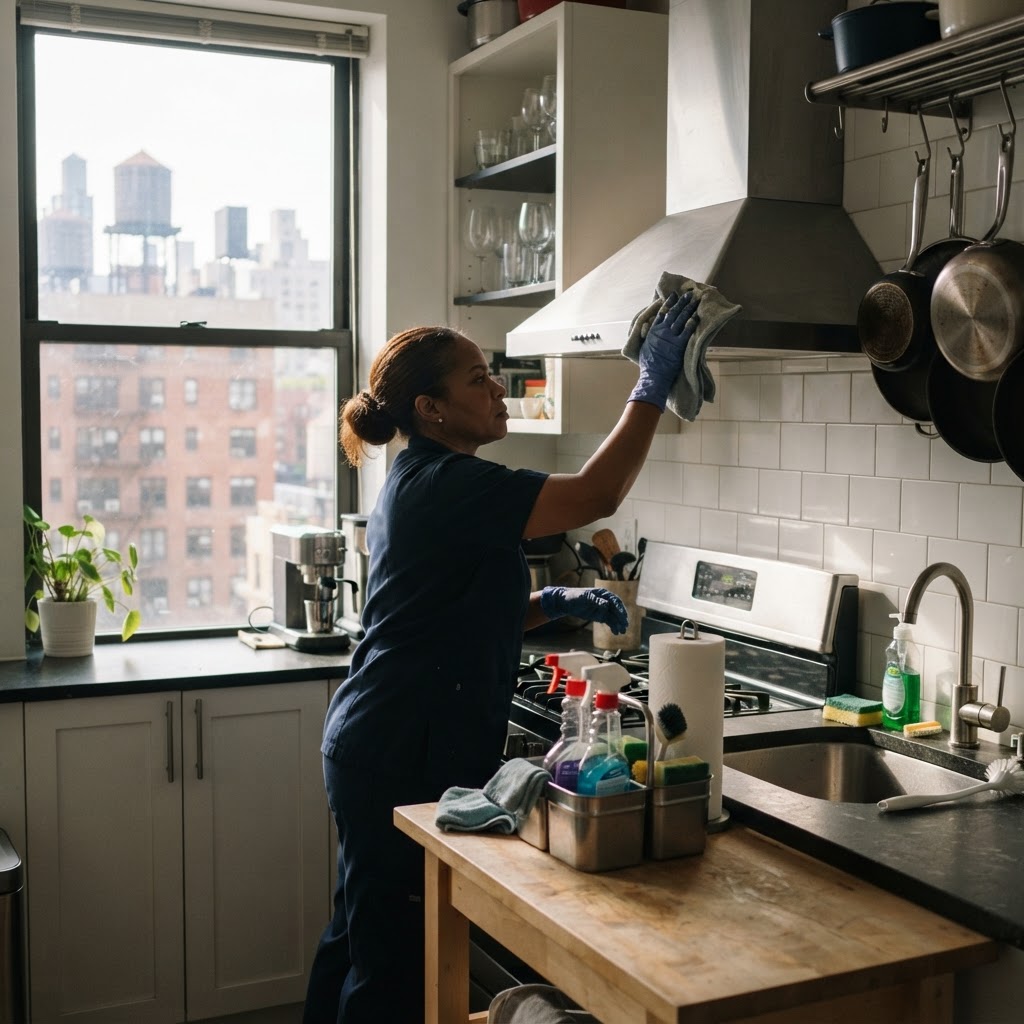
In kitchens, a deep clean addresses the grease accumulation behind the stove and inside the microwave. Professionals degrease cabinet fronts and scrub the area behind the refrigerator, a common hotspot for dust bunnies that can impact appliance longevity. When tackling the oven, they use non-caustic cleaners to break down carbon deposits without damaging the enamel or heating elements. If you notice a persistent smell, they check the grease trap under the stove hood and clean the filter with a high-strength degreaser to restore airflow.
For bathrooms, the focus shifts to removing soap scum and hard water deposits on tile and grout. Deep cleaning here is not just about aesthetics; it prevents moisture from settling into cracks, which can lead to mold issues in poorly ventilated NYC bathrooms. Professionals use specialized pH-neutral cleaners on natural stone like marble to avoid etching the surface. They scrub grout lines with stiff brushes, often following up with a sanitizing rinse to ensure no chemical residue remains on the floors or walls.
Living Spaces and Floor Care
Deep cleaning includes detailed dusting of baseboards, window tracks, and door frames. In tight city apartments, window tracks often accumulate grit that prevents smooth operation. By vacuuming and wiping these tracks, they prevent the mechanical wear that leads to sticky or broken window hardware. They use crevice tools to reach the corners where tracks meet the frame, which is where grit hides.
Hardwood floors are treated according to their finish, ensuring that grit does not get ground into the sealant. If the floors are hardwood, professionals use minimal water to prevent swelling. For luxury vinyl or tile, they use a mop with a specialized solution to lift embedded soil from textures.
Understanding NYC Building Rules and Timing New
York City apartment buildings often have strict rules regarding moving heavy appliances or using service elevators. Before scheduling a deep clean, check if your management company requires a Certificate of Insurance from your cleaning provider. Some buildings restrict the hours during which heavy cleaning equipment can be used to avoid noise disturbances. Planning your cleaning during mid-week hours often results in better availability and fewer conflicts with building management.
If your building requires a move-out inspection, time your deep clean to occur after all furniture has been removed. This allows the team to access wall corners and floor edges without obstruction. Being clear with your service provider about any specific building requirements, such as stair-only access or limited freight elevator availability, ensures the job proceeds without delays.
Long-term Maintenance and Cost Drivers
Maintaining your apartment after a deep clean depends on proactive daily habits. One major cost driver in professional cleaning is the condition of the space; a home with years of neglected grease or heavy soap scum requires more labor-intensive chemicals and time. You can keep costs lower by scheduling maintenance cleans every few months rather than waiting for a massive buildup to occur. Check your air filters and radiator vents monthly to ensure they are not clogged with dust.
If you see signs of peeling paint or water rings on ceilings, address the source immediately before it causes damage that cleaning cannot fix. Investing in small, regular professional visits keeps your home environment healthy and reduces the risk of large-scale restoration projects later.
Maintenance Tasks to Prevent Bigger Repairs
Routine maintenance is the best way to extend the lifespan of your apartment fixtures. If you find your surfaces are becoming impossible to manage on your own, it might be time to use a house cleaning service to reset the baseline. Beyond cleaning, watch for signs of water damage around sink faucets and near baseboards. If you notice persistent leaks, address them before they lead to warped cabinetry or floorboard damage.
Don't let clutter become a safety hazard. In small NYC layouts, items piled near radiators or vents can pose a fire risk or block airflow, causing your heating system to work harder than necessary. Regularly using book junk removal services to clear out old furniture or boxes prevents pests and frees up space for better airflow. A clean, uncluttered apartment is easier to inspect for maintenance issues like cracks or shifting frames.
Preparing for Your Next Big
Move Deep cleaning is especially critical when you are getting ready to vacate your apartment. If you want to ensure your security deposit is returned, a specialized move-out cleaning is a smart investment. This process covers the deep interior of drawers, inside the oven, and the deep corners of closets. Landlords and property managers look for these specific details during a move-out inspection.
Tackling these areas thoroughly leaves the unit in move-in ready condition and satisfies lease requirements regarding property care.
Frequently Asked Questions
What does deep cleaning include compared to a regular cleaning?
A regular cleaning maintains the surface-level cleanliness of your home, while a deep cleaning targets long-term buildup in hidden areas. This includes tasks like degreasing appliances, scrubbing grout, and cleaning baseboards, door frames, and inside appliances.
How often should I schedule a professional deep clean?
Most experts recommend a professional deep clean every three to six months for city apartments. This frequency helps keep your home in top condition and prevents the accumulation of stubborn grime that is difficult to remove later.
Can a deep clean help me keep my security deposit?
Yes, a thorough move-out clean is the most effective way to ensure your apartment meets the standard required by landlords. Cleaning the oven, the interior of cabinets, and floor corners significantly reduces the likelihood of deposit deductions.
Book help in New York
Whether you need a one-time deep clean or regular assistance to keep your apartment in peak condition, we are ready to help across all five boroughs, Long Island, Westchester, New Jersey and Connecticut. You can schedule your next service through our house cleaning service booking page.