
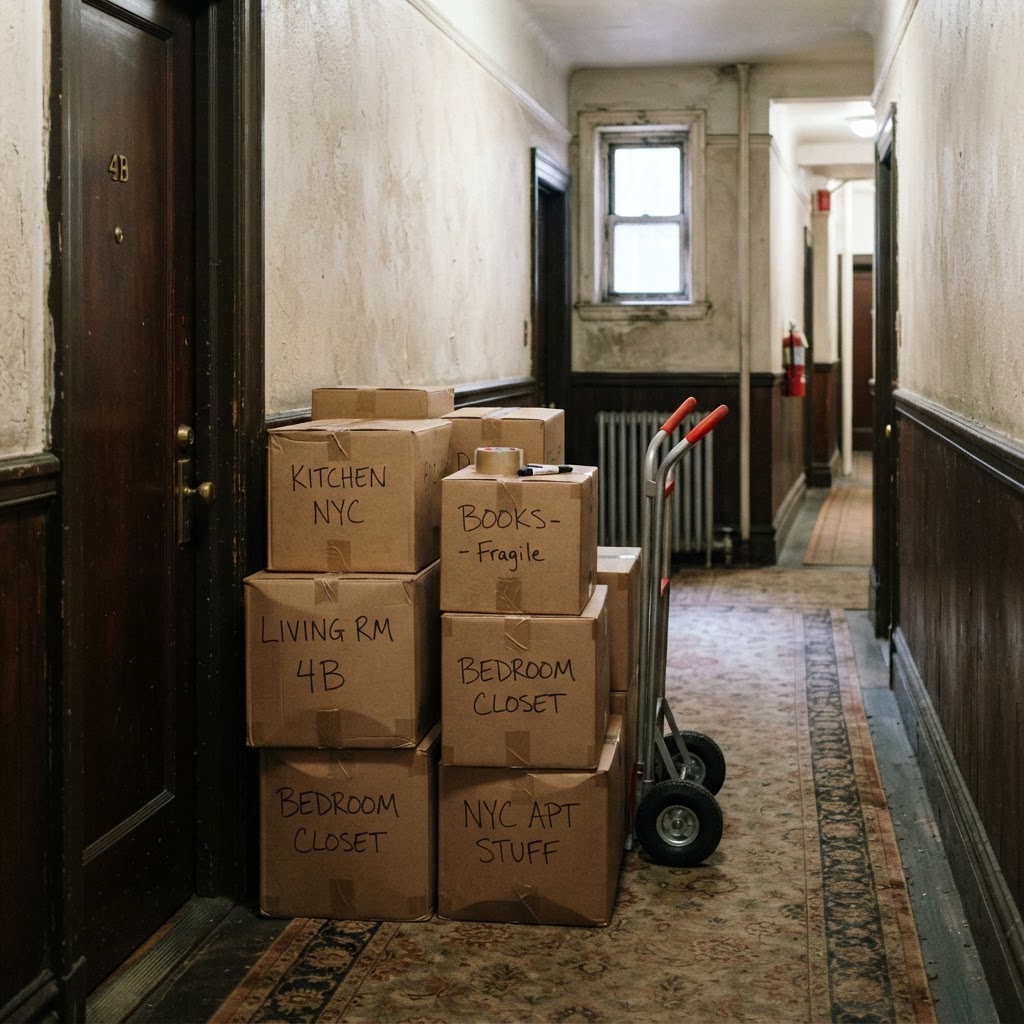
Professional movers operate under strict safety and legal guidelines that define what movers will not move. In a dense environment like New York City, where moves often involve narrow stairwells, small freight elevators, and strict building regulations, these policies are designed to protect both your property and the building itself. If you are packing for a move, knowing these restrictions upfront saves you from last-minute stress on your moving day.
Understanding Restricted Items
Most moving companies have a standard list of items that are prohibited due to safety risks or legal liabilities. These typically include hazardous materials such as gasoline, propane tanks, paint thinner, bleach, and certain types of cleaning supplies that are combustible or toxic. Professional movers cannot transport these items in a truck because they could ignite or leak onto your personal belongings during transit.
Perishables and open food containers are also usually excluded. If you have a deep freezer, most companies require it to be emptied and defrosted well in advance. Living in a brownstone or a co-op with strict management, you must also consider that many buildings have their own internal policies regarding hazardous waste disposal. If you have complex moving requirements, check out our moving help service to discuss your specific logistics.
Handling Hazardous Materials
Never pack aerosol cans, car batteries, or any type of flammable liquid into a moving box. These items are dangerous in a confined truck space, especially during a hot summer move in New York. If you have leftover cleaning supplies, consider using them up before your move date or donating them to a neighbor.
Dealing with Perishables
For food items, the rule is simple: if it is not non-perishable, do not pack it. If you have an extensive pantry, donate unopened goods to a local shelter in your borough. Moving heavy appliances is labor-intensive, so having an empty, clean, and defrosted refrigerator or freezer is essential for the team. If you need support with the heavy lifting, you can book moving labor to handle the loading process.
Moving Day Logistics in NYC
Navigating an NYC apartment move is an art form. Beyond what the movers will not take, you must manage building requirements like Certificate of Insurance (COI) requests. Most co-ops and luxury condos in Manhattan or Brooklyn require proof of insurance before a mover can enter the lobby. Always verify these rules with your building manager at least two weeks before your move.
If you are clearing out an apartment, you might find items that you no longer need. For those leftover pieces that you cannot pack or move, do not leave them on the curb. You can book marketplace pickup and delivery if you decide to sell or donate large pieces of furniture rather than moving them. We provide moving labor by borough to ensure we can meet you exactly where you are located.
Packing Strategy for Success
When you prepare your boxes, focus on clarity and weight distribution. Use small boxes for books and heavy items, and large boxes for linens. If you have fragile items, ensure they are wrapped with professional-grade packing materials. Remember that movers are there to transport your items, but you are responsible for preparing them for the transit process. If you are unsure about the weight capacity of your boxes, it is better to pack two smaller boxes than one massive one that risks breaking.
Frequently Asked Questions
Can movers transport my house plants?
Most moving companies will not transport house plants in the truck because they are prone to wilting, spilling soil, or attracting pests. It is best to transport your plants personally in your own vehicle to ensure they remain upright and watered.
Why won't movers take my jewelry or cash?
Movers generally have a policy against transporting items of extreme personal value, such as cash, jewelry, heirlooms, or important legal documents. You should always keep these items with you during the move to ensure they remain safe and accounted for at all times.
What should I do with my leftover paint?
Paint is considered a hazardous material due to its flammability and potential to leak. You should dispose of leftover paint at a designated NYC household hazardous waste drop-off site rather than trying to move it in a truck.
Book help in New York
Whether you need help loading a rental truck or moving items between boroughs, we are here to assist. You can book moving labor to get started on your next move.